Elsevier

Solid Earth Sciences Template

Write in a clean editor, then format for Solid Earth Sciences in one click — DocuGuru applies the official Elsevier template with author–year references and exports a submission-ready PDF plus the editable LaTeX source. Free to start.

About the Solid Earth Sciences format

Solid Earth Sciences is a peer-reviewed journal published by Elsevier, covering Geological and Geochemical Analysis, Geochemistry and Geologic Mapping, earthquake and tectonic studies.

PublisherElsevier
Reference styleAuthor–year (Harvard)
Author–year — (Smith, 2023) in the text
Smith, A., Jones, B. and Lee, C. (2023) 'A representative article title', Solid Earth Sciences, 12(3), pp. 45–58.

Formats any DOI in Solid Earth Sciences style. No sign-up.

Publishes research inGeological and Geochemical Analysis Geochemistry and Geologic Mapping earthquake and tectonic studies High-pressure geophysics and materials Geochemistry and Elemental Analysis
ISSN2451-912X
Citation impact (2-yr)1.74
h-index20
i10-index64
Total citations2,580
Open accessYes
Top institutions publishing hereChinese Academy of Sciences
Journal websitewww.journals.elsevier.com
You getA submission-ready PDF and the editable LaTeX source — ready to submit.

Papers published in Solid Earth Sciences per year

1
2015
11
2016
16
2017
18
2018
25
2019
31
2020
38
2021
20
2022
30
2023
35
2024
36
2025

Citation impact of Solid Earth Sciences by publication year

19
2015
566
2016
141
2017
646
2018
234
2019
197
2020
293
2021
98
2022
184
2023
82
2024
90
2025

Citations each year’s papers have accumulated so far — the most recent years are still building up.

Most-cited papers in Solid Earth Sciences

Calibration and correction of LA-ICP-MS and LA-MC-ICP-MS analyses for element contents and isotopic ratios

Jie Lin, Yongsheng Liu, Yue‐Heng Yang et al. · 1 Jun 2016

LA-ICP-MS and LA-MC-ICP-MS have been the techniques of choice for achieving accurate and precise element content and isotopic ratio, the state-of-the-art technique combines the advantages of low detection limits with high spatial resolution, however, the analysis accuracy and precision are restricted by many factors, such as sensitivity drift, elemental/isotopic fractionation, matrix effects, interferences and the…

XRD-based quantitative analysis of clay minerals using reference intensity ratios, mineral intensity factors, Rietveld, and full pattern summation methods: A critical review

Xiang Zhou, Dong Liu, Hongling Bu et al. · 11 Jan 2018

The quantification of clay minerals is essential for the evaluation of clay-rich rock and soil, but it remains challenging due to the unique structures and various element compositions of clay minerals. In this article, several quantification methods for clay minerals sourced from X-ray diffraction (XRD) analysis, mainly recommending the reference intensity ratio (RIR), mineral intensity…

An evaluation of precision and accuracy of SIMS oxygen isotope analysis

Qing Yang, Xiaoping Xia, Wanfeng Zhang et al. · 29 May 2018

In this study, a high-precision secondary ion mass spectrometry (SIMS) zircon oxygen isotope ratio analytical protocol is described. The analysis is conducted using a Cameca IMS 1280-HR at the SIMS Laboratory of Guangzhou Institute of Geochemistry, Chinese Academy of Sciences (GIGCAS). Four reference zircons (91,500, Qinghu, TEMORA 2 and Penglai) have been chosen to evaluate…

Geodynamic setting of Late Cretaceous Sn–W mineralization in southeastern Yunnan and northeastern Vietnam

Yanbo Cheng, Jingwen Mao, Peng Liu · 1 Dec 2016

The Sn–W mineralization in SE Yunnan Province, China and NE Vietnam shares many similarities. Through comparing the geological and geochronological data, we suggest the Sn–W deposits and the associate igneous rocks in the region represent one regional magmatic-mineralization event. To explore the geodynamic setting of these mineralization and magmatic activities, a geochronological dataset in the…

An extremely brief end Ordovician mass extinction linked to abrupt onset of glaciation

Ming‐Xing Ling, Renbin Zhan, Guangxu Wang et al. · 1 Dec 2019

The end Ordovician mass extinction (EOME) was the second most severe biotic crisis in Phanerozoic, and has been widely linked to a major glaciation. However, robust geochronology of this interval is still lacking. Here we present four successive high-precision zircon U–Pb dates by isotope dilution thermal ionization mass spectrometry (ID-TIMS) for biostratigraphically well-constrained K-bentonites of…

Solid Earth Sciences template — frequently asked questions

How do I write a paper in the Solid Earth Sciences format?
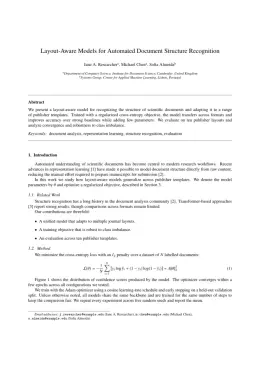
In DocuGuru you write your manuscript in a normal editor — no LaTeX setup required — and select the Solid Earth Sciences template. When you export, DocuGuru compiles the paper into the official Elsevier format and hands you a submission-ready PDF along with the editable LaTeX source.
What reference style does Solid Earth Sciences use?
Solid Earth Sciences uses Author–year (Harvard) references, shown as author–year markers such as (Smith, 2023) in the text. DocuGuru formats every in-text citation and the reference list in this exact style automatically. A reference appears like this: Smith, A., Jones, B. and Lee, C. (2023) 'A representative article title', Solid Earth Sciences, 12(3), pp. 45–58.
Do I need to know LaTeX to submit to Solid Earth Sciences?
No. DocuGuru generates the elsarticle LaTeX class and compiles the PDF for you in the background, so you get a Elsevier-ready Solid Earth Sciences document without writing any LaTeX. If you do want it, the LaTeX source is included in the export.
Can I import an existing draft into the Solid Earth Sciences template?
Yes. Paste or upload your current manuscript — Word, LaTeX, Markdown, or plain text — and DocuGuru reflows it into the Solid Earth Sciences format with correct headings, figures, tables, and author–year citations.
Who publishes Solid Earth Sciences?
Solid Earth Sciences is a multidisciplinary journal published by Elsevier. DocuGuru's Solid Earth Sciences template matches Elsevier's official submission format.
Can I export a submission-ready Solid Earth Sciences PDF?
Yes — DocuGuru produces a PDF built with the official Solid Earth Sciences template (the elsarticle class) that is ready to submit to Elsevier, together with the matching LaTeX source files.
How much does the Solid Earth Sciences template cost?
You can start writing in the Solid Earth Sciences template for free. Exporting the final submission-ready Solid Earth Sciences PDF and LaTeX source is part of DocuGuru's paid plans — see the app for current pricing.
Use the Solid Earth Sciences template