Elsevier

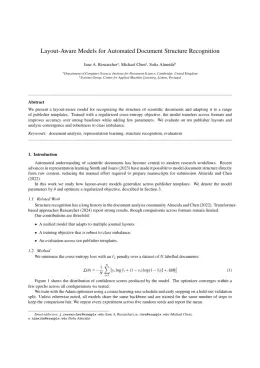
Soil Security Template

Write in a clean editor, then format for Soil Security in one click — DocuGuru applies the official Elsevier template with numbered references and exports a submission-ready PDF plus the editable LaTeX source. Free to start.

About the Soil Security format

Soil Security is a peer-reviewed journal published by Elsevier, covering Soil Carbon and Nitrogen Dynamics, Soil Geostatistics and Mapping, Soil erosion and sediment transport.

PublisherElsevier
Reference styleNumbered (Elsevier)
Numbered — [1], [2] in the text
[1] A. Smith, B. Jones, C. Lee, A representative article title, Soil Security 12 (2023) 45–58.

Formats any DOI in Soil Security style. No sign-up.

Publishes research inSoil Carbon and Nitrogen Dynamics Soil Geostatistics and Mapping Soil erosion and sediment transport Soil and Land Suitability Analysis Agricultural Innovations and Practices
ISSN2667-0062
Citation impact (2-yr)5.03
h-index27
i10-index86
Total citations2,951
Article processing charge$1,300
Open accessYes
Top institutions publishing hereThe University of Sydney
Journal websitewww.journals.elsevier.com
You getA submission-ready PDF and the editable LaTeX source — ready to submit.

Papers published in Soil Security per year

3
2020
28
2021
49
2022
40
2023
47
2024
45
2025

Citation impact of Soil Security by publication year

220
2020
588
2021
1K
2022
524
2023
405
2024
114
2025

Citations each year’s papers have accumulated so far — the most recent years are still building up.

Most-cited papers in Soil Security

The science of Soil Security and Food Security

Liana E. Pozza, Damien J. Field · 29 Nov 2020

There is a nexus of seven inter-linked global existential challenges; Soil Security and Food Security are two of these. The established concept of Food Security is well defined and researched, whereas the emerging concept of Soil Security is building its currency globally. Addressing Soil Security provides the means to improve food, fibre and water quality…

A minimum suite of soil health indicators for North American agriculture

Dianna K. Bagnall, Elizabeth L. Rieke, Cristine L.S. Morgan et al. · 9 Jan 2023

The concept of soil health is appropriately receiving increased attention from governments, producers, corporations, and other stakeholders because of the many functions of soil that support ecosystem services and farm profitability. With this interest, there is growing need to verify and monitor changes in soil health that result from how agricultural soil is managed. There…

Mid-infrared spectroscopy for accurate measurement of an extensive set of soil properties for assessing soil functions

Wartini Ng, Budiman Minasny, Sang Ho Jeon et al. · 15 Jan 2022

Quantitative assessment of soil functions requires the characterization of soil capability and condition. Mid-infrared (MIR) spectroscopy has been suggested as a viable alternative to the wet chemistry method. However, the extensive set of soil properties that can be well predicted have yet to be explored. The USDA MIR spectral library contains approximately 45,000 samples with…

Soil health and its relationship with food security and human health to meet the sustainable development goals in India

Bhabani S. Das, S P Wani, Dinesh K. Benbi et al. · 3 Jul 2022

Healthy soil is critical to human health and for achieving sustainable development goals (SDGs). Although India attained self-sufficiency in food production, realising zero hunger, good health, and no poverty remains a challenge. In this paper, we summarize key features of Indian soils and capture existing and developing trends in soil research in India to assess…

Cropping system and soil texture shape soil health outcomes and scoring functions

Joseph P. Amsili, Harold M. van Es, Robert R. Schindelbeck · 24 Jul 2021

Inherent soil properties often define the soil's basic functions, but human management can have superimposing impacts on the quality of soil. It is therefore challenging to interpret Soil Health (SH) measurements in the context of a region's soils and cropping systems. We examined the effects of soil texture, a dominant inherent soil property, and cropping…

Soil Security template — frequently asked questions

How do I write a paper in the Soil Security format?
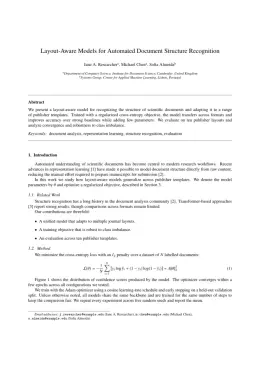
In DocuGuru you write your manuscript in a normal editor — no LaTeX setup required — and select the Soil Security template. When you export, DocuGuru compiles the paper into the official Elsevier format and hands you a submission-ready PDF along with the editable LaTeX source.
What reference style does Soil Security use?
Soil Security uses Numbered (Elsevier) references, shown as numbered [1], [2] markers in the text. DocuGuru formats every in-text citation and the reference list in this exact style automatically. A reference appears like this: [1] A. Smith, B. Jones, C. Lee, A representative article title, Soil Security 12 (2023) 45–58.
Do I need to know LaTeX to submit to Soil Security?
No. DocuGuru generates the elsarticle LaTeX class and compiles the PDF for you in the background, so you get a Elsevier-ready Soil Security document without writing any LaTeX. If you do want it, the LaTeX source is included in the export.
Can I import an existing draft into the Soil Security template?
Yes. Paste or upload your current manuscript — Word, LaTeX, Markdown, or plain text — and DocuGuru reflows it into the Soil Security format with correct headings, figures, tables, and numbered citations.
Who publishes Soil Security?
Soil Security is a multidisciplinary journal published by Elsevier. DocuGuru's Soil Security template matches Elsevier's official submission format.
Can I export a submission-ready Soil Security PDF?
Yes — DocuGuru produces a PDF built with the official Soil Security template (the elsarticle class) that is ready to submit to Elsevier, together with the matching LaTeX source files.
How much does the Soil Security template cost?
You can start writing in the Soil Security template for free. Exporting the final submission-ready Soil Security PDF and LaTeX source is part of DocuGuru's paid plans — see the app for current pricing.
Use the Soil Security template