Elsevier

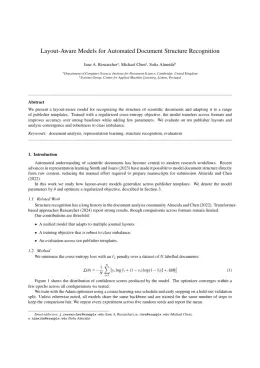
Soil Advances Template

Write in a clean editor, then format for Soil Advances in one click — DocuGuru applies the official Elsevier template with numbered references and exports a submission-ready PDF plus the editable LaTeX source. Free to start.

About the Soil Advances format

Soil Advances is a peer-reviewed journal published by Elsevier, covering Soil Carbon and Nitrogen Dynamics, Soil Geostatistics and Mapping, Soil erosion and sediment transport.

PublisherElsevier
Reference styleNumbered (Elsevier)
Numbered — [1], [2] in the text
[1] A. Smith, B. Jones, C. Lee, A representative article title, Soil Advances 12 (2023) 45–58.

Formats any DOI in Soil Advances style. No sign-up.

Publishes research inSoil Carbon and Nitrogen Dynamics Soil Geostatistics and Mapping Soil erosion and sediment transport Geochemistry and Geologic Mapping Soil and Unsaturated Flow
Papers published last year≈65
ISSN2950-2896
Citation impact (2-yr)2.44
h-index9
i10-index9
Total citations315
Open accessYes
Top institutions publishing hereUniversidade de São Paulo
You getA submission-ready PDF and the editable LaTeX source — ready to submit.

Most-cited papers in Soil Advances

Assessing soil degradation in Brazilian agriculture by a remote sensing approach to monitor bare soil frequency: impact on soil carbon

Gabriel Pimenta Barbosa de Sousa, Henrique Bellinaso, Jorge Tadeu Fim Rosas et al. · 15 Jul 2024

In countries with extensive agricultural practices, there is a significant risk of soil degradation, making it essential to develop techniques for understanding and detecting these changes. In this study, we used an earth observation system to identify the temporal bare soil frequency and thus, relate it with soil tillage and its impact on soil carbon…

Integrating proximal geophysical sensing and machine learning for digital soil mapping: Spatial prediction and model evaluation using a small dataset

Danilo César de Mello, Gustavo Vieira Veloso, Murilo Ferre de Mello et al. · 10 Oct 2024

Geophysical methods support soil security by providing non-invasive tools to assess soil properties, monitor degradation, and guide sustainable management strategies. However, studies focusing the spatial prediction of geophysical data remain limited. In this research, we aimed to model and predict the spatial distribution of soil geophysical properties using parent material and terrain attributes with machine…

Exploring carbon storage and sequestration as affected by land use/land cover changes toward achieving sustainable development goals

Bahman Veisi Nabikandi, Farzin Shahbazi, Ahmad Hami et al. · 31 Aug 2024

Understanding the impact of changes in land use/land cover (LULC) on carbon sequestration (C seq ) and emission leads to achieving sustainable development goals (SDGs). For this, Business-As-Usual (BAU) and Sustainable Development (SD) scenarios were examined in Azarshar city, Iran which is faced with urban intensification. The spatiotemporal dynamics of the carbon cycle and influences…

Evaluating AI-generated responses from different chatbots to soil science-related questions

Javad Khanifar · 31 Jan 2025

The emergence of chatbots powered by large language models (LLMs), capable of providing human-like responses to various inquiries, has revolutionized fields like education and research, making artificial intelligence (AI) a major global topic. This study aimed to evaluate the performance of the most recent LLMs—Claude 3.5 Sonnet, GPT-4o, GPT-4o mini, Gemini 1.5 Pro, and Gemini…

Controlling soil erosion and landslides through ecosystem-based adaptation interventions in the hilly landscape of western Rwanda

Hishamunda Severin, Fashaho Aloys, Judith Uwihirwe et al. · 17 Sep 2024

Ecosystem-based Adaptation interventions such as protective vegetation, soil and water conservation measures and re-vegetation of degraded land have shown promise in reducing soil erosion and landslides occurrence. The western province of Rwanda has experienced destructive natural hazards especially soil erosions, floods and landslides. This study aimed to assess the contribution of Ecosystem-based Adaptation interventions on…

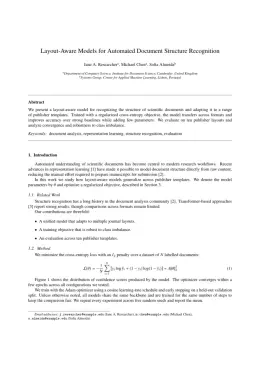
Soil Advances template — frequently asked questions

How do I write a paper in the Soil Advances format?
In DocuGuru you write your manuscript in a normal editor — no LaTeX setup required — and select the Soil Advances template. When you export, DocuGuru compiles the paper into the official Elsevier format and hands you a submission-ready PDF along with the editable LaTeX source.
What reference style does Soil Advances use?
Soil Advances uses Numbered (Elsevier) references, shown as numbered [1], [2] markers in the text. DocuGuru formats every in-text citation and the reference list in this exact style automatically. A reference appears like this: [1] A. Smith, B. Jones, C. Lee, A representative article title, Soil Advances 12 (2023) 45–58.
Do I need to know LaTeX to submit to Soil Advances?
No. DocuGuru generates the elsarticle LaTeX class and compiles the PDF for you in the background, so you get a Elsevier-ready Soil Advances document without writing any LaTeX. If you do want it, the LaTeX source is included in the export.
Can I import an existing draft into the Soil Advances template?
Yes. Paste or upload your current manuscript — Word, LaTeX, Markdown, or plain text — and DocuGuru reflows it into the Soil Advances format with correct headings, figures, tables, and numbered citations.
Who publishes Soil Advances?
Soil Advances is a multidisciplinary journal published by Elsevier. DocuGuru's Soil Advances template matches Elsevier's official submission format.
Can I export a submission-ready Soil Advances PDF?
Yes — DocuGuru produces a PDF built with the official Soil Advances template (the elsarticle class) that is ready to submit to Elsevier, together with the matching LaTeX source files.
How much does the Soil Advances template cost?
You can start writing in the Soil Advances template for free. Exporting the final submission-ready Soil Advances PDF and LaTeX source is part of DocuGuru's paid plans — see the app for current pricing.
Use the Soil Advances template