
2,095 citations
Cite
SaveGo to paper →
Elsevier
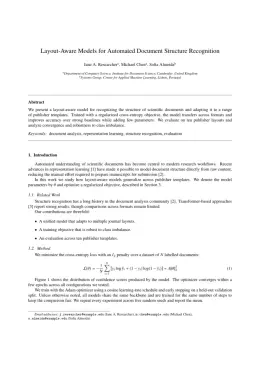
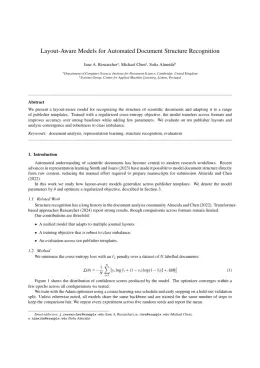
She ji Template
Write in a clean editor, then format for She ji in one click — DocuGuru applies the official Elsevier template with numbered references and exports a submission-ready PDF plus the editable LaTeX source. Free to start.
About the She ji format
She ji is a peer-reviewed journal published by Elsevier, covering Design Education and Practice, Innovative Human-Technology Interaction, Creativity in Education and Neuroscience.
| Publisher | Elsevier |
|---|---|
| Reference style | Numbered (Elsevier) Numbered — [1], [2] in the text [1] A. Smith, B. Jones, C. Lee, A representative article title, She ji 12 (2023) 45–58.
Formats any DOI in She ji style. No sign-up. |
| Publishes research in | Design Education and Practice Innovative Human-Technology Interaction Creativity in Education and Neuroscience Innovative Approaches in Technology and Social Development Information Systems Theories and Implementation |
| ISSN | 2405-8718 |
| Citation impact (2-yr) | 1.06 |
| h-index | 39 |
| i10-index | 134 |
| Total citations | 8,103 |
| Article processing charge | $1,500 |
| Open access | Yes |
| Top institutions publishing here | Delft University of Technology |
| Journal website | www.journals.elsevier.com |
| You get | A submission-ready PDF and the editable LaTeX source — ready to submit. |
Papers published in She ji per year
Citation impact of She ji by publication year
Citations each year’s papers have accumulated so far — the most recent years are still building up.
Most-cited papers in She ji
Designers are entrusted with increasingly complex and impactful challenges. However, the current system of design education does not always prepare students for these challenges. When we examine what and how our system teaches young designers, we discover that the most valuable elements of the designer’s perspective and process are seldom taught. Instead, some designers grow…
477 citations
Cite
SaveGo to paper →
Since at least the mid-1980s, design has been dominated by a human-centered and user-centered paradigm. Currently, the implications of technological and environmental transformations are challenging designers to focus on complex socio-technical systems. This article traces emergent discussions around posthumanism from across a range of disciplines and perspectives, and considers examples from emerging design practices that…
385 citations
Cite
SaveGo to paper →
This paper is a follow up to DesignX, a position paper written in 2014, which introduced the design challenges of complex sociotechnical systems such as healthcare, transportation, governmental policy, and environmental protection. We conclude that the major challenges presented by DesignX problems stem not from trying to understand or address the issues, but rather arise…
275 citations
Cite
SaveGo to paper →
The Quadruple Helix Model of innovation recognizes four major actors in the innovation system: science, policy, industry, and society. In keeping with this model, more and more governments are prioritizing greater public involvement in innovation processes. The goal of this study was to identify desirable and productive forms of interaction between the scientific community and…
186 citations
Cite
SaveGo to paper →
Related journal templates
She ji template — frequently asked questions
How do I write a paper in the She ji format?
In DocuGuru you write your manuscript in a normal editor — no LaTeX setup required — and select the She ji template. When you export, DocuGuru compiles the paper into the official Elsevier format and hands you a submission-ready PDF along with the editable LaTeX source.
What reference style does She ji use?
She ji uses Numbered (Elsevier) references, shown as numbered [1], [2] markers in the text. DocuGuru formats every in-text citation and the reference list in this exact style automatically. A reference appears like this: [1] A. Smith, B. Jones, C. Lee, A representative article title, She ji 12 (2023) 45–58.
Do I need to know LaTeX to submit to She ji?
No. DocuGuru generates the elsarticle LaTeX class and compiles the PDF for you in the background, so you get a Elsevier-ready She ji document without writing any LaTeX. If you do want it, the LaTeX source is included in the export.
Can I import an existing draft into the She ji template?
Yes. Paste or upload your current manuscript — Word, LaTeX, Markdown, or plain text — and DocuGuru reflows it into the She ji format with correct headings, figures, tables, and numbered citations.
Who publishes She ji?
She ji is a multidisciplinary journal published by Elsevier. DocuGuru's She ji template matches Elsevier's official submission format.
Can I export a submission-ready She ji PDF?
Yes — DocuGuru produces a PDF built with the official She ji template (the elsarticle class) that is ready to submit to Elsevier, together with the matching LaTeX source files.
How much does the She ji template cost?
You can start writing in the She ji template for free. Exporting the final submission-ready She ji PDF and LaTeX source is part of DocuGuru's paid plans — see the app for current pricing.