Elsevier

Sensing and Bio-Sensing Research Template

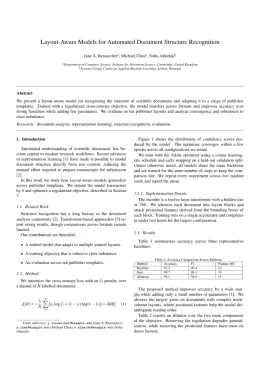
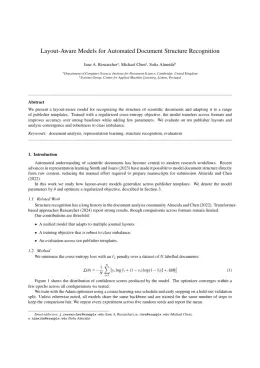
Write in a clean editor, then format for Sensing and Bio-Sensing Research in one click — DocuGuru applies the official Elsevier template with numbered references and exports a submission-ready PDF plus the editable LaTeX source. Free to start.

About the Sensing and Bio-Sensing Research format

Sensing and Bio-Sensing Research is a peer-reviewed journal published by Elsevier, covering Advanced biosensing and bioanalysis techniques, Electrochemical sensors and biosensors, Biosensors and Analytical Detection.

PublisherElsevier
Reference styleNumbered (Elsevier)
Numbered — [1], [2] in the text
[1] A. Smith, B. Jones, C. Lee, A representative article title, Sensing and Bio-Sensing Research 12 (2023) 45–58.

Formats any DOI in Sensing and Bio-Sensing Research style. No sign-up.

Publishes research inAdvanced biosensing and bioanalysis techniques Electrochemical sensors and biosensors Biosensors and Analytical Detection Electrochemical Analysis and Applications Analytical Chemistry and Sensors
ISSN2214-1804
Citation impact (2-yr)3.53
h-index64
i10-index454
Total citations19,899
Article processing charge$800
Open accessYes
Top institutions publishing hereMawlana Bhashani Science and Technology University
Journal websitewww.journals.elsevier.com
You getA submission-ready PDF and the editable LaTeX source — ready to submit.

Papers published in Sensing and Bio-Sensing Research per year

27
2014
72
2015
75
2016
40
2017
38
2018
63
2019
75
2020
73
2021
73
2022
68
2023
111
2024
216
2025

Citation impact of Sensing and Bio-Sensing Research by publication year

532
2014
2K
2015
3.1K
2016
1.6K
2017
1.6K
2018
1.8K
2019
2.7K
2020
2.5K
2021
1.5K
2022
951
2023
739
2024
675
2025

Citations each year’s papers have accumulated so far — the most recent years are still building up.

Most-cited papers in Sensing and Bio-Sensing Research

Various methods of gold nanoparticles (GNPs) conjugation to antibodies

Mir Hadi Jazayeri, Hamed Amani, Ali Akbar Pourfatollah et al. · 1 May 2016

The unique properties of gold nanoparticles, their rich surface chemistry, and low toxicity as well as easy methods of synthesis have promoted conjugation of the particles with numerous biomolecules for site-specific delivery. Gold nanoparticles have multiple applications including photoablation, diagnostic imaging, radiosensitization, vaccine development, antioxidant, and multifunctional drug-delivery vehicles. These applications require an increasingly complex…

Recent advances in wearable sensors for animal health management

Suresh Neethirajan · 19 Nov 2016

Biosensors, as an application for animal health management, are an emerging market that is quickly gaining recognition in the global market. Globally, a number of sensors being produced for animal health management are at various stages of commercialization. Some technologies for producing an accurate health status and disease diagnosis are applicable only for humans, with…

The role of sensors, big data and machine learning in modern animal farming

Suresh Neethirajan · 7 Jul 2020

Ever since man began domesticating animals several thousand years ago, we have always relied on our intuition, collective knowledge, and sensory signals to make effective animal production decisions. So far, this has helped us make significant gains in animal husbandry and farming. Together the growing demand for food and the advancement in sensing technology have…

The strategies of DNA immobilization and hybridization detection mechanism in the construction of electrochemical DNA sensor: A review

Jahwarhar Izuan Abdul Rashid, Nor Azah Yusof · 22 Sep 2017

In recent years, electrochemical deoxyribonucleic acid (DNA) sensor has recently emerged as promising alternative clinical diagnostic devices especially for infectious disease by exploiting DNA recognition events and converting them into an electrochemical signal. This is because the existing DNA diagnostic method possesses certain drawbacks such as time-consuming, expensive, laborious, low selectivity and sensitivity. DNA immobilization…

Refractive index sensor based on all-dielectric gradient metasurface

S. A. Rodionov, M. A. Remnev, В. В. Климов · 1 Feb 2019

A new type of a refractive index sensor based on all-dielectric gradient metasurface was proposed and analyzed with making use of the finite element method (FEM). A new method of optical data processing which is based on intensity distribution over several diffraction orders was suggested. The intensity sensitivity of 4450%/RIU and the phase sensitivity of…

Sensing and Bio-Sensing Research template — frequently asked questions

How do I write a paper in the Sensing and Bio-Sensing Research format?
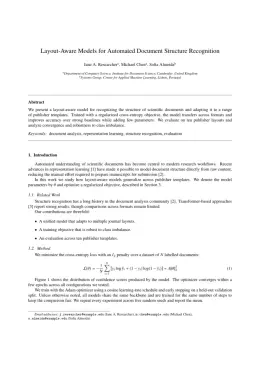
In DocuGuru you write your manuscript in a normal editor — no LaTeX setup required — and select the Sensing and Bio-Sensing Research template. When you export, DocuGuru compiles the paper into the official Elsevier format and hands you a submission-ready PDF along with the editable LaTeX source.
What reference style does Sensing and Bio-Sensing Research use?
Sensing and Bio-Sensing Research uses Numbered (Elsevier) references, shown as numbered [1], [2] markers in the text. DocuGuru formats every in-text citation and the reference list in this exact style automatically. A reference appears like this: [1] A. Smith, B. Jones, C. Lee, A representative article title, Sensing and Bio-Sensing Research 12 (2023) 45–58.
Do I need to know LaTeX to submit to Sensing and Bio-Sensing Research?
No. DocuGuru generates the elsarticle LaTeX class and compiles the PDF for you in the background, so you get a Elsevier-ready Sensing and Bio-Sensing Research document without writing any LaTeX. If you do want it, the LaTeX source is included in the export.
Can I import an existing draft into the Sensing and Bio-Sensing Research template?
Yes. Paste or upload your current manuscript — Word, LaTeX, Markdown, or plain text — and DocuGuru reflows it into the Sensing and Bio-Sensing Research format with correct headings, figures, tables, and numbered citations.
Who publishes Sensing and Bio-Sensing Research?
Sensing and Bio-Sensing Research is a multidisciplinary journal published by Elsevier. DocuGuru's Sensing and Bio-Sensing Research template matches Elsevier's official submission format.
Can I export a submission-ready Sensing and Bio-Sensing Research PDF?
Yes — DocuGuru produces a PDF built with the official Sensing and Bio-Sensing Research template (the elsarticle class) that is ready to submit to Elsevier, together with the matching LaTeX source files.
How much does the Sensing and Bio-Sensing Research template cost?
You can start writing in the Sensing and Bio-Sensing Research template for free. Exporting the final submission-ready Sensing and Bio-Sensing Research PDF and LaTeX source is part of DocuGuru's paid plans — see the app for current pricing.
Use the Sensing and Bio-Sensing Research template