Elsevier

Russian Geology and Geophysics Template

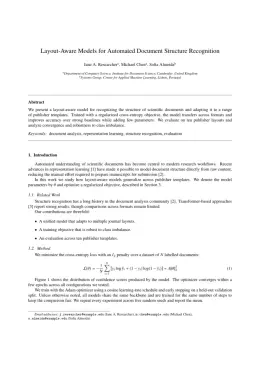
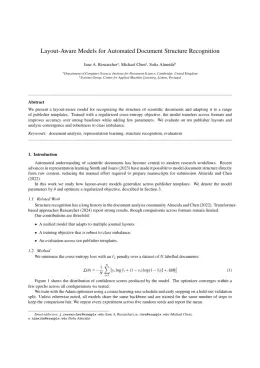
Write in a clean editor, then format for Russian Geology and Geophysics in one click — DocuGuru applies the official Elsevier template with author–year references and exports a submission-ready PDF plus the editable LaTeX source. Free to start.

About the Russian Geology and Geophysics format

Russian Geology and Geophysics is a peer-reviewed journal published by Elsevier, covering Geological and Geochemical Analysis, Geological Studies and Exploration, Geochemistry and Geologic Mapping.

PublisherElsevier
Reference styleAuthor–year (Harvard)
Author–year — (Smith, 2023) in the text
Smith, A., Jones, B. and Lee, C. (2023) 'A representative article title', Russian Geology and Geophysics, 12(3), pp. 45–58.

Formats any DOI in Russian Geology and Geophysics style. No sign-up.

Publishes research inGeological and Geochemical Analysis Geological Studies and Exploration Geochemistry and Geologic Mapping High-pressure geophysics and materials Hydrocarbon exploration and reservoir analysis
ISSN1068-7971
Citation impact (2-yr)0.85
h-index61
i10-index885
Total citations28,497
Top institutions publishing hereV.S. Sobolev Institute of Geology and Mineralogy
Journal websitewww.journals.elsevier.com
You getA submission-ready PDF and the editable LaTeX source — ready to submit.

Papers published in Russian Geology and Geophysics per year

126
2014
137
2015
136
2016
136
2017
129
2018
101
2019
101
2020
102
2021
114
2022
110
2023
102
2024
104
2025

Citation impact of Russian Geology and Geophysics by publication year

2K
2014
2.4K
2015
2K
2016
1.1K
2017
1.3K
2018
649
2019
677
2020
489
2021
477
2022
340
2023
149
2024
47
2025

Citations each year’s papers have accumulated so far — the most recent years are still building up.

Most-cited papers in Russian Geology and Geophysics

Electron probe microanalysis of minerals: Microanalyzer or scanning electron microscope?

Yu. G. Lavrent’ev, Н. С. Карманов, L. V. Usova · 1 Aug 2015

Abstract The results of electron probe microanalysis of several rock-forming minerals by wavelength-dispersive spectrometry (WDS) and energy-dispersive spectrometry (EDS) are compared, and the metrological characteristics of both methods are studied. The measurements were made with the use of a JXA-8100 (JEOL) microanalyzer with five wavelength-dispersive spectrometers and a MIRA 3 LMU (Tescan) scanning electron microscope…

Tectonics and geodynamics of the Central Asian Foldbelt: the role of Late Paleozoic large-amplitude strike-slip faults

M.M. Buslov · 1 Jan 2011

Abstract The following structural elements have been recognized to constitute the tectonic demarcation of Central Asian Foldbelt: (1) The Kazakhstan–Baikal composite continent, its basement formed in Vendian–Cambrian as a result of Paleoasian oceanic crust, along with Precambrian microcontinents and Gondwana-type terranes, subduction beneath the southeastern margin of the Siberian continent (western margin in present-day coordinates).…

Late Cambrian-Ordovician tectonics and geodynamics of Central Asia

Н.Л. Добрецов, M.M. Buslov · 1 Jan 2007

Abstract In the Late Cambrian-Ordovician, Gondwana-derived microcontinents such as Kokchetav, Altai-Mongolian, Tuva-Mongolian, and Barguzin, as well as the Kazakhstan-Tuva-Mongolian island arc or a system of island arcs were involved in intense accretion-collision processes in similar geodynamic settings on a vast territory of Central Asia — from West Kazakhstan to Lake Baikal. The processes were likely…

Jurassic paleogeography of the West Siberian sedimentary basin

А. Э. Конторович, Vladimir Kontorovich, S. V. Ryzhkova et al. · 1 Aug 2013

Abstract Paleogeographic reconstruction of the West Siberian basin during the Jurassic is based on a variety of criteria used to evaluate the depositional environments (paleontological, sedimentological, geochemical, etc.). Extensive geochemical data on the hydrocarbon biomarkers in bitumen from organic matter are first used to constrain the depositional setting of this large region over a span…

Siberian meimechites: origin and relation to flood basalts and kimberlites

А. В. Соболев, S. V. Sobolev, D. V. Kuzmin et al. · 28 Nov 2009

Abstract Here we combine petrological-geochemical and thermomechanical modeling techniques to explain origin of primary magmas of both Maimecha–Kotui meimechites and the Gudchikhinskaya basalts of Norilsk region, which represent, respectively, the end and the beginning of flood magmatism in the Siberian Trap Province. We have analyzed the least altered samples of meimechites, their olivine phenocrysts, and…

Russian Geology and Geophysics template — frequently asked questions

How do I write a paper in the Russian Geology and Geophysics format?
In DocuGuru you write your manuscript in a normal editor — no LaTeX setup required — and select the Russian Geology and Geophysics template. When you export, DocuGuru compiles the paper into the official Elsevier format and hands you a submission-ready PDF along with the editable LaTeX source.
What reference style does Russian Geology and Geophysics use?
Russian Geology and Geophysics uses Author–year (Harvard) references, shown as author–year markers such as (Smith, 2023) in the text. DocuGuru formats every in-text citation and the reference list in this exact style automatically. A reference appears like this: Smith, A., Jones, B. and Lee, C. (2023) 'A representative article title', Russian Geology and Geophysics, 12(3), pp. 45–58.
Do I need to know LaTeX to submit to Russian Geology and Geophysics?
No. DocuGuru generates the elsarticle LaTeX class and compiles the PDF for you in the background, so you get a Elsevier-ready Russian Geology and Geophysics document without writing any LaTeX. If you do want it, the LaTeX source is included in the export.
Can I import an existing draft into the Russian Geology and Geophysics template?
Yes. Paste or upload your current manuscript — Word, LaTeX, Markdown, or plain text — and DocuGuru reflows it into the Russian Geology and Geophysics format with correct headings, figures, tables, and author–year citations.
Who publishes Russian Geology and Geophysics?
Russian Geology and Geophysics is a multidisciplinary journal published by Elsevier. DocuGuru's Russian Geology and Geophysics template matches Elsevier's official submission format.
Can I export a submission-ready Russian Geology and Geophysics PDF?
Yes — DocuGuru produces a PDF built with the official Russian Geology and Geophysics template (the elsarticle class) that is ready to submit to Elsevier, together with the matching LaTeX source files.
How much does the Russian Geology and Geophysics template cost?
You can start writing in the Russian Geology and Geophysics template for free. Exporting the final submission-ready Russian Geology and Geophysics PDF and LaTeX source is part of DocuGuru's paid plans — see the app for current pricing.

Use the Russian Geology and Geophysics template