Elsevier

Resuscitation Plus Template

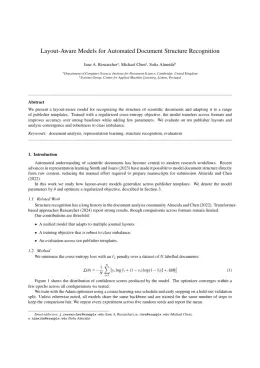
Write in a clean editor, then format for Resuscitation Plus in one click — DocuGuru applies the official Elsevier template with numbered references and exports a submission-ready PDF plus the editable LaTeX source. Free to start.

About the Resuscitation Plus format

Resuscitation Plus is a peer-reviewed journal published by Elsevier, covering Cardiac Arrest and Resuscitation, Simulation-Based Education in Healthcare, Mechanical Circulatory Support Devices.

PublisherElsevier
Reference styleNumbered (Elsevier)
Numbered — [1], [2] in the text
[1] A. Smith, B. Jones, C. Lee, A representative article title, Resuscitation Plus 12 (2023) 45–58.

Formats any DOI in Resuscitation Plus style. No sign-up.

Publishes research inCardiac Arrest and Resuscitation Simulation-Based Education in Healthcare Mechanical Circulatory Support Devices Sepsis Diagnosis and Treatment Family and Patient Care in Intensive Care Units
ISSN2666-5204
Citation impact (2-yr)2.4
h-index31
i10-index263
Total citations7,942
Article processing charge$2,100
Open accessYes
Top institutions publishing hereMonash University
Journal websitewww.journals.elsevier.com
You getA submission-ready PDF and the editable LaTeX source — ready to submit.

Papers published in Resuscitation Plus per year

1
1922
1
1975
1
1990
1
2004
1
2009
3
2011
62
2020
121
2021
144
2022
194
2023
310
2024
351
2025

Citation impact of Resuscitation Plus by publication year

142
1922
0
1975
105
1990
0
2004
0
2009
3
2011
1.1K
2020
1.4K
2021
1.4K
2022
1.6K
2023
1.4K
2024
513
2025

Citations each year’s papers have accumulated so far — the most recent years are still building up.

Most-cited papers in Resuscitation Plus

Out-of-Hospital Cardiac Arrest in London during the COVID-19 pandemic

Rachael Fothergill, Adam Smith, F. R. H. Wrigley et al. · 21 Dec 2020

AIM: There is an emerging potential link between the COVID-19 pandemic and incidence and outcomes from out-of-hospital cardiac arrest (OHCA). We aimed to describe the incidence, characteristics and outcomes from OHCA in London, UK during the first wave of the pandemic. METHODS: We examined data for all OHCA patients attended by the London Ambulance Service…

Current summary of the evidence in drone-based emergency medical services care

Nathan B. Roberts, Emily Ager, Thomas Leith et al. · 6 Jan 2023

Interventions for many medical emergencies including cardiac arrests, strokes, drug overdoses, seizures, and trauma, are critically time-dependent, with faster intervention leading to improved patient outcomes. Consequently, a major focus of emergency medical services (EMS) systems and prehospital medicine has been improving the time until medical intervention in these time-sensitive emergencies, often by reducing the time…

Bystanders are less willing to resuscitate out-of-hospital cardiac arrest victims during the COVID-19 pandemic

Brian Grunau, Joban Bal, Frank Scheuermeyer et al. · 5 Oct 2020

The COVID-19 pandemic may influence the willingness of bystanders to engage in resuscitation for out-of-hospital cardiac arrest. We sought to determine if and how the pandemic has changed willingness to intervene, and the impact of personal protective equipment (PPE). We distributed a 12-item survey to the general public through social media channels from June 4…

Willingness to perform bystander cardiopulmonary resuscitation: A scoping review

Tasuku Matsuyama, Andrea Scapigliati, Tommaso Pellis et al. · 25 Nov 2020

BACKGROUND: Despite the proven effectiveness of rapid initiation of cardiopulmonary resuscitation (CPR) for patients with out-of-hospital cardiac arrest (OHCA) by bystanders, fewer than half of the victims actually receive bystander CPR. We aimed to review the evidence of the barriers and facilitators for bystanders to perform CPR. METHODS: This scoping review was conducted as part…

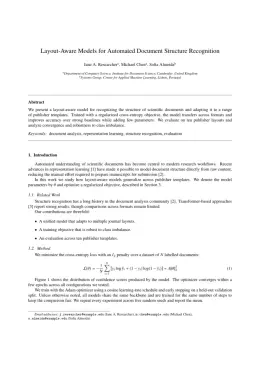
Resuscitation Plus template — frequently asked questions

How do I write a paper in the Resuscitation Plus format?
In DocuGuru you write your manuscript in a normal editor — no LaTeX setup required — and select the Resuscitation Plus template. When you export, DocuGuru compiles the paper into the official Elsevier format and hands you a submission-ready PDF along with the editable LaTeX source.
What reference style does Resuscitation Plus use?
Resuscitation Plus uses Numbered (Elsevier) references, shown as numbered [1], [2] markers in the text. DocuGuru formats every in-text citation and the reference list in this exact style automatically. A reference appears like this: [1] A. Smith, B. Jones, C. Lee, A representative article title, Resuscitation Plus 12 (2023) 45–58.
Do I need to know LaTeX to submit to Resuscitation Plus?
No. DocuGuru generates the elsarticle LaTeX class and compiles the PDF for you in the background, so you get a Elsevier-ready Resuscitation Plus document without writing any LaTeX. If you do want it, the LaTeX source is included in the export.
Can I import an existing draft into the Resuscitation Plus template?
Yes. Paste or upload your current manuscript — Word, LaTeX, Markdown, or plain text — and DocuGuru reflows it into the Resuscitation Plus format with correct headings, figures, tables, and numbered citations.
Who publishes Resuscitation Plus?
Resuscitation Plus is a multidisciplinary journal published by Elsevier. DocuGuru's Resuscitation Plus template matches Elsevier's official submission format.
Can I export a submission-ready Resuscitation Plus PDF?
Yes — DocuGuru produces a PDF built with the official Resuscitation Plus template (the elsarticle class) that is ready to submit to Elsevier, together with the matching LaTeX source files.
How much does the Resuscitation Plus template cost?
You can start writing in the Resuscitation Plus template for free. Exporting the final submission-ready Resuscitation Plus PDF and LaTeX source is part of DocuGuru's paid plans — see the app for current pricing.
Use the Resuscitation Plus template