Elsevier

Results in Surfaces and Interfaces Template

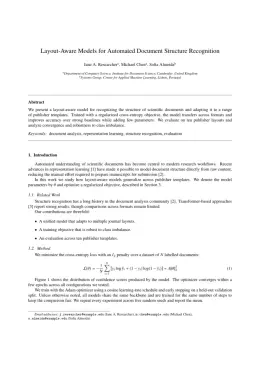
Write in a clean editor, then format for Results in Surfaces and Interfaces in one click — DocuGuru applies the official Elsevier template with numbered references and exports a submission-ready PDF plus the editable LaTeX source. Free to start.

About the Results in Surfaces and Interfaces format

Results in Surfaces and Interfaces is a peer-reviewed journal published by Elsevier, covering Corrosion Behavior and Inhibition, Metal and Thin Film Mechanics, High-Temperature Coating Behaviors.

PublisherElsevier
Reference styleNumbered (Elsevier)
Numbered — [1], [2] in the text
[1] A. Smith, B. Jones, C. Lee, A representative article title, Results in Surfaces and Interfaces 12 (2023) 45–58.

Formats any DOI in Results in Surfaces and Interfaces style. No sign-up.

Publishes research inCorrosion Behavior and Inhibition Metal and Thin Film Mechanics High-Temperature Coating Behaviors Adsorption and biosorption for pollutant removal Advanced Photocatalysis Techniques
ISSN2666-8459
Citation impact (2-yr)5.51
h-index30
i10-index176
Total citations6,171
Article processing charge$1,000
Open accessYes
Top institutions publishing hereSaveetha University
Journal websitewww.journals.elsevier.com
You getA submission-ready PDF and the editable LaTeX source — ready to submit.

Papers published in Results in Surfaces and Interfaces per year

1
2020
22
2021
34
2022
84
2023
226
2024
295
2025

Citation impact of Results in Surfaces and Interfaces by publication year

8
2020
440
2021
442
2022
1.4K
2023
2.4K
2024
1.2K
2025

Citations each year’s papers have accumulated so far — the most recent years are still building up.

Most-cited papers in Results in Surfaces and Interfaces

ADVANCED OXIDATION PROCESS: A remediation technique for organic and non-biodegradable pollutant

Preeti Kumari, Aditya Kumar · 1 May 2023

Pollutants are big threat for the environment. Their imperil nature have disturbed the balance in the ecosystem and have also endangered the existence of the life on the earth. Advanced oxidation process is one of the emerging approach for the treatment of recalcitrant pollutants in nature. The process mainly involves the generation of a strong…

Carbon capture, utilization, and storage (CCUS) technologies: Evaluating the effectiveness of advanced CCUS solutions for reducing CO2 emissions

Enobong Hanson, Chukwuebuka Nwakile, Victor Oluwafolajimi Hammed · 15 Dec 2024

This review provides a comprehensive examination of Carbon Capture, Utilization, and Storage (CCUS) technologies, focusing on their advancements, challenges, and future prospects. It begins with an overview of carbon capture methods, including pre-combustion, post-combustion, and oxy-fuel combustion techniques, highlighting recent technological improvements and associated challenges. The review then explores various carbon utilization strategies, such as…

Advances in nanoparticles in targeted drug delivery–A review

Safiul Islam, Md Mir Shakib Ahmed, Mohammad Aminul Islam et al. · 19 Apr 2025

Nanoparticles have transformed contemporary medicine by improving bioavailability, targeting, and drug release mechanisms. Traditional drug delivery methods typically exhibit minimal therapeutic efficacy due to rapid elimination, inadequate solubility, and systemic toxicity. The distinctive physicochemical characteristics of nanoparticles provide targeted drug distribution to specific areas, reducing harmful consequences. The several kinds of nanoparticles extensively researched for…

A review on corrosion inhibitors: Types, mechanisms, electrochemical analysis, corrosion rate and efficiency of corrosion inhibitors on mild steel in an acidic environment

Shwetha KM, B. M. Praveen, Bharath K. Devendra · 20 Jul 2024

Corrosion is serious problem in many industries, and, unfortunately, metal structures in particular are susceptible to the damage it can cause. For this reason, it's important to take the necessary steps to protect against corrosion. Organic chemical compounds, which are significant and naturally occurring molecules, have been shown to be very effective corrosion inhibitors. According…

Recent developments on graphene oxide and its composite materials: From fundamentals to applications in biodiesel synthesis, adsorption, photocatalysis, supercapacitors, sensors and antimicrobial activity

Nituraj Mushahary, Angita Sarkar, Fungbili Basumatary et al. · 1 May 2024

Graphene oxide (GO), a 2-dimensional (2-D) monolayer of graphite, has drawn a lot of importance due to its accessibility and material compatibility. It can be produced by mechanically stirring or sonicating graphite oxide to exfoliate it into layered sheets. Due to high stability, 2-D planar structure, huge surface area, easy chemical adaptation via its functionalities,…

Results in Surfaces and Interfaces template — frequently asked questions

How do I write a paper in the Results in Surfaces and Interfaces format?
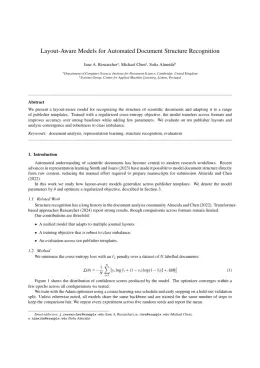
In DocuGuru you write your manuscript in a normal editor — no LaTeX setup required — and select the Results in Surfaces and Interfaces template. When you export, DocuGuru compiles the paper into the official Elsevier format and hands you a submission-ready PDF along with the editable LaTeX source.
What reference style does Results in Surfaces and Interfaces use?
Results in Surfaces and Interfaces uses Numbered (Elsevier) references, shown as numbered [1], [2] markers in the text. DocuGuru formats every in-text citation and the reference list in this exact style automatically. A reference appears like this: [1] A. Smith, B. Jones, C. Lee, A representative article title, Results in Surfaces and Interfaces 12 (2023) 45–58.
Do I need to know LaTeX to submit to Results in Surfaces and Interfaces?
No. DocuGuru generates the elsarticle LaTeX class and compiles the PDF for you in the background, so you get a Elsevier-ready Results in Surfaces and Interfaces document without writing any LaTeX. If you do want it, the LaTeX source is included in the export.
Can I import an existing draft into the Results in Surfaces and Interfaces template?
Yes. Paste or upload your current manuscript — Word, LaTeX, Markdown, or plain text — and DocuGuru reflows it into the Results in Surfaces and Interfaces format with correct headings, figures, tables, and numbered citations.
Who publishes Results in Surfaces and Interfaces?
Results in Surfaces and Interfaces is a multidisciplinary journal published by Elsevier. DocuGuru's Results in Surfaces and Interfaces template matches Elsevier's official submission format.
Can I export a submission-ready Results in Surfaces and Interfaces PDF?
Yes — DocuGuru produces a PDF built with the official Results in Surfaces and Interfaces template (the elsarticle class) that is ready to submit to Elsevier, together with the matching LaTeX source files.
How much does the Results in Surfaces and Interfaces template cost?
You can start writing in the Results in Surfaces and Interfaces template for free. Exporting the final submission-ready Results in Surfaces and Interfaces PDF and LaTeX source is part of DocuGuru's paid plans — see the app for current pricing.
Use the Results in Surfaces and Interfaces template