Elsevier

Results in Geophysical Sciences Template

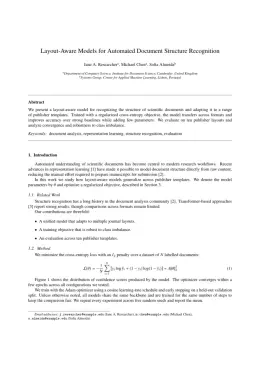
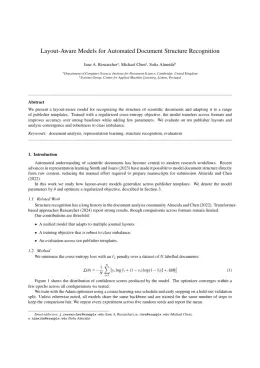
Write in a clean editor, then format for Results in Geophysical Sciences in one click — DocuGuru applies the official Elsevier template with numbered references and exports a submission-ready PDF plus the editable LaTeX source. Free to start.

About the Results in Geophysical Sciences format

Results in Geophysical Sciences is a peer-reviewed journal published by Elsevier, covering Geophysical and Geoelectrical Methods, Seismic Waves and Analysis, Geophysical Methods and Applications.

PublisherElsevier
Reference styleNumbered (Elsevier)
Numbered — [1], [2] in the text
[1] A. Smith, B. Jones, C. Lee, A representative article title, Results in Geophysical Sciences 12 (2023) 45–58.

Formats any DOI in Results in Geophysical Sciences style. No sign-up.

Publishes research inGeophysical and Geoelectrical Methods Seismic Waves and Analysis Geophysical Methods and Applications Seismic Imaging and Inversion Techniques earthquake and tectonic studies
ISSN2666-8289
Citation impact (2-yr)4
h-index15
i10-index24
Total citations737
Article processing charge$1,000
Open accessYes
Top institutions publishing hereFederal University of Technology
Journal websitewww.journals.elsevier.com
You getA submission-ready PDF and the editable LaTeX source — ready to submit.

Papers published in Results in Geophysical Sciences per year

8
2020
25
2021
12
2022
15
2023
1
2024

Citation impact of Results in Geophysical Sciences by publication year

130
2020
229
2021
133
2022
230
2023
4
2024

Citations each year’s papers have accumulated so far — the most recent years are still building up.

Most-cited papers in Results in Geophysical Sciences

Inversion of seismic data to modeling the Interval Velocity in an Oilfield of SW Iran

Pooria Kianoush, Ghodratollah Mohammadi, Seyed Aliakbar Hosseini et al. · 20 Feb 2023

Seismic velocity is considered the best attribute related to formation pressure changes. Integrating seismic attributes and well-logging data through seismic inversion predicts the reservoir characteristics across the field with the highest accuracy. This study especially presents seismic velocity for the whole south Azadegan Field in SW Iran for carbonate formations. The considered dataset includes 3D…

Prediction of uniaxial compressive strength and modulus of elasticity for Travertine samples using an explainable artificial intelligence

Hamid Nasiri, Arman Homafar, Saeed Chehreh Chelgani · 1 Dec 2021

The durability of rocks is a substantial rock property that has to be considered for designing geotechnical structures. Uniaxial compressive strength (UCS) and Young's modulus (E) are key indexes for measuring rocks’ durability. Several types of artificial intelligence (AI) methods have been used for modeling these key indexes; however, surprisingly, no explainable AI (XAI) has…

Boundaries Determination in Potential Field Anomaly Utilizing Analytical Signal Filtering and its Vertical Derivative in Qeshm Island SE Iran

Seyed Aliakbar Hosseini, Nasser Keshavarz Faraj Khah, Pooria Kianoush et al. · 28 Mar 2023

The analytical signal method and its derivatives can be explicitly calculated and assessed for analyzing and estimating the boundary of geological structures, such as faults or dikes, from potential field anomalies. Gravity field of the east of Qeshm Island and its north coast from Sarkhun to Latidan in SE Iran has been measured in one-kilometer…

Tilt angle filter effect on noise cancelation and structural edges detection in hydrocarbon sources in a gravitational potential field

Seyed Aliakbar Hosseini, Nasser Keshavarz Faraj Khah, Pooria Kianoush et al. · 29 May 2023

Noise cancelation is the process done to remove out-of-range anomalies and make better edge boundaries interpretation. One of the most challenging issues in describing gravitational maps is separating the anomalies related to shallow sources from the deep ones. Furthermore, Existing noise can make it arduous to separate shallow blurred boundaries. In this study in SE…

The relation between temperature and silica benthic exchange rates and implications for near-seabed formation of diagenetic opal

Shahab Varkouhi, Jonathan Wells · 31 Aug 2020

This study calculated the dissolution rates of biogenic silica deposited on the seafloor and the silicic acid benthic flux for 22 Ocean Drilling Program sites. Simple models developed for two host sediment types—siliciclastic and carbonate—were used to explain the variability of biogenic silica dissolution and recycling under present-day low (−0.3 to 2.14 °C) bottom-water temperatures.…

Results in Geophysical Sciences template — frequently asked questions

How do I write a paper in the Results in Geophysical Sciences format?
In DocuGuru you write your manuscript in a normal editor — no LaTeX setup required — and select the Results in Geophysical Sciences template. When you export, DocuGuru compiles the paper into the official Elsevier format and hands you a submission-ready PDF along with the editable LaTeX source.
What reference style does Results in Geophysical Sciences use?
Results in Geophysical Sciences uses Numbered (Elsevier) references, shown as numbered [1], [2] markers in the text. DocuGuru formats every in-text citation and the reference list in this exact style automatically. A reference appears like this: [1] A. Smith, B. Jones, C. Lee, A representative article title, Results in Geophysical Sciences 12 (2023) 45–58.
Do I need to know LaTeX to submit to Results in Geophysical Sciences?
No. DocuGuru generates the elsarticle LaTeX class and compiles the PDF for you in the background, so you get a Elsevier-ready Results in Geophysical Sciences document without writing any LaTeX. If you do want it, the LaTeX source is included in the export.
Can I import an existing draft into the Results in Geophysical Sciences template?
Yes. Paste or upload your current manuscript — Word, LaTeX, Markdown, or plain text — and DocuGuru reflows it into the Results in Geophysical Sciences format with correct headings, figures, tables, and numbered citations.
Who publishes Results in Geophysical Sciences?
Results in Geophysical Sciences is a multidisciplinary journal published by Elsevier. DocuGuru's Results in Geophysical Sciences template matches Elsevier's official submission format.
Can I export a submission-ready Results in Geophysical Sciences PDF?
Yes — DocuGuru produces a PDF built with the official Results in Geophysical Sciences template (the elsarticle class) that is ready to submit to Elsevier, together with the matching LaTeX source files.
How much does the Results in Geophysical Sciences template cost?
You can start writing in the Results in Geophysical Sciences template for free. Exporting the final submission-ready Results in Geophysical Sciences PDF and LaTeX source is part of DocuGuru's paid plans — see the app for current pricing.

Use the Results in Geophysical Sciences template