Elsevier

Resources Conservation & Recycling Advances Template

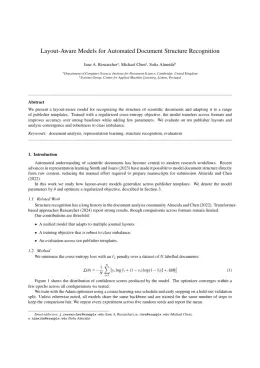
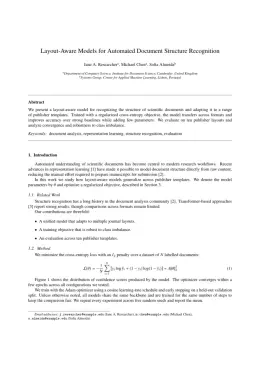
Write in a clean editor, then format for Resources Conservation & Recycling Advances in one click — DocuGuru applies the official Elsevier template with numbered references and exports a submission-ready PDF plus the editable LaTeX source. Free to start.

About the Resources Conservation & Recycling Advances format

Resources Conservation & Recycling Advances is a peer-reviewed journal published by Elsevier, covering Sustainable Supply Chain Management, Recycling and Waste Management Techniques, Municipal Solid Waste Management.

PublisherElsevier
Reference styleNumbered (Elsevier)
Numbered — [1], [2] in the text
[1] A. Smith, B. Jones, C. Lee, A representative article title, Resources Conservation & Recycling Advances 12 (2023) 45–58.

Formats any DOI in Resources Conservation & Recycling Advances style. No sign-up.

Publishes research inSustainable Supply Chain Management Recycling and Waste Management Techniques Municipal Solid Waste Management Environmental Impact and Sustainability Environmental Sustainability in Business
ISSN2667-3789
Citation impact (2-yr)4.65
h-index36
i10-index120
Total citations4,553
Article processing charge$1,750
Open accessYes
Top institutions publishing hereKhalifa University of Science and Technology
Journal websitewww.journals.elsevier.com
You getA submission-ready PDF and the editable LaTeX source — ready to submit.

Papers published in Resources Conservation & Recycling Advances per year

11
2021
62
2022
71
2023
41
2024
67
2025

Citation impact of Resources Conservation & Recycling Advances by publication year

293
2021
1.9K
2022
1.5K
2023
553
2024
164
2025

Citations each year’s papers have accumulated so far — the most recent years are still building up.

Most-cited papers in Resources Conservation & Recycling Advances

Toward a sustainable environment: Nexus between economic growth, renewable energy use, forested area, and carbon emissions in Malaysia

Asif Raihan, Almagul Tuspekova · 14 Jun 2022

Global climate change caused by greenhouse gasses (GHGs), particularly carbon dioxide (CO2) emissions, poses incomparable threats to the environment, development, and sustainability. This research investigates the potential of economic growth, renewable energy use, and forested area toward achieving environmental sustainability in Malaysia by reducing CO2 emissions. Time series data from 1990 to 2019 were utilized…

Digitalization for a circular economy in the building industry: Multiple-case study of Dutch social housing organizations

Sultan Çetin, Vincent Gruis, Ad Straub · 13 Aug 2022

Digital technologies are considered enablers of circular economy implementation in the built environment. Literature mainly focuses on conceptual or review studies examining the role of digital tools (e.g., material passport and building information modelling) to close the material loops. There is a lack of understanding of how digital technologies are implemented in real-life and whether…

Biochar from agricultural crop residues: Environmental, production, and life cycle assessment overview

Maga Ram Patel, N. L. Panwar · 17 Jul 2023

In circular economies, it is imperative to implement effective environmental management solutions to address resource depletion. Over the past few years, there has been a growing recognition of the potential of agricultural crop waste in mitigating greenhouse gas (GHG) emissions and promoting global carbon neutrality. Despite lacking practical management options, open-field burning of crop residue…

The anatomy of a passport for the circular economy: a conceptual definition, vision and structured literature review

Guido van Capelleveen, Dennis Vegter, Matthias Olthaar et al. · 9 Feb 2023

In recent literature, various variants of passports are suggested enhancing the traceability of products and their components to accelerate the integration of the circular economy philosophy into supply chain management. While there has been an increasing research interest in the development of such passports, there is, to the best of our knowledge, no well-formed, common…

Resources Conservation & Recycling Advances template — frequently asked questions

How do I write a paper in the Resources Conservation & Recycling Advances format?
In DocuGuru you write your manuscript in a normal editor — no LaTeX setup required — and select the Resources Conservation & Recycling Advances template. When you export, DocuGuru compiles the paper into the official Elsevier format and hands you a submission-ready PDF along with the editable LaTeX source.
What reference style does Resources Conservation & Recycling Advances use?
Resources Conservation & Recycling Advances uses Numbered (Elsevier) references, shown as numbered [1], [2] markers in the text. DocuGuru formats every in-text citation and the reference list in this exact style automatically. A reference appears like this: [1] A. Smith, B. Jones, C. Lee, A representative article title, Resources Conservation & Recycling Advances 12 (2023) 45–58.
Do I need to know LaTeX to submit to Resources Conservation & Recycling Advances?
No. DocuGuru generates the elsarticle LaTeX class and compiles the PDF for you in the background, so you get a Elsevier-ready Resources Conservation & Recycling Advances document without writing any LaTeX. If you do want it, the LaTeX source is included in the export.
Can I import an existing draft into the Resources Conservation & Recycling Advances template?
Yes. Paste or upload your current manuscript — Word, LaTeX, Markdown, or plain text — and DocuGuru reflows it into the Resources Conservation & Recycling Advances format with correct headings, figures, tables, and numbered citations.
Who publishes Resources Conservation & Recycling Advances?
Resources Conservation & Recycling Advances is a multidisciplinary journal published by Elsevier. DocuGuru's Resources Conservation & Recycling Advances template matches Elsevier's official submission format.
Can I export a submission-ready Resources Conservation & Recycling Advances PDF?
Yes — DocuGuru produces a PDF built with the official Resources Conservation & Recycling Advances template (the elsarticle class) that is ready to submit to Elsevier, together with the matching LaTeX source files.
How much does the Resources Conservation & Recycling Advances template cost?
You can start writing in the Resources Conservation & Recycling Advances template for free. Exporting the final submission-ready Resources Conservation & Recycling Advances PDF and LaTeX source is part of DocuGuru's paid plans — see the app for current pricing.

Use the Resources Conservation & Recycling Advances template