Elsevier

Quaternary Environments and Humans Template

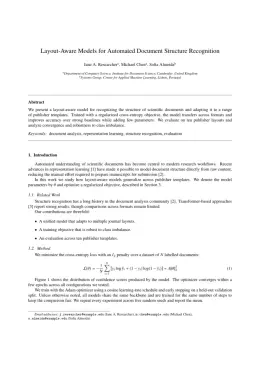
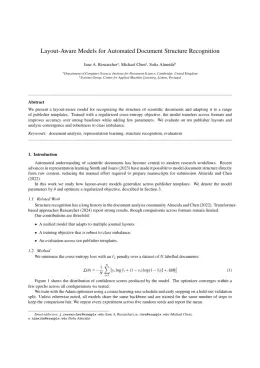
Write in a clean editor, then format for Quaternary Environments and Humans in one click — DocuGuru applies the official Elsevier template with numbered references and exports a submission-ready PDF plus the editable LaTeX source. Free to start.

About the Quaternary Environments and Humans format

Quaternary Environments and Humans is a peer-reviewed journal published by Elsevier, covering Pleistocene-Era Hominins and Archaeology, Archaeology and ancient environmental studies, Geology and Paleoclimatology Research.

PublisherElsevier
Reference styleNumbered (Elsevier)
Numbered — [1], [2] in the text
[1] A. Smith, B. Jones, C. Lee, A representative article title, Quaternary Environments and Humans 12 (2023) 45–58.

Formats any DOI in Quaternary Environments and Humans style. No sign-up.

Publishes research inPleistocene-Era Hominins and Archaeology Archaeology and ancient environmental studies Geology and Paleoclimatology Research Forensic Anthropology and Bioarchaeology Studies Evolution and Paleontology Studies
ISSN2950-2365
Citation impact (2-yr)2.22
h-index7
i10-index3
Total citations234
Open accessYes
Top institutions publishing hereMax Planck Institute for the Science of Human History
You getA submission-ready PDF and the editable LaTeX source — ready to submit.

Papers published in Quaternary Environments and Humans per year

1
2023
47
2024
41
2025

Citation impact of Quaternary Environments and Humans by publication year

3
2023
158
2024
57
2025

Citations each year’s papers have accumulated so far — the most recent years are still building up.

Most-cited papers in Quaternary Environments and Humans

A Data‐Driven Paradigm Shift for the Middle‐to‐Upper Palaeolithic Transition and the Neandertal Debate

Joào Zilhão, Francesco d’Errico, William E. Banks et al. · 6 Nov 2024

Based on morphologically undiagnostic human remains from the southern Balkans and central Europe, it has been argued that the Bachokirian and Ranisian industries stand for modern humans, have roots in the IUP (Initial Upper Palaeolithic) of the Near East, and emerge ~45,000 years ago. Coevally, Siberia and Central Asia would also have been reached by…

Human membership in the large carnivore guild: Was it always “tooth and claw”?

John D. Speth · 24 Jan 2024

Conventional wisdom holds that when humans began acquiring meat on a regular basis, whether by hunting or by scavenging, they became part of the large carnivore guild and, as a consequence, faced greatly increased levels of potentially life-threatening competition with other predators. This paper offers an alternative view based on fundamental nutritional and metabolic differences…

Mid- to northern latitude hunting economies: Unpredictable returns, nutritional constraints, "meat" caching, and archaeological conundrums

John D. Speth · 1 Mar 2025

Mid- to northern latitude hunting peoples could not consume more than ~300 g of protein per day (~1,200 kcal). Exceeding that limit could lead within a week or two to a debilitating, even lethal condition known as "rabbit starvation." The remaining energy deficit had to be filled using non-protein sources, mostly animal fat. To minimize…

An open letter to evolutionary and human sciences; Statistics has moved on and so should we. A proposal for more transparent research, and some notes on p < 0.003

Lloyd A. Courtenay · 14 Nov 2024

Statistical reasoning and inference have become integral to how we reach conclusions as scientists. Few papers in evolutionary, biological, and human sciences, are published at present without at least one report of a p -value, or the term “statistically significant”. As a product of this, discoveries and results often hinge on p -values below the…

The geoarchaeology, chronology and environment of Lusakert-1, a Late Middle Palaeolithic rockshelter (Kotayk Province, Armenia)

Keith Wilkinson, Ethel Allué, Simon J. Armitage et al. · 26 Dec 2024

Lusakert-1 (LKT-1) is a key site in any discussion of the Palaeolithic of the Armenian Highlands. This is in large part because of a long-running campaign of excavation in the 1970–1980s which recovered an obsidian artefact assemblage that was then interpreted as spanning the Lower–Upper Palaeolithic. Our reinvestigation in 2008–2012 revealed evidence of occupation in…

Quaternary Environments and Humans template — frequently asked questions

How do I write a paper in the Quaternary Environments and Humans format?
In DocuGuru you write your manuscript in a normal editor — no LaTeX setup required — and select the Quaternary Environments and Humans template. When you export, DocuGuru compiles the paper into the official Elsevier format and hands you a submission-ready PDF along with the editable LaTeX source.
What reference style does Quaternary Environments and Humans use?
Quaternary Environments and Humans uses Numbered (Elsevier) references, shown as numbered [1], [2] markers in the text. DocuGuru formats every in-text citation and the reference list in this exact style automatically. A reference appears like this: [1] A. Smith, B. Jones, C. Lee, A representative article title, Quaternary Environments and Humans 12 (2023) 45–58.
Do I need to know LaTeX to submit to Quaternary Environments and Humans?
No. DocuGuru generates the elsarticle LaTeX class and compiles the PDF for you in the background, so you get a Elsevier-ready Quaternary Environments and Humans document without writing any LaTeX. If you do want it, the LaTeX source is included in the export.
Can I import an existing draft into the Quaternary Environments and Humans template?
Yes. Paste or upload your current manuscript — Word, LaTeX, Markdown, or plain text — and DocuGuru reflows it into the Quaternary Environments and Humans format with correct headings, figures, tables, and numbered citations.
Who publishes Quaternary Environments and Humans?
Quaternary Environments and Humans is a multidisciplinary journal published by Elsevier. DocuGuru's Quaternary Environments and Humans template matches Elsevier's official submission format.
Can I export a submission-ready Quaternary Environments and Humans PDF?
Yes — DocuGuru produces a PDF built with the official Quaternary Environments and Humans template (the elsarticle class) that is ready to submit to Elsevier, together with the matching LaTeX source files.
How much does the Quaternary Environments and Humans template cost?
You can start writing in the Quaternary Environments and Humans template for free. Exporting the final submission-ready Quaternary Environments and Humans PDF and LaTeX source is part of DocuGuru's paid plans — see the app for current pricing.

Use the Quaternary Environments and Humans template