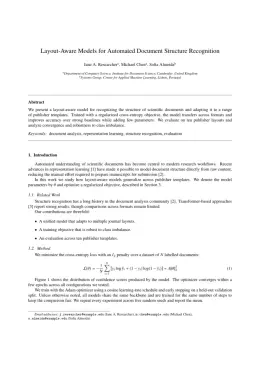
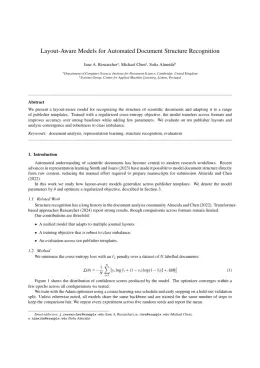
Elsevier

Psychiatry Research Communications Template

Write in a clean editor, then format for Psychiatry Research Communications in one click — DocuGuru applies the official Elsevier template with numbered references and exports a submission-ready PDF plus the editable LaTeX source. Free to start.

About the Psychiatry Research Communications format

Psychiatry Research Communications is a peer-reviewed journal published by Elsevier, covering Schizophrenia research and treatment, Mental Health Treatment and Access, Child and Adolescent Psychosocial and Emotional Development.

PublisherElsevier
Reference styleNumbered (Elsevier)
Numbered — [1], [2] in the text
[1] A. Smith, B. Jones, C. Lee, A representative article title, Psychiatry Research Communications 12 (2023) 45–58.

Formats any DOI in Psychiatry Research Communications style. No sign-up.

Publishes research inSchizophrenia research and treatment Mental Health Treatment and Access Child and Adolescent Psychosocial and Emotional Development COVID-19 and Mental Health Anxiety, Depression, Psychometrics, Treatment, Cognitive Processes
ISSN2772-5987
Citation impact (2-yr)1.75
h-index17
i10-index39
Total citations1,273
Article processing charge$2,000
Open accessYes
Top institutions publishing hereHarvard University
Journal websitewww.journals.elsevier.com
You getA submission-ready PDF and the editable LaTeX source — ready to submit.

Papers published in Psychiatry Research Communications per year

1
2011
18
2021
79
2022
54
2023
46
2024
41
2025

Citation impact of Psychiatry Research Communications by publication year

1
2011
246
2021
551
2022
259
2023
110
2024
69
2025

Citations each year’s papers have accumulated so far — the most recent years are still building up.

Most-cited papers in Psychiatry Research Communications

Depression, anxiety and suicidal behaviour among college students: Comparisons pre-COVID-19 and during the pandemic

Margaret McLafferty, Natasha Brown, Rachel Mc Hugh et al. · 6 Nov 2021

BACKGROUND: Many students struggle with psychological problems during their college years. These problems may be even more apparent during the COVID-19 pandemic with the accompanying restrictions and transition to an online learning environment, but few longitudinal studies have been conducted to date. The aim of this study was to compare symptoms of depression, anxiety and…

The association between depression symptoms and reduced executive functioning is primarily linked by fatigue

Brage Kraft, Ragnhild Bø, Rune Jonassen et al. · 15 Mar 2023

Depression is associated with reduced executive functioning. Still, we lack a more detailed understanding of the factors explaining this association. Addressing several limitations in the previous literature, we examine whether poor executive functioning is associated with specific depression symptoms using a network approach. The sample consisted of currently depressed, previously depressed, and never-depressed individuals (n…

Are healthcare workers particularly vulnerable to loneliness? The role of social relationships and mental well-being during the COVID-19 pandemic

Joanne M. Stubbs, Helen M. Achat · 27 Apr 2022

Loneliness is a major public health issue with renewed prominence due to the COVID-19 pandemic and associated social restrictions. Healthcare workers (HCWs) may be at heightened risk, but research is lacking. We measured the prevalence of loneliness among HCWs during the pandemic in 2020 and examined pre-pandemic predictors and pandemic experiences associated with loneliness. HCWs…

Sociodemographic and clinical changes in pediatric in-patient admissions for mental health emergencies during the COVID-19 pandemic: March 2020 to June 2021

Riccardo Bortoletto, Gianfranco Di Gennaro, Giulia Antolini et al. · 24 Jan 2022

COVID-19 pandemic may affect children's mental health. Children <18 years in-patiently admitted for mental health emergencies between March 2020 and June 2021 were compared to those admitted in the same period of 2018-2019 in terms of sociodemographic and clinical characteristics. There were 49 admissions in the pre-pandemic period and 60 in the pandemic period (IRR:…

Construct validity and internal consistency of the Patient Health Questionnaire-9 (PHQ-9) depression screening measure translated into two Ugandan languages

Amanda P. Miller, Cristina Espinosa da Silva, Leo Ziegel et al. · 30 Oct 2021

BACKGROUND: In Uganda, depression is a major public health issue because of its direct disease burden and as a risk factor and co-morbidity for other pervasive health issues. Psychometric assessment of translated depression measures is critical to public health planning to ensure proper screening, surveillance, and treatment of depression and related outcomes. We examined aspects…

Psychiatry Research Communications template — frequently asked questions

How do I write a paper in the Psychiatry Research Communications format?
In DocuGuru you write your manuscript in a normal editor — no LaTeX setup required — and select the Psychiatry Research Communications template. When you export, DocuGuru compiles the paper into the official Elsevier format and hands you a submission-ready PDF along with the editable LaTeX source.
What reference style does Psychiatry Research Communications use?
Psychiatry Research Communications uses Numbered (Elsevier) references, shown as numbered [1], [2] markers in the text. DocuGuru formats every in-text citation and the reference list in this exact style automatically. A reference appears like this: [1] A. Smith, B. Jones, C. Lee, A representative article title, Psychiatry Research Communications 12 (2023) 45–58.
Do I need to know LaTeX to submit to Psychiatry Research Communications?
No. DocuGuru generates the elsarticle LaTeX class and compiles the PDF for you in the background, so you get a Elsevier-ready Psychiatry Research Communications document without writing any LaTeX. If you do want it, the LaTeX source is included in the export.
Can I import an existing draft into the Psychiatry Research Communications template?
Yes. Paste or upload your current manuscript — Word, LaTeX, Markdown, or plain text — and DocuGuru reflows it into the Psychiatry Research Communications format with correct headings, figures, tables, and numbered citations.
Who publishes Psychiatry Research Communications?
Psychiatry Research Communications is a multidisciplinary journal published by Elsevier. DocuGuru's Psychiatry Research Communications template matches Elsevier's official submission format.
Can I export a submission-ready Psychiatry Research Communications PDF?
Yes — DocuGuru produces a PDF built with the official Psychiatry Research Communications template (the elsarticle class) that is ready to submit to Elsevier, together with the matching LaTeX source files.
How much does the Psychiatry Research Communications template cost?
You can start writing in the Psychiatry Research Communications template for free. Exporting the final submission-ready Psychiatry Research Communications PDF and LaTeX source is part of DocuGuru's paid plans — see the app for current pricing.

Use the Psychiatry Research Communications template