Elsevier

Procedia Structural Integrity Template

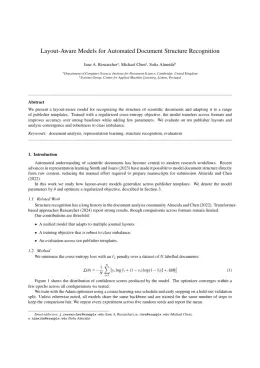
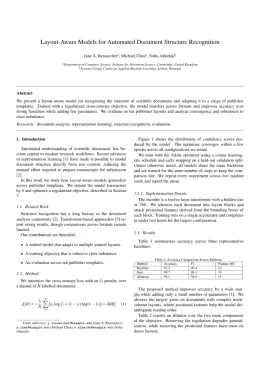
Write in a clean editor, then format for Procedia Structural Integrity in one click — DocuGuru applies the official Elsevier template with numbered references and exports a submission-ready PDF plus the editable LaTeX source. Free to start.

About the Procedia Structural Integrity format

Procedia Structural Integrity is a peer-reviewed journal published by Elsevier, covering Fatigue and fracture mechanics, Structural Health Monitoring Techniques, Material Properties and Failure Mechanisms.

PublisherElsevier
Reference styleNumbered (Elsevier)
Numbered — [1], [2] in the text
[1] A. Smith, B. Jones, C. Lee, A representative article title, Procedia Structural Integrity 12 (2023) 45–58.

Formats any DOI in Procedia Structural Integrity style. No sign-up.

Publishes research inFatigue and fracture mechanics Structural Health Monitoring Techniques Material Properties and Failure Mechanisms Mechanical Behavior of Composites Structural Behavior of Reinforced Concrete
ISSN2452-3216
Citation impact (2-yr)1.29
h-index52
i10-index1,017
Total citations36,768
Open accessYes
Top institutions publishing herePolitecnico di Torino
Journal websitewww.journals.elsevier.com
You getA submission-ready PDF and the editable LaTeX source — ready to submit.

Papers published in Procedia Structural Integrity per year

513
2016
401
2017
635
2018
815
2019
479
2020
254
2021
767
2022
663
2023
1.1K
2024
566
2025

Citation impact of Procedia Structural Integrity by publication year

6.2K
2016
4K
2017
5.6K
2018
6.5K
2019
3.7K
2020
1.5K
2021
3.7K
2022
2.3K
2023
2.4K
2024
382
2025

Citations each year’s papers have accumulated so far — the most recent years are still building up.

Most-cited papers in Procedia Structural Integrity

A review of non-destructive testing methods of composite materials

Samira Gholizadeh · 1 Jan 2016

A review provided about non-destructive testing (NDT) methods for the evaluation of composites. The review considers the capabilities of most common methods in composite NDT applications such as Visual Testing (VT or VI), Ultrasonic Testing (UT), Thermography, Radiographic Testing (RT), Electromagnetic Testing (ET), Acoustic Emission (AE), and Shearography Testing with respect to advantages and disadvantages…

Selective laser melting (SLM) and topology optimization for lighter aerospace componentes

Miguel Seabra, José Manuel Cruz Azevedo, A.L. Araújo et al. · 1 Jan 2016

Additive Manufacturing (AM) is a manufacturing process through which a 3D component is produced by consecutively adding material. One of the most promising AM processes is SLM. In SLM a laser completely melts metallic powder particles together forming a 3D component. SLM is known for its freedom of manufacturing constraints allowing complex geometries and high…

Life Cycle Assessment in the automotive sector: a comparative case study of Internal Combustion Engine (ICE) and electric car

Francesco Del Pero, Massimo Delogu, Marco Pierini · 1 Jan 2018

Abstract Transportation represents one of the major contributors to several environmental burdens such as Green-House-Gas (GHG) emissions and resource depletion. Considering the European Union, light duty vehicles are responsible for roughly 10% of total energy use and air emissions. As a consequence, the need for higher fuel/energy efficiency in both conventional and electric cars has…

Effects of Defects, Surface Roughness and HIP on Fatigue Strength of Ti-6Al-4V manufactured by Additive Manufacturing

Hiroshige Masuo, Yuzo Tanaka, Shotaro Morokoshi et al. · 1 Jan 2017

The additive manufacturing (AM) is expected to be the promising manufacturing process for high strength or hard steels such as Ti-6Al-4V for the aerospace industry components having complex shapes. However, disadvantage or challenge of AM is presence of defects which are inevitably contained in the manufacturing process. This paper focuses on the effects of defects,…

Effect of manufacturing parameters on tensile properties of FDM printed specimens

Cristina Vălean, Liviu Marșavina, Mihai Mărghitaș et al. · 1 Jan 2020

Nowadays, one of the most studied technologies for obtaining different parts is Additive Manufacturing (AM). Whether it is about plastic or metal materials, AM is used because very complex parts can be obtained, without further technological operations. From all AM technologies, Fused Deposition Modeling (FDM) is the most used all over the world, due to…

Procedia Structural Integrity template — frequently asked questions

How do I write a paper in the Procedia Structural Integrity format?
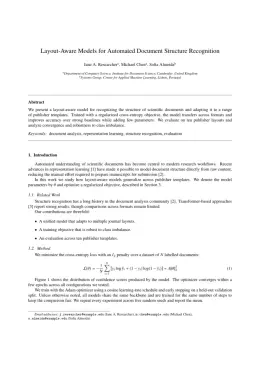
In DocuGuru you write your manuscript in a normal editor — no LaTeX setup required — and select the Procedia Structural Integrity template. When you export, DocuGuru compiles the paper into the official Elsevier format and hands you a submission-ready PDF along with the editable LaTeX source.
What reference style does Procedia Structural Integrity use?
Procedia Structural Integrity uses Numbered (Elsevier) references, shown as numbered [1], [2] markers in the text. DocuGuru formats every in-text citation and the reference list in this exact style automatically. A reference appears like this: [1] A. Smith, B. Jones, C. Lee, A representative article title, Procedia Structural Integrity 12 (2023) 45–58.
Do I need to know LaTeX to submit to Procedia Structural Integrity?
No. DocuGuru generates the elsarticle LaTeX class and compiles the PDF for you in the background, so you get a Elsevier-ready Procedia Structural Integrity document without writing any LaTeX. If you do want it, the LaTeX source is included in the export.
Can I import an existing draft into the Procedia Structural Integrity template?
Yes. Paste or upload your current manuscript — Word, LaTeX, Markdown, or plain text — and DocuGuru reflows it into the Procedia Structural Integrity format with correct headings, figures, tables, and numbered citations.
Who publishes Procedia Structural Integrity?
Procedia Structural Integrity is a multidisciplinary journal published by Elsevier. DocuGuru's Procedia Structural Integrity template matches Elsevier's official submission format.
Can I export a submission-ready Procedia Structural Integrity PDF?
Yes — DocuGuru produces a PDF built with the official Procedia Structural Integrity template (the elsarticle class) that is ready to submit to Elsevier, together with the matching LaTeX source files.
How much does the Procedia Structural Integrity template cost?
You can start writing in the Procedia Structural Integrity template for free. Exporting the final submission-ready Procedia Structural Integrity PDF and LaTeX source is part of DocuGuru's paid plans — see the app for current pricing.
Use the Procedia Structural Integrity template