Elsevier

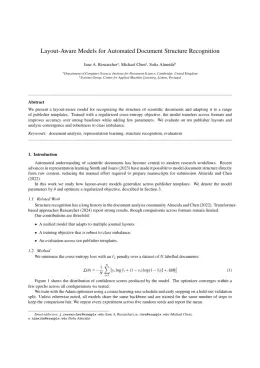
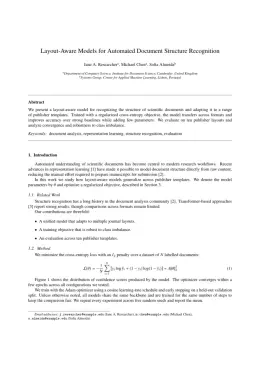
Procedia Food Science Template

Write in a clean editor, then format for Procedia Food Science in one click — DocuGuru applies the official Elsevier template with numbered references and exports a submission-ready PDF plus the editable LaTeX source. Free to start.

About the Procedia Food Science format

Procedia Food Science is a peer-reviewed journal published by Elsevier, covering Meat and Animal Product Quality, Proteins in Food Systems, Microencapsulation and Drying Processes.

PublisherElsevier
Reference styleNumbered (Elsevier)
Numbered — [1], [2] in the text
[1] A. Smith, B. Jones, C. Lee, A representative article title, Procedia Food Science 12 (2023) 45–58.

Formats any DOI in Procedia Food Science style. No sign-up.

Publishes research inMeat and Animal Product Quality Proteins in Food Systems Microencapsulation and Drying Processes Microbial Inactivation Methods Food composition and properties
ISSN2211-601X
h-index49
i10-index327
Total citations11,992
Top institutions publishing hereInstitut za higijenu i tehnologiju mesa
Journal websitewww.sciencedirect.com
You getA submission-ready PDF and the editable LaTeX source — ready to submit.

Papers published in Procedia Food Science per year

300
2011
30
2013
161
2015
116
2016

Citation impact of Procedia Food Science by publication year

6.6K
2011
783
2013
2.9K
2015
1.7K
2016

Citations each year’s papers have accumulated so far — the most recent years are still building up.

Most-cited papers in Procedia Food Science

An overview of encapsulation technologies for food applications

Viktor Nedović, Ana Kalušević, Verica Manojlović et al. · 1 Jan 2011

Encapsulation is a process to entrap active agents within a carrier material and it is a useful tool to improve delivery of bioactive molecules and living cells into foods. Materials used for design of protective shell of encapsulates must be food-grade, biodegradable and able to form a barrier between the internal phase and its surroundings.…

USDA Food and Nutrient Database for Dietary Studies (FNDDS), 5.0

Janice Bodner Montville, Jaspreet K.C. Ahuja, Carrie Martin et al. · 1 Jan 2013

The Food and Nutrient Database for Dietary Studies (FNDDS) is used to code and analyze dietary intakes for the What We Eat In America, National Health and Nutrition Examination Survey (WWEIA, NHANES). To create FNDDS 5.0 for WWEIA, NHANES 2009-2010, data for over 7,200 foods were updated to incorporate changes in the marketplace and information…

Starch particles for food based Pickering emulsions

Anna Timgren, Marilyn Rayner, Malin Sjöö et al. · 1 Jan 2011

Intact starch granules are a new source of particles for stabilizing emulsions, so called Pickering emulsions. Small (1-2 μm) and uni-modal starch granules at various concentrations have been used in this study to investigate the stability of the emulsions, the drop size dependence of the starch concentration and the barrier properties of the stabilizing starch…

Encapsulation of bioactive compounds in nanoemulsion- based delivery systems

Francesco Donsı̀, Mariarenata Sessa, Houda Mediouni et al. · 1 Jan 2011

Encapsulation into nanoemulsion-based delivery systems of bioactive compounds characterized by low solubility in aqueous phase, represents an effective approach to improve the dispersion of the bioactives into food products, to protect them against degradation or interaction with other ingredients, to reduce the impact on organoleptic properties of the food and to improve their bioavailability. The…

Food Reporting Patterns in the USDA Automated Multiple-Pass Method

Lois Steinfeldt, Jaswinder Anand, Theophile Murayi · 1 Jan 2013

Complete and accurate 24-hour dietary recalls are essential for nutrition monitoring in the United States. The USDA Automated Multiple-Pass Method (AMPM) uses a five-step multiple-pass approach to collect dietary data. The first step is an unstructured, uninterrupted listing of all foods and beverages consumed. The next 3 steps use a structured approach to data collection…

Procedia Food Science template — frequently asked questions

How do I write a paper in the Procedia Food Science format?
In DocuGuru you write your manuscript in a normal editor — no LaTeX setup required — and select the Procedia Food Science template. When you export, DocuGuru compiles the paper into the official Elsevier format and hands you a submission-ready PDF along with the editable LaTeX source.
What reference style does Procedia Food Science use?
Procedia Food Science uses Numbered (Elsevier) references, shown as numbered [1], [2] markers in the text. DocuGuru formats every in-text citation and the reference list in this exact style automatically. A reference appears like this: [1] A. Smith, B. Jones, C. Lee, A representative article title, Procedia Food Science 12 (2023) 45–58.
Do I need to know LaTeX to submit to Procedia Food Science?
No. DocuGuru generates the elsarticle LaTeX class and compiles the PDF for you in the background, so you get a Elsevier-ready Procedia Food Science document without writing any LaTeX. If you do want it, the LaTeX source is included in the export.
Can I import an existing draft into the Procedia Food Science template?
Yes. Paste or upload your current manuscript — Word, LaTeX, Markdown, or plain text — and DocuGuru reflows it into the Procedia Food Science format with correct headings, figures, tables, and numbered citations.
Who publishes Procedia Food Science?
Procedia Food Science is a multidisciplinary journal published by Elsevier. DocuGuru's Procedia Food Science template matches Elsevier's official submission format.
Can I export a submission-ready Procedia Food Science PDF?
Yes — DocuGuru produces a PDF built with the official Procedia Food Science template (the elsarticle class) that is ready to submit to Elsevier, together with the matching LaTeX source files.
How much does the Procedia Food Science template cost?
You can start writing in the Procedia Food Science template for free. Exporting the final submission-ready Procedia Food Science PDF and LaTeX source is part of DocuGuru's paid plans — see the app for current pricing.
Use the Procedia Food Science template