Elsevier

Plant Diversity Template

Write in a clean editor, then format for Plant Diversity in one click — DocuGuru applies the official Elsevier template with author–year references and exports a submission-ready PDF plus the editable LaTeX source. Free to start.

About the Plant Diversity format

Plant Diversity is a peer-reviewed journal published by Elsevier, covering Plant and animal studies, Plant and Fungal Species Descriptions, Plant Diversity and Evolution.

PublisherElsevier
Reference styleAuthor–year (Harvard)
Author–year — (Smith, 2023) in the text
Smith, A., Jones, B. and Lee, C. (2023) 'A representative article title', Plant Diversity, 12(3), pp. 45–58.

Formats any DOI in Plant Diversity style. No sign-up.

Publishes research inPlant and animal studies Plant and Fungal Species Descriptions Plant Diversity and Evolution Ecology and Vegetation Dynamics Studies Legal and Regulatory Analysis
ISSN2096-2703
Citation impact (2-yr)4.15
h-index53
i10-index387
Total citations15,816
Open accessYes
Top institutions publishing hereChinese Academy of Sciences
Journal websitewww.sciencedirect.com
You getA submission-ready PDF and the editable LaTeX source — ready to submit.

Papers published in Plant Diversity per year

53
2014
60
2015
84
2016
46
2017
41
2018
42
2019
77
2020
72
2021
61
2022
73
2023
81
2024
97
2025

Citation impact of Plant Diversity by publication year

93
2014
115
2015
1.7K
2016
1.8K
2017
1.5K
2018
1.2K
2019
2.5K
2020
1.4K
2021
2.1K
2022
808
2023
688
2024
299
2025

Citations each year’s papers have accumulated so far — the most recent years are still building up.

Most-cited papers in Plant Diversity

V.PhyloMaker2: An updated and enlarged R package that can generate very large phylogenies for vascular plants

Yi Jin, Hong Qian · 27 May 2022

An earlier version of V.PhyloMaker has been broadly used to generate phylogenetic trees of vascular plants for botanical, biogeographical and ecological studies. Here, we update and enlarge this package, which is now called 'V.PhyloMaker2'. With V.PhyloMaker2, one can generate a phylogenetic tree for vascular plants based on one of three different botanical nomenclature systems. V.PhyloMaker2…

Plant diversity in a changing world: Status, trends, and conservation needs

Richard T. Corlett · 1 Feb 2016

The conservation of plants has not generated the sense of urgency—or the funding—that drives the conservation of animals, although plants are far more important for us. There are an estimated 500,000 species of land plants (angiosperms, gymnosperms, ferns, lycophytes, and bryophytes), with diversity strongly concentrated in the humid tropics. Many species are still unknown to…

ROS and oxidative burst: Roots in plant development

Anuj Choudhary, Antul Kumar, Nirmaljit Kaur · 28 Oct 2019

Reactive oxygen species (ROS) are widely generated in various redox reactions in plants. In earlier studies, ROS were considered toxic byproducts of aerobic metabolism. In recent years, it has become clear that ROS act as plant signaling molecules that participate in various processes such as growth and development. Several studies have elucidated the roles of…

Tibet, the Himalaya, Asian monsoons and biodiversity – In what ways are they related?

Robert A. Spicer · 14 Sep 2017

Prevailing dogma asserts that the uplift of Tibet, the onset of the Asian monsoon system and high biodiversity in southern Asia are linked, and that all occurred after 23 million years ago in the Neogene. Here, spanning the last 60 million years of Earth history, the geological, climatological and palaeontological evidence for this linkage is…

Plant Diversity template — frequently asked questions

How do I write a paper in the Plant Diversity format?
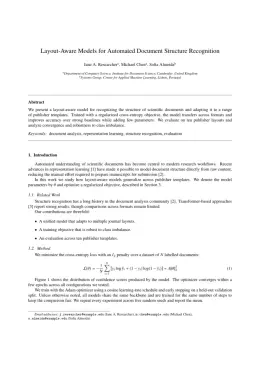
In DocuGuru you write your manuscript in a normal editor — no LaTeX setup required — and select the Plant Diversity template. When you export, DocuGuru compiles the paper into the official Elsevier format and hands you a submission-ready PDF along with the editable LaTeX source.
What reference style does Plant Diversity use?
Plant Diversity uses Author–year (Harvard) references, shown as author–year markers such as (Smith, 2023) in the text. DocuGuru formats every in-text citation and the reference list in this exact style automatically. A reference appears like this: Smith, A., Jones, B. and Lee, C. (2023) 'A representative article title', Plant Diversity, 12(3), pp. 45–58.
Do I need to know LaTeX to submit to Plant Diversity?
No. DocuGuru generates the elsarticle LaTeX class and compiles the PDF for you in the background, so you get a Elsevier-ready Plant Diversity document without writing any LaTeX. If you do want it, the LaTeX source is included in the export.
Can I import an existing draft into the Plant Diversity template?
Yes. Paste or upload your current manuscript — Word, LaTeX, Markdown, or plain text — and DocuGuru reflows it into the Plant Diversity format with correct headings, figures, tables, and author–year citations.
Who publishes Plant Diversity?
Plant Diversity is a multidisciplinary journal published by Elsevier. DocuGuru's Plant Diversity template matches Elsevier's official submission format.
Can I export a submission-ready Plant Diversity PDF?
Yes — DocuGuru produces a PDF built with the official Plant Diversity template (the elsarticle class) that is ready to submit to Elsevier, together with the matching LaTeX source files.
How much does the Plant Diversity template cost?
You can start writing in the Plant Diversity template for free. Exporting the final submission-ready Plant Diversity PDF and LaTeX source is part of DocuGuru's paid plans — see the app for current pricing.
Use the Plant Diversity template