Elsevier

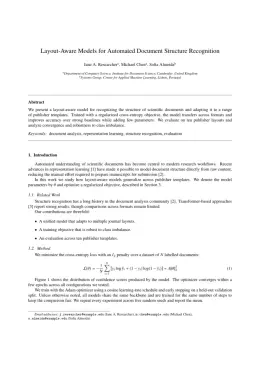
Physics Procedia Template

Write in a clean editor, then format for Physics Procedia in one click — DocuGuru applies the official Elsevier template with numbered references and exports a submission-ready PDF plus the editable LaTeX source. Free to start.

About the Physics Procedia format

Physics Procedia is a peer-reviewed journal published by Elsevier, covering Physics of Superconductivity and Magnetism, Nuclear Physics and Applications, Laser Material Processing Techniques.

PublisherElsevier
Reference styleNumbered (Elsevier)
Numbered — [1], [2] in the text
[1] A. Smith, B. Jones, C. Lee, A representative article title, Physics Procedia 12 (2023) 45–58.

Formats any DOI in Physics Procedia style. No sign-up.

Publishes research inPhysics of Superconductivity and Magnetism Nuclear Physics and Applications Laser Material Processing Techniques Superconducting Materials and Applications Radiation Detection and Scintillator Technologies
ISSN1875-3892
h-index101
i10-index1,944
Total citations81,064
Open accessYes
Top institutions publishing hereNational Research Nuclear University MEPhI
Journal websitewww.sciencedirect.com
You getA submission-ready PDF and the editable LaTeX source — ready to submit.

Papers published in Physics Procedia per year

71
2008
189
2009
596
2010
670
2011
2.2K
2012
541
2013
512
2014
1.7K
2015
331
2016
180
2017
1
2018

Citation impact of Physics Procedia by publication year

531
2008
2.1K
2009
9.4K
2010
12.6K
2011
21.4K
2012
7.5K
2013
8K
2014
12.1K
2015
5.4K
2016
1.9K
2017
0
2018

Citations each year’s papers have accumulated so far — the most recent years are still building up.

Most-cited papers in Physics Procedia

Mechanical Properties of AlSi10Mg Produced by Selective Laser Melting

Karolien Kempen, Lore Thijs, J. Van Humbeeck et al. · 1 Jan 2012

Selective Laser Melting (SLM) is an Additive Manufacturing (AM) technique in which a part is built up in a layer- by-layer manner by melting the top surface layer of a powder bed with a high intensity laser according to sliced 3D CAD data. In this work, mechanical properties like tensile strength, elongation, Young's modulus, impact…

High Power Selective Laser Melting (HP SLM) of Aluminum Parts

Damien Buchbinder, Johannes Henrich Schleifenbaum, Sebastian Heidrich et al. · 1 Jan 2011

Selective Laser Melting (SLM) is one of the Additive Manufacturing (AM) technologies that enables the production of light weight structured components with series identical mechanical properties without the need for part specific tooling or downstream sintering processes, etc. Especially aluminum is suited for such eco-designed components due to its low weight and superior mechanical and…

Microstructure and mechanical properties of Selective Laser Melted 18Ni-300 steel

Karolien Kempen, Evren Yasa, Lore Thijs et al. · 1 Jan 2011

Selective Laser Melting (SLM) is an Additive Manufacturing process in which a part is built in a layer by layer manner. A laser source selectively scans the powder bed according to the CAD data of the part to be produced. The high intensity laser beam makes it possible to completely melt the metal powder particles…

Direct Production of 99mTc via 100Mo(p,2n) on Small Medical Cyclotrons

Paul Schaffer, François Bénard, Aaron Bernstein et al. · 1 Jan 2015

From the efforts of a number of Canadian institutions and private industry collaborations, direct production of 99mTc using medical cyclotrons has recently been advanced from a 1970's academic exercise to a commercial, economically viable solution for regional production. Using GE PETtrace 880 machines our team has established preliminary saturated yields of 2.7 GBq/μA, translating to…

Musrfit: A Free Platform-Independent Framework for μSR Data Analysis

Andreas Suter, B. M. Wojek · 1 Jan 2012

Afree data-analysis framework forμSR has been developed. musrfit is fully written in C++, is running under GNU/Linux, MacOSX, as well as Microsoft Windows, andis distributed under the termsof the GNU GPL.Itis based on the CERN ROOT framework and is utilizing the Minuit2 optimization routines for fitting. It consists of a set of programmes allowing the…

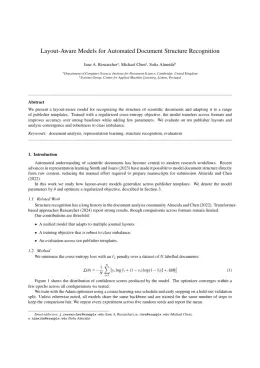
Physics Procedia template — frequently asked questions

How do I write a paper in the Physics Procedia format?
In DocuGuru you write your manuscript in a normal editor — no LaTeX setup required — and select the Physics Procedia template. When you export, DocuGuru compiles the paper into the official Elsevier format and hands you a submission-ready PDF along with the editable LaTeX source.
What reference style does Physics Procedia use?
Physics Procedia uses Numbered (Elsevier) references, shown as numbered [1], [2] markers in the text. DocuGuru formats every in-text citation and the reference list in this exact style automatically. A reference appears like this: [1] A. Smith, B. Jones, C. Lee, A representative article title, Physics Procedia 12 (2023) 45–58.
Do I need to know LaTeX to submit to Physics Procedia?
No. DocuGuru generates the elsarticle LaTeX class and compiles the PDF for you in the background, so you get a Elsevier-ready Physics Procedia document without writing any LaTeX. If you do want it, the LaTeX source is included in the export.
Can I import an existing draft into the Physics Procedia template?
Yes. Paste or upload your current manuscript — Word, LaTeX, Markdown, or plain text — and DocuGuru reflows it into the Physics Procedia format with correct headings, figures, tables, and numbered citations.
Who publishes Physics Procedia?
Physics Procedia is a multidisciplinary journal published by Elsevier. DocuGuru's Physics Procedia template matches Elsevier's official submission format.
Can I export a submission-ready Physics Procedia PDF?
Yes — DocuGuru produces a PDF built with the official Physics Procedia template (the elsarticle class) that is ready to submit to Elsevier, together with the matching LaTeX source files.
How much does the Physics Procedia template cost?
You can start writing in the Physics Procedia template for free. Exporting the final submission-ready Physics Procedia PDF and LaTeX source is part of DocuGuru's paid plans — see the app for current pricing.
Use the Physics Procedia template