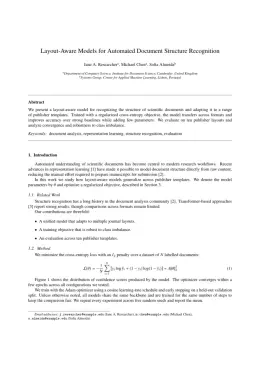
Elsevier

Open Ceramics Template

Write in a clean editor, then format for Open Ceramics in one click — DocuGuru applies the official Elsevier template with numbered references and exports a submission-ready PDF plus the editable LaTeX source. Free to start.

About the Open Ceramics format

Open Ceramics is a peer-reviewed journal published by Elsevier, covering Advanced ceramic materials synthesis, Additive Manufacturing and 3D Printing Technologies, Bone Tissue Engineering Materials.

PublisherElsevier
Reference styleNumbered (Elsevier)
Numbered — [1], [2] in the text
[1] A. Smith, B. Jones, C. Lee, A representative article title, Open Ceramics 12 (2023) 45–58.

Formats any DOI in Open Ceramics style. No sign-up.

Publishes research inAdvanced ceramic materials synthesis Additive Manufacturing and 3D Printing Technologies Bone Tissue Engineering Materials Recycling and utilization of industrial and municipal waste in materials production Concrete and Cement Materials Research
ISSN2666-5395
Citation impact (2-yr)3.19
h-index34
i10-index241
Total citations7,788
Article processing charge$2,000
Open accessYes
Top institutions publishing hereCentre National de la Recherche Scientifique
Journal websitewww.journals.elsevier.com
You getA submission-ready PDF and the editable LaTeX source — ready to submit.

Papers published in Open Ceramics per year

46
2020
156
2021
107
2022
202
2023
190
2024
166
2025

Citation impact of Open Ceramics by publication year

1K
2020
2.6K
2021
1K
2022
1.6K
2023
1.1K
2024
293
2025

Citations each year’s papers have accumulated so far — the most recent years are still building up.

Most-cited papers in Open Ceramics

Ionic substituted hydroxyapatite for bone regeneration applications: A review

Antonia Ressler, Andreja Žužić, Irena Ivanišević et al. · 19 May 2021

Biological apatites are characterised by various ionic substitutions within the HAp lattice that are crucial for bone metabolism. The introduction of key role elements within synthetic calcium phosphates (CaP), mainly hydroxyapatite (HAp), can increase osteogenesis and enhance bone regeneration process. The lattice structure of HAp enables cationic and anionic substitutions leading to the enhanced biological…

Virucidal effect against coronavirus SARS-CoV-2 of a silver nanocluster/silica composite sputtered coating

Cristina Balagna, Sergio Perero, Elena Percivalle et al. · 1 May 2020

During the current pandemic of COVID-19 caused by the new Coronavirus SARS-CoV-2, the confinement measures slowed down the contagion, but did not completely avoid the disease diffusion for health workers, patients and the remaining population. The individual protection equipment (e.g. facial masks), filters for air conditioning systems and for medical respiratory devices do not possess…

A review of additive manufacturing of ceramics by powder bed selective laser processing (sintering / melting): Calcium phosphate, silicon carbide, zirconia, alumina, and their composites

David Grossin, Alejandro Montón, Pedro Navarrete-Segado et al. · 16 Feb 2021

This review offers an overview on the latest advances in the powder bed selective laser processing, known as selective laser sintering/melting, of calcium phosphate, silicon carbide, zirconia, alumina, and some of their composites. A number of published studies between 1991 and August 2020 was collected, analyzed and an inclusive state of the art was created…

Structural diversity and applications of spinel ferrite core - Shell nanostructures- A review

Manju Kurian, Smitha Thankachan · 31 Aug 2021

Core - shell nanoparticles have immense applications in diverse fields such as medicine, catalysis, optoelectronics, water treatment and sensing. Coating a core particle with a shell material can be advantageous in many ways, some of which are increase in functionality, surface modification, reduction in consumption of precious materials, improved stability and dispersibility. Ferrite core –…

Roadmap for densification in cold sintering: Chemical pathways

Arnaud Ndayishimiye, Mert Y. Sengul, Takao Sada et al. · 1 Jul 2020

The cold sintering process (CSP) is a technique that enables densification of ceramics and composites at extremely low temperatures (T ​< ​400 ​°C) with the application of a uniaxial pressure and a transient solvent. At the laboratory scale, comparing direct sintering methods relative to CSP evidences that the latter could enable a sustainable eco-manufacturing path…

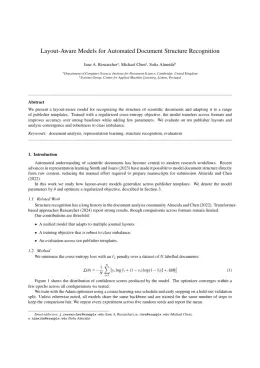
Open Ceramics template — frequently asked questions

How do I write a paper in the Open Ceramics format?
In DocuGuru you write your manuscript in a normal editor — no LaTeX setup required — and select the Open Ceramics template. When you export, DocuGuru compiles the paper into the official Elsevier format and hands you a submission-ready PDF along with the editable LaTeX source.
What reference style does Open Ceramics use?
Open Ceramics uses Numbered (Elsevier) references, shown as numbered [1], [2] markers in the text. DocuGuru formats every in-text citation and the reference list in this exact style automatically. A reference appears like this: [1] A. Smith, B. Jones, C. Lee, A representative article title, Open Ceramics 12 (2023) 45–58.
Do I need to know LaTeX to submit to Open Ceramics?
No. DocuGuru generates the elsarticle LaTeX class and compiles the PDF for you in the background, so you get a Elsevier-ready Open Ceramics document without writing any LaTeX. If you do want it, the LaTeX source is included in the export.
Can I import an existing draft into the Open Ceramics template?
Yes. Paste or upload your current manuscript — Word, LaTeX, Markdown, or plain text — and DocuGuru reflows it into the Open Ceramics format with correct headings, figures, tables, and numbered citations.
Who publishes Open Ceramics?
Open Ceramics is a multidisciplinary journal published by Elsevier. DocuGuru's Open Ceramics template matches Elsevier's official submission format.
Can I export a submission-ready Open Ceramics PDF?
Yes — DocuGuru produces a PDF built with the official Open Ceramics template (the elsarticle class) that is ready to submit to Elsevier, together with the matching LaTeX source files.
How much does the Open Ceramics template cost?
You can start writing in the Open Ceramics template for free. Exporting the final submission-ready Open Ceramics PDF and LaTeX source is part of DocuGuru's paid plans — see the app for current pricing.
Use the Open Ceramics template