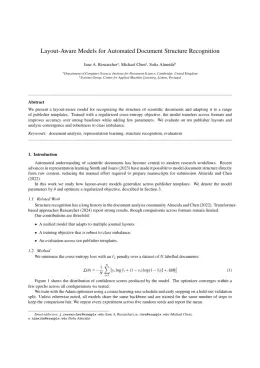
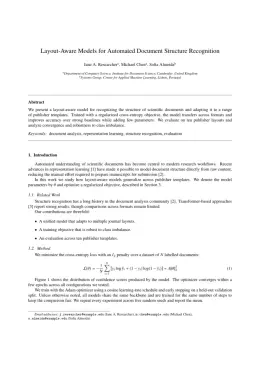
About the Network Security format
Network Security is a peer-reviewed journal published by Elsevier, covering Information and Cyber Security, Network Security and Intrusion Detection, Advanced Malware Detection Techniques.
| Publisher | Elsevier |
|---|
| Reference style | Numbered (Elsevier) Numbered — [1], [2] in the text
[1] A. Smith, B. Jones, C. Lee, A representative article title, Network Security 12 (2023) 45–58.
Formats any DOI in Network Security style. No sign-up.
|
|---|
| Publishes research in | Information and Cyber Security Network Security and Intrusion Detection Advanced Malware Detection Techniques Cybercrime and Law Enforcement Studies Cybersecurity and Cyber Warfare Studies |
|---|
| ISSN | 1353-4858 |
|---|
| Citation impact (2-yr) | 0.67 |
|---|
| h-index | 48 |
|---|
| i10-index | 359 |
|---|
| Total citations | 16,824 |
|---|
| Top institutions publishing here | Pathways Behavioral Services |
|---|
| Journal website | www.journals.elsevier.com |
|---|
| You get | A submission-ready PDF and the editable LaTeX source — ready to submit. |
|---|
Papers published in Network Security per year
Citation impact of Network Security by publication year
Citations each year’s papers have accumulated so far — the most recent years are still building up.
Most-cited papers in Network Security
Advanced Encryption Standard (AES)
Simon Heron · 1 Dec 2009
Ever since humans started talking, we have been trying to work out a way of communicating information to one person, while keeping it secret from everyone else. Certainly, when you start to look at encryption methods, you are introduced to the ‘Caesar’ Cypher. which shows how old encryption is and how simple old ciphers now…
Advanced Persistent threats and how to monitor and deter them
Colin Tankard · 1 Aug 2011
Advanced Persistent Threat (APT) is a term coined over the past couple of years for a new breed of insidious threats that use multiple attack techniques and vectors and that are conducted by stealth to avoid detection so that hackers can retain control over target systems unnoticed for long periods of time. Traditional defences aimed…
Computer and Information Security Handbook
1 Nov 2017
This book presents information on how to analyze risks to your networks and the steps needed to select and deploy the appropriate countermeasures to reduce your exposure to physical and network threats. It also imparts the skills and knowledge needed to identify and counter some fundamental security risks and requirements, inlcuding Internet security threats and…
The Advanced Encryption Standard
Marie Wright · 1 Oct 2001
In October 2000, the National Institute of Standards and Technology (NIST) announced that the Rijndael algorithm had been selected to be the new Advanced Encryption Standard (AES). NIST’s announcement concluded a three and a half year search process in which fifteen candidate algorithms from twelve countries were evaluated on the basis of security, computational efficiency,…
What the GDPR means for businesses
Colin Tankard · 1 Jun 2016
The long-awaited General Data Protection Regulation (GDPR) of the EU was provisionally agreed in December 2015.1 The final details are still being ironed out, but publication of the final version of the regulation is expected around July 2016.2 There will then be a two-year waiting period until every organisation that does business in, or with,…