Elsevier

Nano Materials Science Template

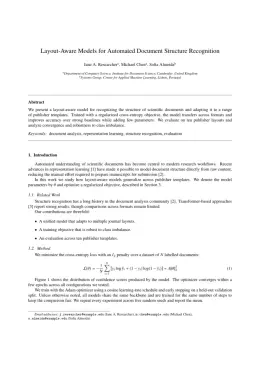
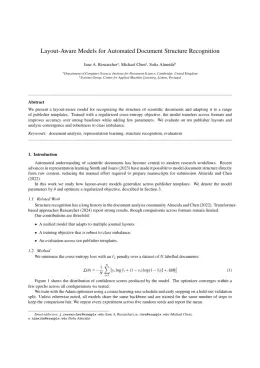
Write in a clean editor, then format for Nano Materials Science in one click — DocuGuru applies the official Elsevier template with numbered references and exports a submission-ready PDF plus the editable LaTeX source. Free to start.

About the Nano Materials Science format

Nano Materials Science is a peer-reviewed journal published by Elsevier, covering Electrocatalysts for Energy Conversion, Advanced Photocatalysis Techniques, Advancements in Battery Materials.

PublisherElsevier
Reference styleNumbered (Elsevier)
Numbered — [1], [2] in the text
[1] A. Smith, B. Jones, C. Lee, A representative article title, Nano Materials Science 12 (2023) 45–58.

Formats any DOI in Nano Materials Science style. No sign-up.

Publishes research inElectrocatalysts for Energy Conversion Advanced Photocatalysis Techniques Advancements in Battery Materials Advanced Sensor and Energy Harvesting Materials Advanced battery technologies research
ISSN2096-6482
Citation impact (2-yr)7.96
h-index62
i10-index284
Total citations16,405
Open accessYes
Top institutions publishing hereChongqing University
Journal websitewww.sciencedirect.com
You getA submission-ready PDF and the editable LaTeX source — ready to submit.

Papers published in Nano Materials Science per year

57
2019
33
2020
55
2021
36
2022
43
2023
125
2024
125
2025

Citation impact of Nano Materials Science by publication year

5.1K
2019
1.8K
2020
2.8K
2021
2.2K
2022
1.6K
2023
2K
2024
596
2025

Citations each year’s papers have accumulated so far — the most recent years are still building up.

Most-cited papers in Nano Materials Science

Synthesis, properties, and applications of graphene oxide/reduced graphene oxide and their nanocomposites

Andrew T. Smith, Anna Marie LaChance, Songshan Zeng et al. · 1 Mar 2019

Thanks to their remarkable mechanical, electrical, thermal, and barrier properties, graphene-based nanocomposites have been a hot area of research in the past decade. Because of their simple top-down synthesis, graphene oxide (GO) and reduced graphene oxide (rGO) have opened new possibilities for gas barrier, membrane separation, and stimuli-response characteristics in nanocomposites. Herein, we review the…

1,605 citations Cite SaveGo to paper →
Some basic aspects of polymer nanocomposites: A critical review

Shao‐Yun Fu, Zheng Sun, Pei Huang et al. · 1 Mar 2019

Polymer nanocomposites have been investigated for about three decades. To get deep insights into the modifying effects of various nanofillers on mechanical and physical properties of polymer nanocomposites, the three basic aspects of processing, characterization and properties are critically reviewed in this paper. Nanofillers can be classified into three major types of two-dimensional (2D) layered,…

Recent advances in electrocatalysts for seawater splitting

Guangbo Liu, Yingshuang Xu, Teng Yang et al. · 19 Dec 2020

Water splitting is an effective strategy to produce renewable and sustainable hydrogen energy. Especially, seawater splitting, avoiding use of the limited freshwater resource, is more intriguing. Nowadays, electrocatalysts explored for hydrogen evolution reaction (HER) and oxygen evolution reaction (OER) using natural seawater or saline electrolyte have been increasingly reported. To better understand the current status…

Gas sensors based on TiO2 nanostructured materials for the detection of hazardous gases: A review

Tian Xu, Xiuxiu Cui, Tingrun Lai et al. · 7 Jul 2021

Hazardous gases have been strongly associated with being a detriment to human life within the environment. The development of a reliable gas sensor with high response and selectivity is of great significance for detecting different hazardous gases. TiO2 nanomaterials are promising candidates with great potential and excellent performance in gas sensor applications, such as hydrogen,…

Nano Materials Science template — frequently asked questions

How do I write a paper in the Nano Materials Science format?
In DocuGuru you write your manuscript in a normal editor — no LaTeX setup required — and select the Nano Materials Science template. When you export, DocuGuru compiles the paper into the official Elsevier format and hands you a submission-ready PDF along with the editable LaTeX source.
What reference style does Nano Materials Science use?
Nano Materials Science uses Numbered (Elsevier) references, shown as numbered [1], [2] markers in the text. DocuGuru formats every in-text citation and the reference list in this exact style automatically. A reference appears like this: [1] A. Smith, B. Jones, C. Lee, A representative article title, Nano Materials Science 12 (2023) 45–58.
Do I need to know LaTeX to submit to Nano Materials Science?
No. DocuGuru generates the elsarticle LaTeX class and compiles the PDF for you in the background, so you get a Elsevier-ready Nano Materials Science document without writing any LaTeX. If you do want it, the LaTeX source is included in the export.
Can I import an existing draft into the Nano Materials Science template?
Yes. Paste or upload your current manuscript — Word, LaTeX, Markdown, or plain text — and DocuGuru reflows it into the Nano Materials Science format with correct headings, figures, tables, and numbered citations.
Who publishes Nano Materials Science?
Nano Materials Science is a multidisciplinary journal published by Elsevier. DocuGuru's Nano Materials Science template matches Elsevier's official submission format.
Can I export a submission-ready Nano Materials Science PDF?
Yes — DocuGuru produces a PDF built with the official Nano Materials Science template (the elsarticle class) that is ready to submit to Elsevier, together with the matching LaTeX source files.
How much does the Nano Materials Science template cost?
You can start writing in the Nano Materials Science template for free. Exporting the final submission-ready Nano Materials Science PDF and LaTeX source is part of DocuGuru's paid plans — see the app for current pricing.
Use the Nano Materials Science template