Elsevier

Micro and Nano Engineering Template

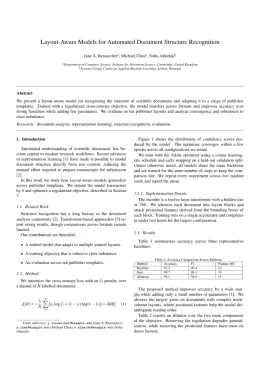
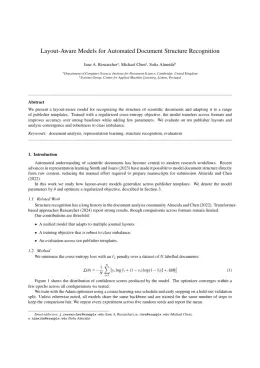
Write in a clean editor, then format for Micro and Nano Engineering in one click — DocuGuru applies the official Elsevier template with numbered references and exports a submission-ready PDF plus the editable LaTeX source. Free to start.

About the Micro and Nano Engineering format

Micro and Nano Engineering is a peer-reviewed journal published by Elsevier, covering Nanofabrication and Lithography Techniques, Advanced Sensor and Energy Harvesting Materials, Advancements in Photolithography Techniques.

PublisherElsevier
Reference styleNumbered (Elsevier)
Numbered — [1], [2] in the text
[1] A. Smith, B. Jones, C. Lee, A representative article title, Micro and Nano Engineering 12 (2023) 45–58.

Formats any DOI in Micro and Nano Engineering style. No sign-up.

Publishes research inNanofabrication and Lithography Techniques Advanced Sensor and Energy Harvesting Materials Advancements in Photolithography Techniques Semiconductor materials and devices Microfluidic and Capillary Electrophoresis Applications
ISSN2590-0072
Citation impact (2-yr)3.23
h-index24
i10-index97
Total citations4,154
Article processing charge$1,380
Open accessYes
Top institutions publishing hereCentre National de la Recherche Scientifique
Journal websitewww.journals.elsevier.com
You getA submission-ready PDF and the editable LaTeX source — ready to submit.

Papers published in Micro and Nano Engineering per year

17
2018
29
2019
31
2020
22
2021
65
2022
61
2023
59
2024
53
2025

Citation impact of Micro and Nano Engineering by publication year

485
2018
884
2019
318
2020
437
2021
658
2022
856
2023
397
2024
44
2025

Citations each year’s papers have accumulated so far — the most recent years are still building up.

Most-cited papers in Micro and Nano Engineering

30 years of microfluidics

Neil Convery, Nikolaj Gadegaard · 27 Jan 2019

Microfluidics provides a great opportunity to create devices capable of outperforming classical techniques in biomedical and chemical research. In this review, the origins of this emerging field in the microelectronics industry are detailed. We also appraise how factors such as government funding influenced the development of new materials and fabrication techniques. Current applications of microfluidics…

Supercapacitors for renewable energy applications: A review

Jie Zhang, Miṅ Gu, Xi Chen · 2 Oct 2023

Energy harvesting and conservation are essential for all kinds of power sources, particularly renewable energy sources, given their global distribution. Usually, batteries are employed to mitigate the imbalance between abundant renewable energy generation and inefficient energy transmission. However, batteries suffer from a drawback in terms of low power density. In recent years, supercapacitor devices have…

Fluorescence in situ hybridization (FISH): History, limitations and what to expect from micro-scale FISH?

Deborah Huber, Lena Voith von Voithenberg, Govind V. Kaigala · 31 Oct 2018

In this article, we review an important cytogenetic technique - fluorescence in situ hybridization (FISH) - which is used for obtaining spatial genomic and transcriptomic information. FISH is widely utilized in genomic and cell biological research as well as for diagnostic applications in preventive and reproductive medicine, and oncology. It is the gold standard technique…

Photocatalytic TiO2 nanomaterials as potential antimicrobial and antiviral agents: Scope against blocking the SARS-COV-2 spread

Jai Prakash, Junghyun Cho, Yogendra Kumar Mishra · 20 Dec 2021

The whole world is struggling with current coronavirus pandemic that shows urgent need to develop novel technologies, medical innovations or innovative materials for controlling SARS-CoV-2 infection. The mode of infection of SARS-CoV-2 is still not well known and seems to spread through surface, air, and water. Therefore, the whole surrounding environment needs to be disinfected…

Super-resolution optical imaging: A comparison

Gergely Huszka, Martin A. M. Gijs · 3 Dec 2018

Overcoming the classical diffraction limit in optical microscopy is known to be achievable by a variety of far-field and near-field microscopy techniques. More recently, so-called micro-object-based optical super-resolution microscopy techniques have emerged. In this review, we provide an overview of the state-of-the-art of optical super-resolution imaging techniques. In the first section, far-field techniques are discussed,…

Micro and Nano Engineering template — frequently asked questions

How do I write a paper in the Micro and Nano Engineering format?
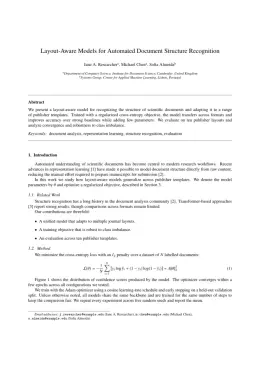
In DocuGuru you write your manuscript in a normal editor — no LaTeX setup required — and select the Micro and Nano Engineering template. When you export, DocuGuru compiles the paper into the official Elsevier format and hands you a submission-ready PDF along with the editable LaTeX source.
What reference style does Micro and Nano Engineering use?
Micro and Nano Engineering uses Numbered (Elsevier) references, shown as numbered [1], [2] markers in the text. DocuGuru formats every in-text citation and the reference list in this exact style automatically. A reference appears like this: [1] A. Smith, B. Jones, C. Lee, A representative article title, Micro and Nano Engineering 12 (2023) 45–58.
Do I need to know LaTeX to submit to Micro and Nano Engineering?
No. DocuGuru generates the elsarticle LaTeX class and compiles the PDF for you in the background, so you get a Elsevier-ready Micro and Nano Engineering document without writing any LaTeX. If you do want it, the LaTeX source is included in the export.
Can I import an existing draft into the Micro and Nano Engineering template?
Yes. Paste or upload your current manuscript — Word, LaTeX, Markdown, or plain text — and DocuGuru reflows it into the Micro and Nano Engineering format with correct headings, figures, tables, and numbered citations.
Who publishes Micro and Nano Engineering?
Micro and Nano Engineering is a multidisciplinary journal published by Elsevier. DocuGuru's Micro and Nano Engineering template matches Elsevier's official submission format.
Can I export a submission-ready Micro and Nano Engineering PDF?
Yes — DocuGuru produces a PDF built with the official Micro and Nano Engineering template (the elsarticle class) that is ready to submit to Elsevier, together with the matching LaTeX source files.
How much does the Micro and Nano Engineering template cost?
You can start writing in the Micro and Nano Engineering template for free. Exporting the final submission-ready Micro and Nano Engineering PDF and LaTeX source is part of DocuGuru's paid plans — see the app for current pricing.
Use the Micro and Nano Engineering template