Elsevier

Methods in Oceanography Template

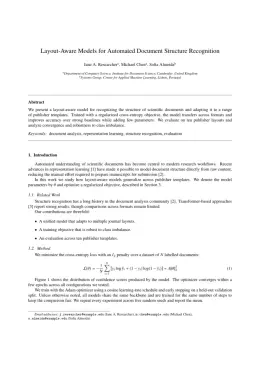
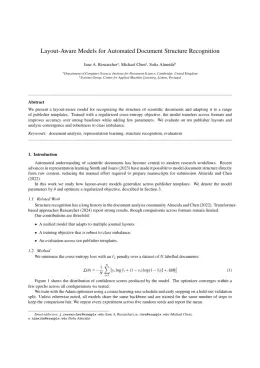
Write in a clean editor, then format for Methods in Oceanography in one click — DocuGuru applies the official Elsevier template with author–year references and exports a submission-ready PDF plus the editable LaTeX source. Free to start.

About the Methods in Oceanography format

Methods in Oceanography is a peer-reviewed journal published by Elsevier, covering Oceanographic and Atmospheric Processes, Marine and coastal ecosystems, Underwater Vehicles and Communication Systems.

PublisherElsevier
Reference styleAuthor–year (Harvard)
Author–year — (Smith, 2023) in the text
Smith, A., Jones, B. and Lee, C. (2023) 'A representative article title', Methods in Oceanography, 12(3), pp. 45–58.

Formats any DOI in Methods in Oceanography style. No sign-up.

Publishes research inOceanographic and Atmospheric Processes Marine and coastal ecosystems Underwater Vehicles and Communication Systems Underwater Acoustics Research Diverse Scientific and Economic Studies
ISSN2211-1220
h-index30
i10-index58
Total citations2,784
Top institutions publishing hereScripps Institution of Oceanography
Journal websitewww.sciencedirect.com
You getA submission-ready PDF and the editable LaTeX source — ready to submit.

Papers published in Methods in Oceanography per year

9
2012
25
2013
23
2014
7
2015
33
2016

Citation impact of Methods in Oceanography by publication year

209
2012
818
2013
637
2014
120
2015
987
2016

Citations each year’s papers have accumulated so far — the most recent years are still building up.

Most-cited papers in Methods in Oceanography

Best practices for autonomous measurement of seawater pH with the Honeywell Durafet

Philip J. Bresnahan, Todd R. Martz, Yuichiro Takeshita et al. · 1 Apr 2014

Performance of autonomous pH sensors is evaluated by comparing in situ data to independent bench-top measurements of pH and to co-located pH, O 2 , and p CO 2 sensors. While the best practice is always to deploy a properly calibrated sensor, the lengthy time period required for sensor conditioning and calibration often results in…

Optical proxy for phytoplankton biomass in the absence of photophysiology: Rethinking the absorption line height

Collin S. Roesler, Andrew H. Barnard · 1 Sep 2013

The pigment absorption peak in the red waveband observed in phytoplankton and particulate absorption spectra is primarily associated with chlorophyll- a and exhibits much lower pigment packaging compared to the blue peak. The minor contributions to the signature by accessory pigments can be largely removed by computing the line height absorption at 676 nm above…

Decomposition of in situ particulate absorption spectra

Alison Chase, Emmanuel Boss, R. Zaneveld et al. · 1 Sep 2013

A global dataset of in situ particulate absorption spectra has been decomposed into component functions representing absorption by phytoplankton pigments and non-algal particles. The magnitudes of component Gaussian functions, used to represent absorption by individual or groups of pigments, are well correlated with pigment concentrations determined using High Performance Liquid Chromatography. We are able to…

Acoustic identification of marine species using a feature library

Rolf J. Korneliussen, Yngve Heggelund, Gavin J. Macaulay et al. · 29 Oct 2016

Sonars and echosounders are widely used for remote sensing of life in the marine environment. There is an ongoing need to make the acoustic identification of marine species more correct and objective and thereby reduce the uncertainty of acoustic abundance estimates. In our work, data from multi-frequency echosounders working simultaneously with nearly identical and overlapping…

Methods in Oceanography template — frequently asked questions

How do I write a paper in the Methods in Oceanography format?
In DocuGuru you write your manuscript in a normal editor — no LaTeX setup required — and select the Methods in Oceanography template. When you export, DocuGuru compiles the paper into the official Elsevier format and hands you a submission-ready PDF along with the editable LaTeX source.
What reference style does Methods in Oceanography use?
Methods in Oceanography uses Author–year (Harvard) references, shown as author–year markers such as (Smith, 2023) in the text. DocuGuru formats every in-text citation and the reference list in this exact style automatically. A reference appears like this: Smith, A., Jones, B. and Lee, C. (2023) 'A representative article title', Methods in Oceanography, 12(3), pp. 45–58.
Do I need to know LaTeX to submit to Methods in Oceanography?
No. DocuGuru generates the elsarticle LaTeX class and compiles the PDF for you in the background, so you get a Elsevier-ready Methods in Oceanography document without writing any LaTeX. If you do want it, the LaTeX source is included in the export.
Can I import an existing draft into the Methods in Oceanography template?
Yes. Paste or upload your current manuscript — Word, LaTeX, Markdown, or plain text — and DocuGuru reflows it into the Methods in Oceanography format with correct headings, figures, tables, and author–year citations.
Who publishes Methods in Oceanography?
Methods in Oceanography is a multidisciplinary journal published by Elsevier. DocuGuru's Methods in Oceanography template matches Elsevier's official submission format.
Can I export a submission-ready Methods in Oceanography PDF?
Yes — DocuGuru produces a PDF built with the official Methods in Oceanography template (the elsarticle class) that is ready to submit to Elsevier, together with the matching LaTeX source files.
How much does the Methods in Oceanography template cost?
You can start writing in the Methods in Oceanography template for free. Exporting the final submission-ready Methods in Oceanography PDF and LaTeX source is part of DocuGuru's paid plans — see the app for current pricing.

Use the Methods in Oceanography template