Elsevier

Memories - Materials Devices Circuits and Systems Template

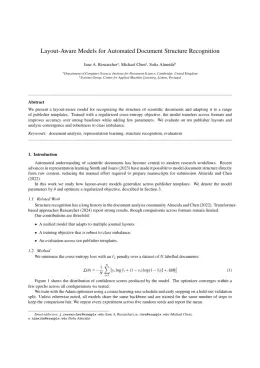
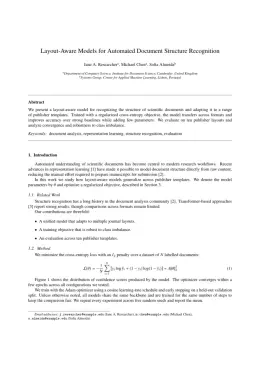
Write in a clean editor, then format for Memories - Materials Devices Circuits and Systems in one click — DocuGuru applies the official Elsevier template with numbered references and exports a submission-ready PDF plus the editable LaTeX source. Free to start.

About the Memories - Materials Devices Circuits and Systems format

Memories - Materials Devices Circuits and Systems is a peer-reviewed journal published by Elsevier, covering Advanced Memory and Neural Computing, Ferroelectric and Negative Capacitance Devices, Semiconductor materials and devices.

PublisherElsevier
Reference styleNumbered (Elsevier)
Numbered — [1], [2] in the text
[1] A. Smith, B. Jones, C. Lee, A representative article title, Memories - Materials Devices Circuits and Systems 12 (2023) 45–58.

Formats any DOI in Memories - Materials Devices Circuits and Systems style. No sign-up.

Publishes research inAdvanced Memory and Neural Computing Ferroelectric and Negative Capacitance Devices Semiconductor materials and devices Advancements in Semiconductor Devices and Circuit Design Neuroscience and Neural Engineering
ISSN2773-0646
Citation impact (2-yr)2.34
h-index16
i10-index35
Total citations945
Open accessYes
Top institutions publishing hereIslamic Azad University Central Tehran Branch
You getA submission-ready PDF and the editable LaTeX source — ready to submit.

Papers published in Memories - Materials Devices Circuits and Systems per year

16
2022
74
2023
21
2024
17
2025

Citation impact of Memories - Materials Devices Circuits and Systems by publication year

213
2022
614
2023
76
2024
30
2025

Citations each year’s papers have accumulated so far — the most recent years are still building up.

Most-cited papers in Memories - Materials Devices Circuits and Systems

A survey on processing-in-memory techniques: Advances and challenges

Kazi Asifuzzaman, Narasinga Rao Miniskar, Aaron Young et al. · 29 Dec 2022

Processing-in-memory (PIM) techniques have gained much attention from computer architecture researchers, and significant research effort has been invested in exploring and developing such techniques. Increasing the research activity dedicated to improving PIM techniques will hopefully help deliver PIM’s promise to solve or significantly reduce memory access bottleneck problems for memory-intensive applications. We also believe it…

Nanotechnology and Computer Science: Trends and advances

Taha Basheer Taha, Azeez A. Barzinjy, Faiq Hama Seaeed Hussain et al. · 27 Aug 2022

Nanotechnology is the aptitude to perceive, measure, operate, and build materials at the nanometer scale, the size of atoms and molecules. Nanotechnology, is involved in many scientific and practical applications, including health, agriculture, electronic devices, computer science and many other fields. At the same time, computers play an essential role in simulating and analyzing the…

Bio-inspired artificial synapses: Neuromorphic computing chip engineering with soft biomaterials

Tanvir Ahmed · 18 Oct 2023

In the context of neuromorphic computing chip engineering, this review paper explores the area of bio-inspired artificial synapses with a focus on the incorporation of soft biomaterials. Soft biomaterials, including biocompatible hydrogels and organic polymers, have definite advantages in resembling the soft and dynamic properties of biological synapses. The article gives a general review of…

Tutorial on memristor-based computing for smart edge applications

Anteneh Gebregiorgis, Abhairaj Singh, Amirreza Yousefzadeh et al. · 20 Jan 2023

Smart computing on edge-devices has demonstrated huge potential for various application sectors such as personalized healthcare and smart robotics. These devices aim at bringing smart computing close to the source where the data is generated or stored, while coping with the stringent resource budget of the edge platforms. The conventional Von-Neumann architecture fails to meet…

Resistive switching behavior of TiO2/(PVP:MoS2) nanocomposite hybrid bilayer in rigid and flexible RRAM devices

Shalu Saini, Anurag Dwivedi, Anil Lodhi et al. · 10 Feb 2023

Resistive switching (RS) behavior of bilayer of poly(4-vinylphenol) (PVP): molybdenum disulfide (MoS 2) nanocomposite (NC) and TiO 2 in resistive random-access memory (RRAM) devices were explored. Devices were demonstrated on indium tin oxide (ITO) coated glass and polyethylene naphtholate (PEN) substrates, with ITO acting as bottom electrode and Ag as top electrode for both rigid…

Memories - Materials Devices Circuits and Systems template — frequently asked questions

How do I write a paper in the Memories - Materials Devices Circuits and Systems format?
In DocuGuru you write your manuscript in a normal editor — no LaTeX setup required — and select the Memories - Materials Devices Circuits and Systems template. When you export, DocuGuru compiles the paper into the official Elsevier format and hands you a submission-ready PDF along with the editable LaTeX source.
What reference style does Memories - Materials Devices Circuits and Systems use?
Memories - Materials Devices Circuits and Systems uses Numbered (Elsevier) references, shown as numbered [1], [2] markers in the text. DocuGuru formats every in-text citation and the reference list in this exact style automatically. A reference appears like this: [1] A. Smith, B. Jones, C. Lee, A representative article title, Memories - Materials Devices Circuits and Systems 12 (2023) 45–58.
Do I need to know LaTeX to submit to Memories - Materials Devices Circuits and Systems?
No. DocuGuru generates the elsarticle LaTeX class and compiles the PDF for you in the background, so you get a Elsevier-ready Memories - Materials Devices Circuits and Systems document without writing any LaTeX. If you do want it, the LaTeX source is included in the export.
Can I import an existing draft into the Memories - Materials Devices Circuits and Systems template?
Yes. Paste or upload your current manuscript — Word, LaTeX, Markdown, or plain text — and DocuGuru reflows it into the Memories - Materials Devices Circuits and Systems format with correct headings, figures, tables, and numbered citations.
Who publishes Memories - Materials Devices Circuits and Systems?
Memories - Materials Devices Circuits and Systems is a multidisciplinary journal published by Elsevier. DocuGuru's Memories - Materials Devices Circuits and Systems template matches Elsevier's official submission format.
Can I export a submission-ready Memories - Materials Devices Circuits and Systems PDF?
Yes — DocuGuru produces a PDF built with the official Memories - Materials Devices Circuits and Systems template (the elsarticle class) that is ready to submit to Elsevier, together with the matching LaTeX source files.
How much does the Memories - Materials Devices Circuits and Systems template cost?
You can start writing in the Memories - Materials Devices Circuits and Systems template for free. Exporting the final submission-ready Memories - Materials Devices Circuits and Systems PDF and LaTeX source is part of DocuGuru's paid plans — see the app for current pricing.
Use the Memories - Materials Devices Circuits and Systems template