Elsevier

Mechanobiology in Medicine Template

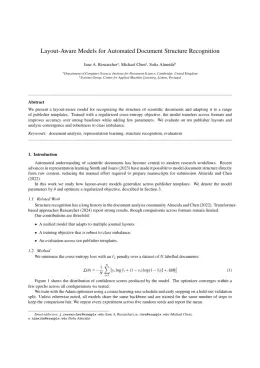
Write in a clean editor, then format for Mechanobiology in Medicine in one click — DocuGuru applies the official Elsevier template with numbered references and exports a submission-ready PDF plus the editable LaTeX source. Free to start.

About the Mechanobiology in Medicine format

Mechanobiology in Medicine is a peer-reviewed journal published by Elsevier, covering Cellular Mechanics and Interactions, 3D Printing in Biomedical Research, Erythrocyte Function and Pathophysiology.

PublisherElsevier
Reference styleNumbered (Elsevier)
Numbered — [1], [2] in the text
[1] A. Smith, B. Jones, C. Lee, A representative article title, Mechanobiology in Medicine 12 (2023) 45–58.

Formats any DOI in Mechanobiology in Medicine style. No sign-up.

Publishes research inCellular Mechanics and Interactions 3D Printing in Biomedical Research Erythrocyte Function and Pathophysiology Cell Adhesion Molecules Research Cancer Cells and Metastasis
ISSN2949-9070
Citation impact (2-yr)4.22
h-index13
i10-index22
Total citations620
Open accessYes
Top institutions publishing hereShanghai Jiao Tong University
You getA submission-ready PDF and the editable LaTeX source — ready to submit.

Papers published in Mechanobiology in Medicine per year

25
2023
43
2024
36
2025

Citation impact of Mechanobiology in Medicine by publication year

204
2023
290
2024
90
2025

Citations each year’s papers have accumulated so far — the most recent years are still building up.

Most-cited papers in Mechanobiology in Medicine

Matrix stiffness-driven cancer progression and the targeted therapeutic strategy

Rui Liang, Guanbin Song · 3 Aug 2023

Increased matrix stiffness is a common phenomenon in solid tumor tissue and is regulated by both tumor and mesenchymal cells. The increase in collagen and lysyl oxidase family proteins in the extracellular matrix leads to deposition, contraction, and crosslinking of the stroma, promoting increased matrix stiffness in tumors. Matrix stiffness is critical to the progression…

YAP/TAZ as mechanobiological signaling pathway in cardiovascular physiological regulation and pathogenesis

Rakibul Islam, Zhongkui Hong · 9 Aug 2024

Cardiovascular diseases (CVDs) persistently rank as a leading cause of premature death and illness worldwide. The Hippo signaling pathway, known for its highly conserved nature and integral role in regulating organ size, tissue homeostasis, and stem cell function, has been identified as a critical factor in the pathogenesis of CVDs. Recent findings underscore the significance…

Mechanobiomaterials: Harnessing mechanobiology principles for tissue repair and regeneration

Xiao Lin, Hua Yang, Yi Xia et al. · 16 May 2024

Mechanical stimuli are known to play critical roles in mediating tissue repair and regeneration. Recently, this knowledge has led to a paradigm shift toward proactive programming of biological functionalities of biomaterials by leveraging mechanics-geometry-biofunction relationships, which are beginning to shape the newly emerging field of mechanobiomaterials. To profile this emerging field, this article aims to…

Viscoelasticity of ECM and cells—origin, measurement and correlation

Zhi-Qiang Liu, Si Da Ling, Kaini Liang et al. · 31 Jul 2024

The extracellular matrix (ECM) and cells are crucial components of natural tissue microenvironments, and they both demonstrate dynamic mechanical properties, particularly viscoelastic behaviors, when exposed to external stress or strain over time. The capacity to modify the mechanical properties of cells and ECM is crucial for gaining insight into the development, physiology, and pathophysiology of…

Patient-derived tumor models and their distinctive applications in personalized drug therapy

Jia He, Chunhe Zhang, Aliçan Özkan et al. · 9 Aug 2023

are conventional methods for developing anti-cancer drugs, evaluating drug delivery, or calculating drug efficacy. However, traditional cell line-derived tumor models are unable to capture the tumor heterogeneity in patients or mimic the interaction between tumors and their surroundings. Recently emerging patient-derived preclinical cancer models, including of patient-derived xenograft (PDX) model, circulating tumor cell (CTC)-derived model,…

Mechanobiology in Medicine template — frequently asked questions

How do I write a paper in the Mechanobiology in Medicine format?
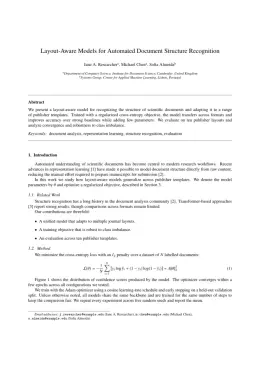
In DocuGuru you write your manuscript in a normal editor — no LaTeX setup required — and select the Mechanobiology in Medicine template. When you export, DocuGuru compiles the paper into the official Elsevier format and hands you a submission-ready PDF along with the editable LaTeX source.
What reference style does Mechanobiology in Medicine use?
Mechanobiology in Medicine uses Numbered (Elsevier) references, shown as numbered [1], [2] markers in the text. DocuGuru formats every in-text citation and the reference list in this exact style automatically. A reference appears like this: [1] A. Smith, B. Jones, C. Lee, A representative article title, Mechanobiology in Medicine 12 (2023) 45–58.
Do I need to know LaTeX to submit to Mechanobiology in Medicine?
No. DocuGuru generates the elsarticle LaTeX class and compiles the PDF for you in the background, so you get a Elsevier-ready Mechanobiology in Medicine document without writing any LaTeX. If you do want it, the LaTeX source is included in the export.
Can I import an existing draft into the Mechanobiology in Medicine template?
Yes. Paste or upload your current manuscript — Word, LaTeX, Markdown, or plain text — and DocuGuru reflows it into the Mechanobiology in Medicine format with correct headings, figures, tables, and numbered citations.
Who publishes Mechanobiology in Medicine?
Mechanobiology in Medicine is a multidisciplinary journal published by Elsevier. DocuGuru's Mechanobiology in Medicine template matches Elsevier's official submission format.
Can I export a submission-ready Mechanobiology in Medicine PDF?
Yes — DocuGuru produces a PDF built with the official Mechanobiology in Medicine template (the elsarticle class) that is ready to submit to Elsevier, together with the matching LaTeX source files.
How much does the Mechanobiology in Medicine template cost?
You can start writing in the Mechanobiology in Medicine template for free. Exporting the final submission-ready Mechanobiology in Medicine PDF and LaTeX source is part of DocuGuru's paid plans — see the app for current pricing.
Use the Mechanobiology in Medicine template