Elsevier

Materials Today Bio Template

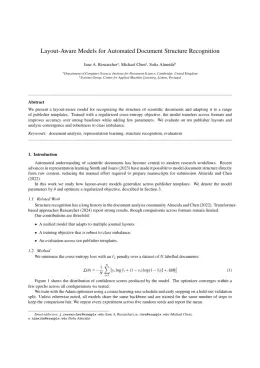
Write in a clean editor, then format for Materials Today Bio in one click — DocuGuru applies the official Elsevier template with numbered references and exports a submission-ready PDF plus the editable LaTeX source. Free to start.

About the Materials Today Bio format

Materials Today Bio is a peer-reviewed journal published by Elsevier, covering Nanoplatforms for cancer theranostics, Bone Tissue Engineering Materials, 3D Printing in Biomedical Research.

PublisherElsevier
Reference styleNumbered (Elsevier)
Numbered — [1], [2] in the text
[1] A. Smith, B. Jones, C. Lee, A representative article title, Materials Today Bio 12 (2023) 45–58.

Formats any DOI in Materials Today Bio style. No sign-up.

Publishes research inNanoplatforms for cancer theranostics Bone Tissue Engineering Materials 3D Printing in Biomedical Research Electrospun Nanofibers in Biomedical Applications Nanoparticle-Based Drug Delivery
ISSN2590-0064
Citation impact (2-yr)5.66
h-index90
i10-index1,239
Total citations48,976
Article processing charge$3,000
Open accessYes
Top institutions publishing hereShanghai Jiao Tong University
Journal websitewww.journals.elsevier.com
You getA submission-ready PDF and the editable LaTeX source — ready to submit.

Papers published in Materials Today Bio per year

1
2006
1
2009
1
2010
1
2011
1
2014
33
2019
46
2020
103
2021
327
2022
394
2023
494
2024
1.3K
2025

Citation impact of Materials Today Bio by publication year

4
2006
5
2009
2
2010
5
2011
0
2014
2.5K
2019
2.1K
2020
5K
2021
13K
2022
11.7K
2023
6.5K
2024
6.4K
2025

Citations each year’s papers have accumulated so far — the most recent years are still building up.

Most-cited papers in Materials Today Bio

Bioinks and bioprinting technologies to make heterogeneous and biomimetic tissue constructs

Nureddin Ashammakhi, Samad Ahadian, C. F. Xu et al. · 1 Jan 2019

The native tissues are complex structures consisting of different cell types, extracellular matrix materials, and biomolecules. Traditional tissue engineering strategies have not been able to fully reproduce biomimetic and heterogeneous tissue constructs because of the lack of appropriate biomaterials and technologies. However, recently developed three-dimensional bioprinting techniques can be leveraged to produce biomimetic and complex…

Smart/stimuli-responsive hydrogels: Cutting-edge platforms for tissue engineering and other biomedical applications

Hussein M. El‐Husseiny, Eman A. Mady, Lina Hamabe et al. · 9 Dec 2021

Recently, biomedicine and tissue regeneration have emerged as great advances that impacted the spectrum of healthcare. This left the door open for further improvement of their applications to revitalize the impaired tissues. Hence, restoring their functions. The implementation of therapeutic protocols that merge biomimetic scaffolds, bioactive molecules, and cells plays a pivotal role in this…

Extracellular vesicle-loaded hydrogels for tissue repair and regeneration

Yikun Ju, Yue Hu, Yang Pu et al. · 20 Dec 2022

Extracellular vesicles (EVs) are a collective term for nanoscale or microscale vesicles secreted by cells that play important biological roles. Mesenchymal stem cells are a class of cells with the potential for self-healing and multidirectional differentiation. In recent years, numerous studies have shown that EVs, especially those secreted by mesenchymal stem cells, can promote the…

Advanced application of stimuli-responsive drug delivery system for inflammatory arthritis treatment

Mi Zhang, Wenhui Hu, Chenhui Cai et al. · 21 Feb 2022

Inflammatory arthritis is a major cause of disability in the elderly. This condition causes joint pain, loss of function, and deterioration of quality of life, mainly due to osteoarthritis (OA) and rheumatoid arthritis (RA). Currently, available treatment options for inflammatory arthritis include anti-inflammatory medications administered via oral, topical, or intra-articular routes, surgery, and physical rehabilitation.…

Recent progress of antibacterial hydrogels in wound dressings

Ben Jia, Guowei Li, Ertai Cao et al. · 15 Feb 2023

Hydrogels are essential biomaterials due to their favorable biocompatibility, mechanical properties similar to human soft tissue extracellular matrix, and tissue repair properties. In skin wound repair, hydrogels with antibacterial functions are especially suitable for dressing applications, so novel antibacterial hydrogel wound dressings have attracted widespread attention, including the design of components, optimization of preparation methods,…

Materials Today Bio template — frequently asked questions

How do I write a paper in the Materials Today Bio format?
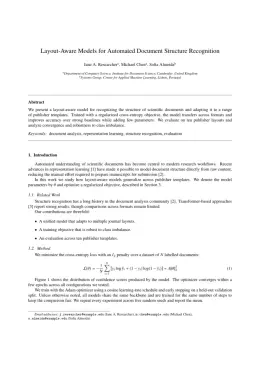
In DocuGuru you write your manuscript in a normal editor — no LaTeX setup required — and select the Materials Today Bio template. When you export, DocuGuru compiles the paper into the official Elsevier format and hands you a submission-ready PDF along with the editable LaTeX source.
What reference style does Materials Today Bio use?
Materials Today Bio uses Numbered (Elsevier) references, shown as numbered [1], [2] markers in the text. DocuGuru formats every in-text citation and the reference list in this exact style automatically. A reference appears like this: [1] A. Smith, B. Jones, C. Lee, A representative article title, Materials Today Bio 12 (2023) 45–58.
Do I need to know LaTeX to submit to Materials Today Bio?
No. DocuGuru generates the elsarticle LaTeX class and compiles the PDF for you in the background, so you get a Elsevier-ready Materials Today Bio document without writing any LaTeX. If you do want it, the LaTeX source is included in the export.
Can I import an existing draft into the Materials Today Bio template?
Yes. Paste or upload your current manuscript — Word, LaTeX, Markdown, or plain text — and DocuGuru reflows it into the Materials Today Bio format with correct headings, figures, tables, and numbered citations.
Who publishes Materials Today Bio?
Materials Today Bio is a multidisciplinary journal published by Elsevier. DocuGuru's Materials Today Bio template matches Elsevier's official submission format.
Can I export a submission-ready Materials Today Bio PDF?
Yes — DocuGuru produces a PDF built with the official Materials Today Bio template (the elsarticle class) that is ready to submit to Elsevier, together with the matching LaTeX source files.
How much does the Materials Today Bio template cost?
You can start writing in the Materials Today Bio template for free. Exporting the final submission-ready Materials Today Bio PDF and LaTeX source is part of DocuGuru's paid plans — see the app for current pricing.
Use the Materials Today Bio template