Elsevier

Materials Today Advances Template

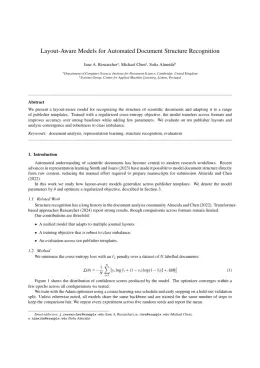
Write in a clean editor, then format for Materials Today Advances in one click — DocuGuru applies the official Elsevier template with numbered references and exports a submission-ready PDF plus the editable LaTeX source. Free to start.

About the Materials Today Advances format

Materials Today Advances is a peer-reviewed journal published by Elsevier, covering Nanoplatforms for cancer theranostics, Bone Tissue Engineering Materials, 3D Printing in Biomedical Research.

PublisherElsevier
Reference styleNumbered (Elsevier)
Numbered — [1], [2] in the text
[1] A. Smith, B. Jones, C. Lee, A representative article title, Materials Today Advances 12 (2023) 45–58.

Formats any DOI in Materials Today Advances style. No sign-up.

Publishes research inNanoplatforms for cancer theranostics Bone Tissue Engineering Materials 3D Printing in Biomedical Research MXene and MAX Phase Materials 2D Materials and Applications
ISSN2590-0498
Citation impact (2-yr)3.22
h-index68
i10-index356
Total citations18,374
Article processing charge$3,000
Open accessYes
Top institutions publishing hereShanghai Jiao Tong University
Journal websitewww.journals.elsevier.com
You getA submission-ready PDF and the editable LaTeX source — ready to submit.

Papers published in Materials Today Advances per year

25
2019
87
2020
71
2021
131
2022
117
2023
89
2024
126
2025

Citation impact of Materials Today Advances by publication year

1.5K
2019
6.5K
2020
2.7K
2021
4.2K
2022
2K
2023
929
2024
307
2025

Citations each year’s papers have accumulated so far — the most recent years are still building up.

Most-cited papers in Materials Today Advances

Intercalation pseudocapacitance in electrochemical energy storage: recent advances in fundamental understanding and materials development

Y. Liu, San Ping Jiang, Zongping Shao · 17 May 2020

Electrochemical energy storage (EES) plays an important role in personal electronics, electrified vehicles, and smart grid. Lithium-ion batteries (LIBs) and supercapacitors (SCs) are two of the most important EES devices that have been widely used in our daily life. The energy density of LIBs is heavily dependent on the electrode capacity, in which the charge…

Carbon quantum dots: Preparation, optical properties, and biomedical applications

Hai-Li Yang, Lifei Bai, Zhirong Geng et al. · 3 May 2023

As an excellent fluorescent nanomaterial, carbon quantum dots (CQDs) have the properties of small molecular weight, small particle size, high fluorescence stability, no optical flicker, wide excitation spectrum, continuous, long adjustable emission wavelength, good biocompatibility and low toxicity. At present, it has been widely used in biological detection, in vivo and in vitro imaging, drug…

Solid-state nuclear magnetic resonance spectroscopy of cements

Brant Walkley, John L. Provis · 1 Mar 2019

Cement is the ubiquitous material upon which modern civilisation is built, providing long-term strength, impermeability and durability for housing and infrastructure. The fundamental chemical interactions which control the structure and performance of cements have been the subject of intense research for decades, but the complex, crystallographically disordered nature of the key phases which form in…

Recent advances in nanomaterial-based solid-state hydrogen storage

Emmanuel Boateng, Aicheng Chen · 6 Feb 2020

The hydrogen economy is a system that is proposed as a long-term solution for a secure energy future. Hydrogen production, storage, distribution, and utilization make up the fundamental elements of an envisaged hydrogen economy system. These elements have been the subject of intense research for decades; however, the development of a viable safe and efficient…

Electrocatalytic carbon dioxide reduction: from fundamental principles to catalyst design

Xiaolong Zhang, Si‐Xuan Guo, Karl Adrian Gandionco et al. · 26 May 2020

Electrocatalytic reduction of carbon dioxide (CO2) is one of the most promising technologies available to mitigate environmental problems introduced by the continuous increase in its concentration that has occurred since the industrial revolution. This technology also is attractive from the viewpoint that it can be based on carbon-neutral energy by converting CO2 into fuels and…

Materials Today Advances template — frequently asked questions

How do I write a paper in the Materials Today Advances format?
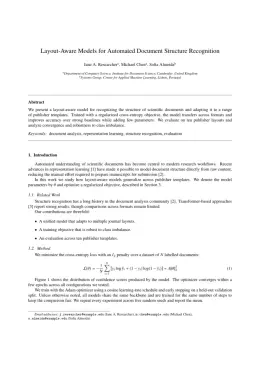
In DocuGuru you write your manuscript in a normal editor — no LaTeX setup required — and select the Materials Today Advances template. When you export, DocuGuru compiles the paper into the official Elsevier format and hands you a submission-ready PDF along with the editable LaTeX source.
What reference style does Materials Today Advances use?
Materials Today Advances uses Numbered (Elsevier) references, shown as numbered [1], [2] markers in the text. DocuGuru formats every in-text citation and the reference list in this exact style automatically. A reference appears like this: [1] A. Smith, B. Jones, C. Lee, A representative article title, Materials Today Advances 12 (2023) 45–58.
Do I need to know LaTeX to submit to Materials Today Advances?
No. DocuGuru generates the elsarticle LaTeX class and compiles the PDF for you in the background, so you get a Elsevier-ready Materials Today Advances document without writing any LaTeX. If you do want it, the LaTeX source is included in the export.
Can I import an existing draft into the Materials Today Advances template?
Yes. Paste or upload your current manuscript — Word, LaTeX, Markdown, or plain text — and DocuGuru reflows it into the Materials Today Advances format with correct headings, figures, tables, and numbered citations.
Who publishes Materials Today Advances?
Materials Today Advances is a multidisciplinary journal published by Elsevier. DocuGuru's Materials Today Advances template matches Elsevier's official submission format.
Can I export a submission-ready Materials Today Advances PDF?
Yes — DocuGuru produces a PDF built with the official Materials Today Advances template (the elsarticle class) that is ready to submit to Elsevier, together with the matching LaTeX source files.
How much does the Materials Today Advances template cost?
You can start writing in the Materials Today Advances template for free. Exporting the final submission-ready Materials Today Advances PDF and LaTeX source is part of DocuGuru's paid plans — see the app for current pricing.
Use the Materials Today Advances template