Elsevier

Marine Genomics Template

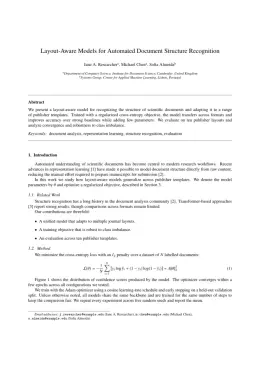
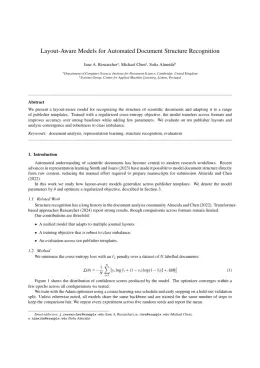
Write in a clean editor, then format for Marine Genomics in one click — DocuGuru applies the official Elsevier template with author–year references and exports a submission-ready PDF plus the editable LaTeX source. Free to start.

About the Marine Genomics format

Marine Genomics is a peer-reviewed journal published by Elsevier, covering Genomics and Phylogenetic Studies, Microbial Community Ecology and Physiology, Aquaculture disease management and microbiota.

PublisherElsevier
Reference styleAuthor–year (Harvard)
Author–year — (Smith, 2023) in the text
Smith, A., Jones, B. and Lee, C. (2023) 'A representative article title', Marine Genomics, 12(3), pp. 45–58.

Formats any DOI in Marine Genomics style. No sign-up.

Publishes research inGenomics and Phylogenetic Studies Microbial Community Ecology and Physiology Aquaculture disease management and microbiota Marine Bivalve and Aquaculture Studies Protist diversity and phylogeny
ISSN1874-7787
Citation impact (2-yr)0.95
h-index54
i10-index488
Total citations17,023
Article processing charge$2,980
Top institutions publishing hereMinistry of Natural Resources
Journal websitewww.journals.elsevier.com
You getA submission-ready PDF and the editable LaTeX source — ready to submit.

Papers published in Marine Genomics per year

106
2014
138
2015
79
2016
94
2017
70
2018
77
2019
57
2020
45
2021
46
2022
35
2023
41
2024
29
2025

Citation impact of Marine Genomics by publication year

2.3K
2014
3.2K
2015
1.8K
2016
1.8K
2017
782
2018
1.1K
2019
465
2020
274
2021
258
2022
158
2023
72
2024
8
2025

Citations each year’s papers have accumulated so far — the most recent years are still building up.

Most-cited papers in Marine Genomics

Origin, dynamics, and implications of extracellular DNA pools in marine sediments

Andrea Torti, Mark A. Lever, Bo Barker Jørgensen · 1 Dec 2015

In marine sediments, DNA occurs both inside and outside living organisms. DNA not enclosed in living cells may account for the largest fraction of total DNA, and include molecules locked within dead cells, organic and inorganic aggregates, adsorbed onto mineral matrices, and viral DNA. This DNA comprises genetic material released in situ from sediment microbial…

t-Distributed Stochastic Neighbor Embedding (t-SNE): A tool for eco-physiological transcriptomic analysis

Matthew Cieslak, Ann M. Castelfranco, Vittoria Roncalli et al. · 26 Nov 2019

High-throughput RNA sequencing (RNA-Seq) has transformed the ecophysiological assessment of individual plankton species and communities. However, the technology generates complex data consisting of millions of short-read sequences that can be difficult to analyze and interpret. New bioinformatics workflows are needed to guide experimentation, environmental sampling, and to develop and test hypotheses. One complexity-reducing tool that…

Next-generation biology: Sequencing and data analysis approaches for non-model organisms

Rute R. da Fonseca, Anders Albrechtsen, Gonçalo Espregueira Themudo et al. · 14 May 2016

As sequencing technologies become more affordable, it is now realistic to propose studying the evolutionary history of virtually any organism on a genomic scale. However, when dealing with non-model organisms it is not always easy to choose the best approach given a specific biological question, a limited budget, and challenging sample material. Furthermore, although recent…

Marine Genomics template — frequently asked questions

How do I write a paper in the Marine Genomics format?
In DocuGuru you write your manuscript in a normal editor — no LaTeX setup required — and select the Marine Genomics template. When you export, DocuGuru compiles the paper into the official Elsevier format and hands you a submission-ready PDF along with the editable LaTeX source.
What reference style does Marine Genomics use?
Marine Genomics uses Author–year (Harvard) references, shown as author–year markers such as (Smith, 2023) in the text. DocuGuru formats every in-text citation and the reference list in this exact style automatically. A reference appears like this: Smith, A., Jones, B. and Lee, C. (2023) 'A representative article title', Marine Genomics, 12(3), pp. 45–58.
Do I need to know LaTeX to submit to Marine Genomics?
No. DocuGuru generates the elsarticle LaTeX class and compiles the PDF for you in the background, so you get a Elsevier-ready Marine Genomics document without writing any LaTeX. If you do want it, the LaTeX source is included in the export.
Can I import an existing draft into the Marine Genomics template?
Yes. Paste or upload your current manuscript — Word, LaTeX, Markdown, or plain text — and DocuGuru reflows it into the Marine Genomics format with correct headings, figures, tables, and author–year citations.
Who publishes Marine Genomics?
Marine Genomics is a multidisciplinary journal published by Elsevier. DocuGuru's Marine Genomics template matches Elsevier's official submission format.
Can I export a submission-ready Marine Genomics PDF?
Yes — DocuGuru produces a PDF built with the official Marine Genomics template (the elsarticle class) that is ready to submit to Elsevier, together with the matching LaTeX source files.
How much does the Marine Genomics template cost?
You can start writing in the Marine Genomics template for free. Exporting the final submission-ready Marine Genomics PDF and LaTeX source is part of DocuGuru's paid plans — see the app for current pricing.

Use the Marine Genomics template