Elsevier

Liver Research Template

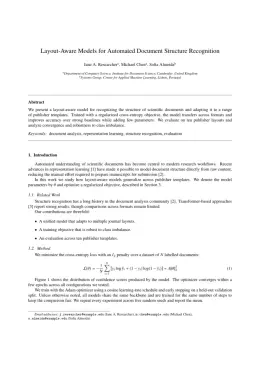
Write in a clean editor, then format for Liver Research in one click — DocuGuru applies the official Elsevier template with numbered references and exports a submission-ready PDF plus the editable LaTeX source. Free to start.

About the Liver Research format

Liver Research is a peer-reviewed journal published by Elsevier, covering Liver Disease Diagnosis and Treatment, Drug Transport and Resistance Mechanisms, Liver physiology and pathology.

PublisherElsevier
Reference styleNumbered (Elsevier)
Numbered — [1], [2] in the text
[1] A. Smith, B. Jones, C. Lee, A representative article title, Liver Research 12 (2023) 45–58.

Formats any DOI in Liver Research style. No sign-up.

Publishes research inLiver Disease Diagnosis and Treatment Drug Transport and Resistance Mechanisms Liver physiology and pathology Liver Disease and Transplantation Hepatocellular Carcinoma Treatment and Prognosis
ISSN2096-2878
Citation impact (2-yr)3.87
h-index40
i10-index132
Total citations5,799
Article processing charge$800
Open accessYes
Top institutions publishing hereSun Yat-sen University
Journal websitewww.sciencedirect.com
You getA submission-ready PDF and the editable LaTeX source — ready to submit.

Papers published in Liver Research per year

34
2017
39
2018
32
2019
40
2020
33
2021
43
2022
41
2023
35
2024
42
2025

Citation impact of Liver Research by publication year

1.1K
2017
1.1K
2018
1.1K
2019
920
2020
466
2021
291
2022
392
2023
229
2024
113
2025

Citations each year’s papers have accumulated so far — the most recent years are still building up.

Most-cited papers in Liver Research

Bile acid metabolism and signaling in liver disease and therapy

John Y.L. Chiang · 11 May 2017

Bile acids play a critical role in the regulation of glucose, lipid, and energy metabolism through activation of the nuclear bile acid receptor farnesoid X receptor (FXR) and membrane G protein-coupled bile acid receptor-1 (Gpbar-1, aka TGR5). Agonist activation of FXR and TGR5 improves insulin and glucose sensitivity and stimulates energy metabolism to prevent diabetes,…

Up to date on cholesterol 7 alpha-hydroxylase (CYP7A1) in bile acid synthesis

John Y.L. Chiang, Jessica M. Ferrell · 1 Jun 2020

Cholesterol 7 alpha-hydroxylase (CYP7A1, EC1.14) is the first and rate-limiting enzyme in the classic bile acid synthesis pathway. Much progress has been made in understanding the transcriptional regulation of CYP7A1 gene expression and the underlying molecular mechanisms of bile acid feedback regulation of CYP7A1 and bile acid synthesis in the last three decades. Discovery of…

Endoplasmic reticulum stress and liver diseases

Xiaoying Liu, Richard M. Green · 30 Jan 2019

Endoplasmic reticulum (ER) stress occurs when ER homeostasis is perturbed with accumulation of unfolded/misfolded protein or calcium depletion. The unfolded protein response (UPR), comprising of inositol-requiring enzyme 1α (IRE1α), PKR-like ER kinase (PERK) and activating transcription factor 6 (ATF6) signaling pathways, is a protective cellular response activated by ER stress. However, UPR activation can also…

Hepatic lipid homeostasis by peroxisome proliferator-activated receptor gamma 2

Yoon Kwang Lee, Jung Eun Park, Mikang Lee et al. · 1 Dec 2018

Peroxisome proliferator-activated receptor gamma (PPARγ or PPARG) is a ligand-activated transcription factor belonging to the nuclear hormone receptor superfamily. It plays a master role in the differentiation and proliferation of adipose tissues. It has two major isoforms, PPARγ1 and PPARγ2, encoded from a single gene using two separate promoters and alternative splicing. Among them, PPARγ2…

The acidic pathway of bile acid synthesis: Not just an alternative pathway

William M. Pandak, Genta Kakiyama · 21 May 2019

Over the last two decades, the prevalence of obesity, and metabolic syndromes (MS) such as non-alcoholic fatty liver disease (NAFLD) and type 2 diabetes mellitus (T2DM), have dramatically increased. Bile acids play a major role in the digestion, absorption of nutrients, and the body's redistribution of absorbed lipids as a function of their chemistry and…

Liver Research template — frequently asked questions

How do I write a paper in the Liver Research format?
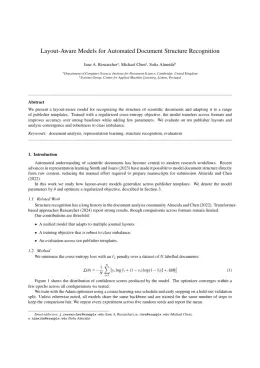
In DocuGuru you write your manuscript in a normal editor — no LaTeX setup required — and select the Liver Research template. When you export, DocuGuru compiles the paper into the official Elsevier format and hands you a submission-ready PDF along with the editable LaTeX source.
What reference style does Liver Research use?
Liver Research uses Numbered (Elsevier) references, shown as numbered [1], [2] markers in the text. DocuGuru formats every in-text citation and the reference list in this exact style automatically. A reference appears like this: [1] A. Smith, B. Jones, C. Lee, A representative article title, Liver Research 12 (2023) 45–58.
Do I need to know LaTeX to submit to Liver Research?
No. DocuGuru generates the elsarticle LaTeX class and compiles the PDF for you in the background, so you get a Elsevier-ready Liver Research document without writing any LaTeX. If you do want it, the LaTeX source is included in the export.
Can I import an existing draft into the Liver Research template?
Yes. Paste or upload your current manuscript — Word, LaTeX, Markdown, or plain text — and DocuGuru reflows it into the Liver Research format with correct headings, figures, tables, and numbered citations.
Who publishes Liver Research?
Liver Research is a multidisciplinary journal published by Elsevier. DocuGuru's Liver Research template matches Elsevier's official submission format.
Can I export a submission-ready Liver Research PDF?
Yes — DocuGuru produces a PDF built with the official Liver Research template (the elsarticle class) that is ready to submit to Elsevier, together with the matching LaTeX source files.
How much does the Liver Research template cost?
You can start writing in the Liver Research template for free. Exporting the final submission-ready Liver Research PDF and LaTeX source is part of DocuGuru's paid plans — see the app for current pricing.
Use the Liver Research template