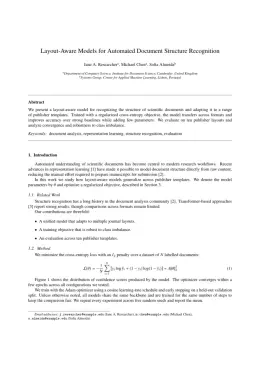
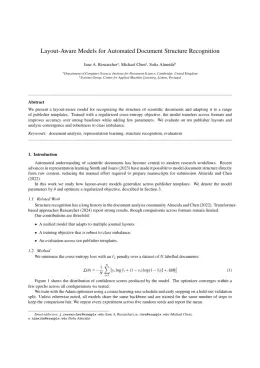
Elsevier

JSES Reviews Reports and Techniques Template

Write in a clean editor, then format for JSES Reviews Reports and Techniques in one click — DocuGuru applies the official Elsevier template with numbered references and exports a submission-ready PDF plus the editable LaTeX source. Free to start.

About the JSES Reviews Reports and Techniques format

JSES Reviews Reports and Techniques is a peer-reviewed journal published by Elsevier, covering Shoulder Injury and Treatment, Shoulder and Clavicle Injuries, Nerve Injury and Rehabilitation.

PublisherElsevier
Reference styleNumbered (Elsevier)
Numbered — [1], [2] in the text
[1] A. Smith, B. Jones, C. Lee, A representative article title, JSES Reviews Reports and Techniques 12 (2023) 45–58.

Formats any DOI in JSES Reviews Reports and Techniques style. No sign-up.

Publishes research inShoulder Injury and Treatment Shoulder and Clavicle Injuries Nerve Injury and Rehabilitation Elbow and Forearm Trauma Treatment Orthopedic Surgery and Rehabilitation
ISSN2666-6391
Citation impact (2-yr)0.58
h-index16
i10-index43
Total citations1,633
Article processing charge$1,250
Open accessYes
Top institutions publishing hereMayo Clinic in Arizona
Journal websitewww.journals.elsevier.com
You getA submission-ready PDF and the editable LaTeX source — ready to submit.

Papers published in JSES Reviews Reports and Techniques per year

1
1989
1
2011
2
2013
13
2020
93
2021
101
2022
99
2023
124
2024
226
2025

Citation impact of JSES Reviews Reports and Techniques by publication year

4
1989
2
2011
0
2013
63
2020
463
2021
460
2022
329
2023
186
2024
83
2025

Citations each year’s papers have accumulated so far — the most recent years are still building up.

Most-cited papers in JSES Reviews Reports and Techniques

Trends in rotator cuff repair rates and comorbidity burden among commercially insured patients younger than the age of 65 years, United States 2007-2016

Elizabeth L. Yanik, Aaron M. Chamberlain, Jay D. Keener · 13 Aug 2021

Background: Prior US studies have shown increasing rotator cuff repair rates through 2009. We hypothesize that rotator cuff repair rates are continuing to increase and the comorbidity profiles of patients are becoming more complex over time. Methods: We identified rotator cuff repairs in a large US cohort of people 18-64 years of age with ≥1…

Pectoralis minor syndrome – review of pathoanatomy, diagnosis, and management of the primary cause of neurogenic thoracic outlet syndrome

Adil Shahzad Ahmed, Alexander Graf, Anthony L. Karzon et al. · 30 Jun 2022

Thoracic outlet syndrome is an umbrella term for compressive pathologies in the supraclavicular and infraclavicular fossae, with the vast majority being neurogenic in nature. These compressive neuropathies, such as pectoralis minor syndrome, can be challenging problems for both patients and physicians. Robust understanding of thoracic outlet anatomy and scapulothoracic biomechanics are necessary to distinguish neurogenic…

Low socioeconomic status worsens access to care and outcomes for rotator cuff repair: a scoping review

Andrew P. Gatto, Brian T. Feeley, Drew A. Lansdown · 25 Oct 2021

Background: Poor socioeconomic status (SES) is consistently associated with poor quality of health care, particularly in the field of orthopedics. Expanding insurance coverage has created a larger patient population by specifically making health care more accessible, translating to greater demand for care in the low-SES population. The purpose of this article is to provide a…

Fatty degeneration of the rotator cuff: pathogenesis, clinical implications, and future treatment

Jacob Bogdanov, Rae Lan, Timothy N. Chu et al. · 12 Jul 2021

Chronic rotator cuff pathology is often complicated by fatty degeneration of the rotator cuff (FDRC) muscles, an insidious process associated with poor prognosis with or without surgical intervention. Currently there is no treatment for FDRC, and many studies have described a natural course for this disease almost always resulting in further degeneration and morbidity. Recapitulating…

Management of shoulder instability in hypermobility-type Ehlers-Danlos syndrome

Samuel E. Broida, Aidan P. Sweeney, Michael B. Gottschalk et al. · 24 Mar 2021

Shoulder instability in hypermobile Ehlers-Danlos syndrome can result in lifelong pain and functional disability. Treatment in this population is complicated by the severe degree of instability as well as the underlying abnormalities of the joint connective tissue. Appropriate care for these patients requires a thorough understanding of the natural history of their disease, knowledge of…

JSES Reviews Reports and Techniques template — frequently asked questions

How do I write a paper in the JSES Reviews Reports and Techniques format?
In DocuGuru you write your manuscript in a normal editor — no LaTeX setup required — and select the JSES Reviews Reports and Techniques template. When you export, DocuGuru compiles the paper into the official Elsevier format and hands you a submission-ready PDF along with the editable LaTeX source.
What reference style does JSES Reviews Reports and Techniques use?
JSES Reviews Reports and Techniques uses Numbered (Elsevier) references, shown as numbered [1], [2] markers in the text. DocuGuru formats every in-text citation and the reference list in this exact style automatically. A reference appears like this: [1] A. Smith, B. Jones, C. Lee, A representative article title, JSES Reviews Reports and Techniques 12 (2023) 45–58.
Do I need to know LaTeX to submit to JSES Reviews Reports and Techniques?
No. DocuGuru generates the elsarticle LaTeX class and compiles the PDF for you in the background, so you get a Elsevier-ready JSES Reviews Reports and Techniques document without writing any LaTeX. If you do want it, the LaTeX source is included in the export.
Can I import an existing draft into the JSES Reviews Reports and Techniques template?
Yes. Paste or upload your current manuscript — Word, LaTeX, Markdown, or plain text — and DocuGuru reflows it into the JSES Reviews Reports and Techniques format with correct headings, figures, tables, and numbered citations.
Who publishes JSES Reviews Reports and Techniques?
JSES Reviews Reports and Techniques is a multidisciplinary journal published by Elsevier. DocuGuru's JSES Reviews Reports and Techniques template matches Elsevier's official submission format.
Can I export a submission-ready JSES Reviews Reports and Techniques PDF?
Yes — DocuGuru produces a PDF built with the official JSES Reviews Reports and Techniques template (the elsarticle class) that is ready to submit to Elsevier, together with the matching LaTeX source files.
How much does the JSES Reviews Reports and Techniques template cost?
You can start writing in the JSES Reviews Reports and Techniques template for free. Exporting the final submission-ready JSES Reviews Reports and Techniques PDF and LaTeX source is part of DocuGuru's paid plans — see the app for current pricing.

Use the JSES Reviews Reports and Techniques template