Elsevier

Journal of Photochemistry and Photobiology Template

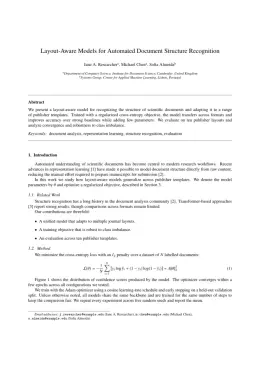
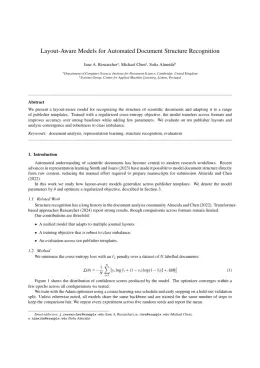
Write in a clean editor, then format for Journal of Photochemistry and Photobiology in one click — DocuGuru applies the official Elsevier template with numbered references and exports a submission-ready PDF plus the editable LaTeX source. Free to start.

About the Journal of Photochemistry and Photobiology format

Journal of Photochemistry and Photobiology is a peer-reviewed journal published by Elsevier, covering Photodynamic Therapy Research Studies, Advanced Photocatalysis Techniques, Skin Protection and Aging.

PublisherElsevier
Reference styleNumbered (Elsevier)
Numbered — [1], [2] in the text
[1] A. Smith, B. Jones, C. Lee, A representative article title, Journal of Photochemistry and Photobiology 12 (2023) 45–58.

Formats any DOI in Journal of Photochemistry and Photobiology style. No sign-up.

Publishes research inPhotodynamic Therapy Research Studies Advanced Photocatalysis Techniques Skin Protection and Aging Nanoplatforms for cancer theranostics Laser Applications in Dentistry and Medicine
ISSN2666-4690
Citation impact (2-yr)2.37
h-index28
i10-index93
Total citations2,922
Article processing charge$1,700
Open accessYes
Top institutions publishing hereUniversidade de São Paulo
Journal websitewww.journals.elsevier.com
You getA submission-ready PDF and the editable LaTeX source — ready to submit.

Papers published in Journal of Photochemistry and Photobiology per year

14
2020
82
2021
58
2022
63
2023
27
2024
17
2025

Citation impact of Journal of Photochemistry and Photobiology by publication year

184
2020
1.3K
2021
615
2022
584
2023
139
2024
25
2025

Citations each year’s papers have accumulated so far — the most recent years are still building up.

Most-cited papers in Journal of Photochemistry and Photobiology

Molecular electrostatic potential (MEP) surface analysis of chemo sensors: An extra supporting hand for strength, selectivity & non-traditional interactions

Sudha Lakshminarayanan, Vanthana Jeyasingh, Kumaresan Murugesan et al. · 27 Feb 2021

We have used Molecular Electrostatic Potential (MEP) surface analysis as a web based theoretical tool to visualize and support our experimental finding on existence of C-H••• anion & anion•••π interactions in receptor-anion complexes. In addition, the MEP surface analysis also play vital role in the designing of effective receptors for anion binding. we have used…

Reactive azo compounds as a potential chemotherapy drugs in the treatment of malignant glioblastoma (GBM): Experimental and theoretical studies

Akaninyene D. Udoikono, Hitler Louis, Ededet A. Eno et al. · 9 Mar 2022

This research work focuses on the synthesis, spectroscopic characterization, DFT studies, and in silico molecular docking of two azo compounds; (E)-6-((4,6-dichloro-1,3,5-triazin-2-yl)amino)-4-hydroxy-3-(phenyldiazenyl)naphthalen-2-yl hydrogen sulfite (compound A) and (E)-6-((4,6-dichloro-1,3,5-triazin-2-yl)amino)-3-((4-formylphenyl)diazenyl)-4-hydroxynaphthalen-2-yl hydrogen sulfite (compound D) to determine their application as chemotherapeutic drug for the treatment of the malignant glioblastoma multiforme (GBM). The experimental and theoretical vibrational wavenumbers of the…

Photobiomodulation: Cellular, molecular, and clinical aspects

Márcia Cristina Prado Felician, Renata Belotto, João Paulo Tardivo et al. · 23 Jul 2023

Photobiomodulation (PBM) is a noninvasive photonic-based therapy, capable of dealing with immune-inflammatory, neurological, and musculoskeletal disorders, as well as healing oral and chronic skin wounds. During PBM light is applied at a specific wavelength, either in the visible or near-infrared (NIR) ranges. Photophysical and photochemical processes might stimulate or inhibit various biological processes, depending on…

Synthesis and characterization of 2-D La-doped Bi2O3 for photocatalytic degradation of organic dye and pesticide

Subhash Dharmraj Khairnar, Anil N. Kulkarni, Sachin Girdhar Shinde et al. · 27 Mar 2021

Photocatalytic degradation of organic dye by AOP's is an effective method to minimize water pollution. The semiconducting materials have a larger bandgap and difficult to fabricate in the form of 2 D-films. Here we report a simple method for the effective fabrication of undoped and La-doped Bi2O3 thin films by a chemical solution deposition method.…

Harnessing ZnO nanoparticles for antimicrobial and photocatalytic activities

N. Bhuvan Raj, N.T. PavithraGowda, O.S. Pooja et al. · 23 Feb 2021

Zinc oxide nanoparticles (ZnO NPs) have proven record of exhibiting multifunctional properties and thus utilized for diversified applications. ZnO NPs were successfully synthesized by chemical and green routes. The Syzygium cumini plant leaf extract was used to synthesize green ZnO NPs. The chemical and green ZnO NPs were characterized by using advanced technical tools to…

Journal of Photochemistry and Photobiology template — frequently asked questions

How do I write a paper in the Journal of Photochemistry and Photobiology format?
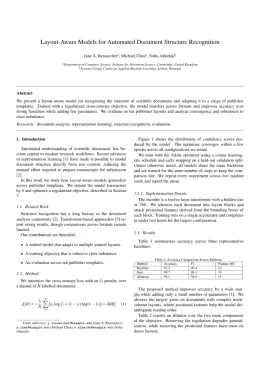
In DocuGuru you write your manuscript in a normal editor — no LaTeX setup required — and select the Journal of Photochemistry and Photobiology template. When you export, DocuGuru compiles the paper into the official Elsevier format and hands you a submission-ready PDF along with the editable LaTeX source.
What reference style does Journal of Photochemistry and Photobiology use?
Journal of Photochemistry and Photobiology uses Numbered (Elsevier) references, shown as numbered [1], [2] markers in the text. DocuGuru formats every in-text citation and the reference list in this exact style automatically. A reference appears like this: [1] A. Smith, B. Jones, C. Lee, A representative article title, Journal of Photochemistry and Photobiology 12 (2023) 45–58.
Do I need to know LaTeX to submit to Journal of Photochemistry and Photobiology?
No. DocuGuru generates the elsarticle LaTeX class and compiles the PDF for you in the background, so you get a Elsevier-ready Journal of Photochemistry and Photobiology document without writing any LaTeX. If you do want it, the LaTeX source is included in the export.
Can I import an existing draft into the Journal of Photochemistry and Photobiology template?
Yes. Paste or upload your current manuscript — Word, LaTeX, Markdown, or plain text — and DocuGuru reflows it into the Journal of Photochemistry and Photobiology format with correct headings, figures, tables, and numbered citations.
Who publishes Journal of Photochemistry and Photobiology?
Journal of Photochemistry and Photobiology is a multidisciplinary journal published by Elsevier. DocuGuru's Journal of Photochemistry and Photobiology template matches Elsevier's official submission format.
Can I export a submission-ready Journal of Photochemistry and Photobiology PDF?
Yes — DocuGuru produces a PDF built with the official Journal of Photochemistry and Photobiology template (the elsarticle class) that is ready to submit to Elsevier, together with the matching LaTeX source files.
How much does the Journal of Photochemistry and Photobiology template cost?
You can start writing in the Journal of Photochemistry and Photobiology template for free. Exporting the final submission-ready Journal of Photochemistry and Photobiology PDF and LaTeX source is part of DocuGuru's paid plans — see the app for current pricing.
Use the Journal of Photochemistry and Photobiology template