
629 citations
Cite
SaveGo to paper →
Elsevier
Journal of Palaeogeography Template
Write in a clean editor, then format for Journal of Palaeogeography in one click — DocuGuru applies the official Elsevier template with author–year references and exports a submission-ready PDF plus the editable LaTeX source. Free to start.
About the Journal of Palaeogeography format
Journal of Palaeogeography is a peer-reviewed journal published by Elsevier, covering Paleontology and Stratigraphy of Fossils, Geological formations and processes, Geology and Paleoclimatology Research.
| Publisher | Elsevier |
|---|---|
| Reference style | Author–year (Harvard) Author–year — (Smith, 2023) in the text Smith, A., Jones, B. and Lee, C. (2023) 'A representative article title', Journal of Palaeogeography, 12(3), pp. 45–58.
Formats any DOI in Journal of Palaeogeography style. No sign-up. |
| Publishes research in | Paleontology and Stratigraphy of Fossils Geological formations and processes Geology and Paleoclimatology Research Hydrocarbon exploration and reservoir analysis Geological and Geophysical Studies |
| ISSN | 2095-3836 |
| Citation impact (2-yr) | 2.11 |
| h-index | 35 |
| i10-index | 162 |
| Total citations | 6,187 |
| Article processing charge | $1,500 |
| Open access | Yes |
| Top institutions publishing here | Chinese Academy of Sciences |
| Journal website | www.sciencedirect.com |
| You get | A submission-ready PDF and the editable LaTeX source — ready to submit. |
Papers published in Journal of Palaeogeography per year
Citation impact of Journal of Palaeogeography by publication year
Citations each year’s papers have accumulated so far — the most recent years are still building up.
Most-cited papers in Journal of Palaeogeography
The synonymous use of the general term “landslide”, with a built-in reference to a sliding motion, for all varieties of mass-transport deposits (MTD), which include slides, slumps, debrites, topples, creeps, debris avalanches etc. in subaerial, sublacustrine, submarine, and extraterrestrial environments has created a multitude of conceptual and nomenclatural problems. In addition, concepts of triggers and…
166 citations
Cite
SaveGo to paper →
When we look back the contributions on submarine fans during the past 65 years (1950–2015), the empirical data on 21 modern submarine fans and 10 ancient deep-water systems, published by the results of the First COMFAN (Committee on FANs) Meeting (Bouma et al., 1985a), have remained the single most significant compilation of data on submarine…
164 citations
Cite
SaveGo to paper →
This study presents a review on palaeogeographic implications and temporal variations of glaucony covering both modern and ancient records. Phanerozoic glaucony preferably forms in a shelf depositional setting. Deep marine conditions and low seawater temperature discourage formation of glaucony. Around 75% of glaucony is recorded from the Cretaceous to the Holocene sediments, which are related…
156 citations
Cite
SaveGo to paper →
Abstract A hyperpycnal flow forms when a relatively dense land-derived gravity flow enters into a marine or lacustrine water reservoir. As a consequence of its excess of density, the incoming flow plunges in coastal areas, generating a highly dynamic and often long-lived dense underflow. Depending on the characteristics of the parent flow (flow duration and…
135 citations
Cite
SaveGo to paper →
Related journal templates
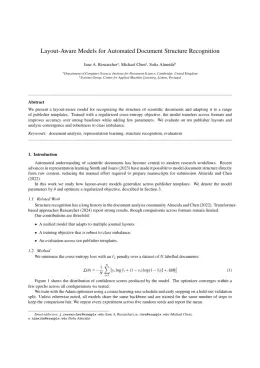
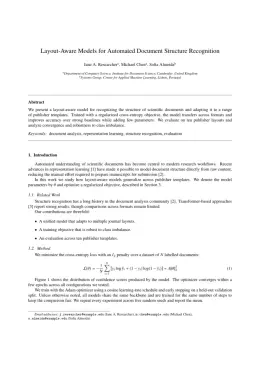
Journal of Palaeogeography template — frequently asked questions
How do I write a paper in the Journal of Palaeogeography format?
In DocuGuru you write your manuscript in a normal editor — no LaTeX setup required — and select the Journal of Palaeogeography template. When you export, DocuGuru compiles the paper into the official Elsevier format and hands you a submission-ready PDF along with the editable LaTeX source.
What reference style does Journal of Palaeogeography use?
Journal of Palaeogeography uses Author–year (Harvard) references, shown as author–year markers such as (Smith, 2023) in the text. DocuGuru formats every in-text citation and the reference list in this exact style automatically. A reference appears like this: Smith, A., Jones, B. and Lee, C. (2023) 'A representative article title', Journal of Palaeogeography, 12(3), pp. 45–58.
Do I need to know LaTeX to submit to Journal of Palaeogeography?
No. DocuGuru generates the elsarticle LaTeX class and compiles the PDF for you in the background, so you get a Elsevier-ready Journal of Palaeogeography document without writing any LaTeX. If you do want it, the LaTeX source is included in the export.
Can I import an existing draft into the Journal of Palaeogeography template?
Yes. Paste or upload your current manuscript — Word, LaTeX, Markdown, or plain text — and DocuGuru reflows it into the Journal of Palaeogeography format with correct headings, figures, tables, and author–year citations.
Who publishes Journal of Palaeogeography?
Journal of Palaeogeography is a multidisciplinary journal published by Elsevier. DocuGuru's Journal of Palaeogeography template matches Elsevier's official submission format.
Can I export a submission-ready Journal of Palaeogeography PDF?
Yes — DocuGuru produces a PDF built with the official Journal of Palaeogeography template (the elsarticle class) that is ready to submit to Elsevier, together with the matching LaTeX source files.
How much does the Journal of Palaeogeography template cost?
You can start writing in the Journal of Palaeogeography template for free. Exporting the final submission-ready Journal of Palaeogeography PDF and LaTeX source is part of DocuGuru's paid plans — see the app for current pricing.