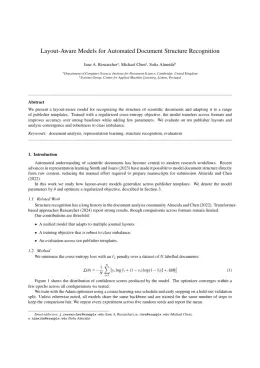
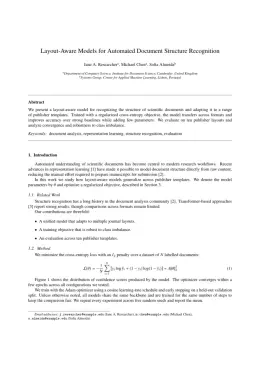
About the Journal of Mood and Anxiety Disorders format
Journal of Mood and Anxiety Disorders is a peer-reviewed journal published by Elsevier, covering Anxiety, Depression, Psychometrics, Treatment, Cognitive Processes, Child and Adolescent Psychosocial and Emotional Development, Mental Health Research Topics.
| Publisher | Elsevier |
|---|
| Reference style | Numbered (Elsevier) Numbered — [1], [2] in the text
[1] A. Smith, B. Jones, C. Lee, A representative article title, Journal of Mood and Anxiety Disorders 12 (2023) 45–58.
Formats any DOI in Journal of Mood and Anxiety Disorders style. No sign-up.
|
|---|
| Publishes research in | Anxiety, Depression, Psychometrics, Treatment, Cognitive Processes Child and Adolescent Psychosocial and Emotional Development Mental Health Research Topics Mental Health Treatment and Access Digital Mental Health Interventions |
|---|
| ISSN | 2950-0044 |
|---|
| Citation impact (2-yr) | 2.43 |
|---|
| h-index | 11 |
|---|
| i10-index | 14 |
|---|
| Total citations | 594 |
|---|
| Open access | Yes |
|---|
| Top institutions publishing here | Harvard University |
|---|
| You get | A submission-ready PDF and the editable LaTeX source — ready to submit. |
|---|
Papers published in Journal of Mood and Anxiety Disorders per year
Citation impact of Journal of Mood and Anxiety Disorders by publication year
Citations each year’s papers have accumulated so far — the most recent years are still building up.
Most-cited papers in Journal of Mood and Anxiety Disorders
Increases in poor mental health, mental distress, and depression symptoms among U.S. adults, 1993–2020
Nikhila S. Udupa, Jean M. Twenge, Cooper McAllister et al. · 7 Jul 2023
= 9.2 million), U.S. adults reported increasingly poor mental health between 1993 and 2020. In the Behavioral Risk Factor Surveillance Survey, poor mental health days rose from 3 to 4 days per month, and from 3.55 to 6.02 days per month among young adults ages 18-25. Twice as many young adults spent half or more…
Self-efficacy, stress, and symptoms of depression and anxiety in adolescents: An epidemiological cohort study with ecological momentary assessment
Sophia Fürtjes, Catharina Voß, Frank Rückert et al. · 18 Nov 2023
Self-efficacy (confidence in one’s abilities to execute behavior to reach ones goals) has been reported to reduce the impact of stress on symptoms of depression and anxiety. However, findings have been inconsistent regarding the two different conditions and the temporal resolution (individual situations [micro-level] vs. general disposition [macro-level], cross-sectional vs. longitudinal). By analyzing available data…
Screen media activity in youth: A critical review of mental health and neuroscience findings
Martin P. Paulus, Yihong Zhao, Marc N. Potenza et al. · 11 Aug 2023
This review has two primary objectives: (1) to offer a balanced examination of recent findings on the relationship between screen media activity (SMA) in young individuals and outcomes such as sleep patterns, mood disturbances, anxiety-related concerns, and cognitive processes; and (2) to introduce a novel multi-level system model that integrates these findings, resolves contradictions in…
Perceptions of psychedelic-assisted therapy among Black Americans
Sierra Carter, Grace Packard, Callan Coghlan et al. · 26 Sep 2023
The present study investigated differences in perceptions of psychedelic-assisted therapy between Black and White Americans, as well as factors that may influence these perceptions. A final sample of 294 adults (42% female, 44% Black/African American or Mixed Race (of Black/African ancestry), 56% White American; Mage = 36.3 years) completed an online survey which assessed baseline…
Assessing depression recurrence, cognitive burden, and neurobiological homeostasis in late life: Design and rationale of the REMBRANDT study
Warren D. Taylor, Olusola Ajilore, Helmet T. Karim et al. · 4 Nov 2023
Background: Late-life depression is characterized by disability, cognitive impairment and decline, and a high risk of recurrence following remission. Aside from past psychiatric history, prognostic neurobiological and clinical factors influencing recurrence risk are unclear. Moreover, it is unclear if cognitive impairment predisposes to recurrence, or whether recurrent episodes may accelerate brain aging and cognitive decline.…