Elsevier

Journal of Chromatography Open Template

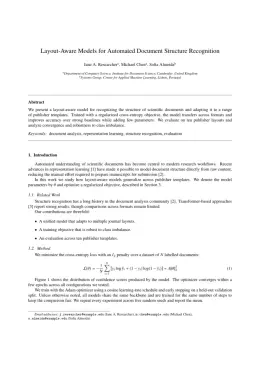
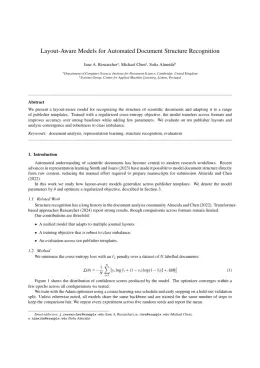
Write in a clean editor, then format for Journal of Chromatography Open in one click — DocuGuru applies the official Elsevier template with numbered references and exports a submission-ready PDF plus the editable LaTeX source. Free to start.

About the Journal of Chromatography Open format

Journal of Chromatography Open is a peer-reviewed journal published by Elsevier, covering Analytical Chemistry and Chromatography, Microfluidic and Capillary Electrophoresis Applications, Analytical chemistry methods development.

PublisherElsevier
Reference styleNumbered (Elsevier)
Numbered — [1], [2] in the text
[1] A. Smith, B. Jones, C. Lee, A representative article title, Journal of Chromatography Open 12 (2023) 45–58.

Formats any DOI in Journal of Chromatography Open style. No sign-up.

Publishes research inAnalytical Chemistry and Chromatography Microfluidic and Capillary Electrophoresis Applications Analytical chemistry methods development Advanced Chemical Sensor Technologies Mass Spectrometry Techniques and Applications
ISSN2772-3917
Citation impact (2-yr)3.34
h-index21
i10-index65
Total citations2,056
Article processing charge$1,900
Open accessYes
Top institutions publishing hereCanAm Bioresearch (Canada)
Journal websitewww.journals.elsevier.com
You getA submission-ready PDF and the editable LaTeX source — ready to submit.

Papers published in Journal of Chromatography Open per year

28
2021
46
2022
31
2023
90
2024
100
2025

Citation impact of Journal of Chromatography Open by publication year

315
2021
504
2022
390
2023
550
2024
207
2025

Citations each year’s papers have accumulated so far — the most recent years are still building up.

Most-cited papers in Journal of Chromatography Open

Separation of therapeutic oligonucleotides using ion-pair reversed-phase chromatography based on fundamental separation science

Torgny Fornstedt, Martin Enmark · 11 Mar 2023

In recent decades, there has been a trend toward using larger biological molecules as new active pharmaceutical ingredients (APIs) instead of the classical small organic API molecules. More recently, this trend has shifted from very large biomolecules toward intermediate-sized APIs, such as oligonucleotide therapeutics. Because of their fundamental role in gene regulation, therapeutic oligonucleotides can…

Analytical quality by design assisted RP-HPLC method for quantifying atorvastatin with green analytical chemistry perspective

K. S. Kokilambigai, K. S. Lakshmi · 2 Jun 2022

Analytical Quality by design and greener solvent methods were applied to optimize the High-Performance Liquid Chromatographic method for assessing atorvastatin calcium in bulk and pharmaceutical dosage forms are highlighted in the present work. The research used a rotatable central composite design, with the volume of ethanol and flow rate chosen as critical method variables for…

Analysis of ultrashort-chain and short-chain (C1 to C4) per- and polyfluorinated substances in potable and non-potable waters

Shun‐Hsin Liang, Justin A. Steimling, M. J. W. Chang · 19 Jul 2023

Ultrashort-chain (USC) per- and polyfluoroalkyl substances (PFAS) are small and very polar compounds with carbon chain lengths of less than C4. Their ubiquitous occurrence in aquatic environments has become a major concern in parallel to long chain PFAS contamination. The high polarity of USC PFAS challenges current analytical practices based on reversed-phase liquid chromatography due…

Exploiting the formation of adducts in mobile phases with ammonium fluoride for the enhancement of annotation in liquid chromatography-high resolution mass spectrometry based lipidomics

Carolina González-Riaño, Ana Gradillas, Coral Barbas · 1 Nov 2021

Liquid Chromatography-High Resolution Mass Spectrometry (LC-HRMS) based lipidomics has become the most versatile analytical tool to discover and detect lipids using a non-targeted approach. A way to improve the ionization performance of specific lipid classes in electrospray sources is to modify their electrostatic interactions with both mobile and stationary phases. So far, studies on mobile…

The current role of chromatography in microplastic research: Plastics chemical characterization and sorption of contaminants

Gabriel Jiménez-Skrzypek, Cecilia Ortega-Zamora, Javier González‐Sálamo et al. · 21 Jun 2021

Microplastic research constitutes nowadays a very interesting and challenging research field since more and more studies are showing that plastic particles are present in every environmental compartment (water, air, soil and biota) in which they are causing important effects that still need to be fully understood. The study of their presence, behavior and fate in…

Journal of Chromatography Open template — frequently asked questions

How do I write a paper in the Journal of Chromatography Open format?
In DocuGuru you write your manuscript in a normal editor — no LaTeX setup required — and select the Journal of Chromatography Open template. When you export, DocuGuru compiles the paper into the official Elsevier format and hands you a submission-ready PDF along with the editable LaTeX source.
What reference style does Journal of Chromatography Open use?
Journal of Chromatography Open uses Numbered (Elsevier) references, shown as numbered [1], [2] markers in the text. DocuGuru formats every in-text citation and the reference list in this exact style automatically. A reference appears like this: [1] A. Smith, B. Jones, C. Lee, A representative article title, Journal of Chromatography Open 12 (2023) 45–58.
Do I need to know LaTeX to submit to Journal of Chromatography Open?
No. DocuGuru generates the elsarticle LaTeX class and compiles the PDF for you in the background, so you get a Elsevier-ready Journal of Chromatography Open document without writing any LaTeX. If you do want it, the LaTeX source is included in the export.
Can I import an existing draft into the Journal of Chromatography Open template?
Yes. Paste or upload your current manuscript — Word, LaTeX, Markdown, or plain text — and DocuGuru reflows it into the Journal of Chromatography Open format with correct headings, figures, tables, and numbered citations.
Who publishes Journal of Chromatography Open?
Journal of Chromatography Open is a multidisciplinary journal published by Elsevier. DocuGuru's Journal of Chromatography Open template matches Elsevier's official submission format.
Can I export a submission-ready Journal of Chromatography Open PDF?
Yes — DocuGuru produces a PDF built with the official Journal of Chromatography Open template (the elsarticle class) that is ready to submit to Elsevier, together with the matching LaTeX source files.
How much does the Journal of Chromatography Open template cost?
You can start writing in the Journal of Chromatography Open template for free. Exporting the final submission-ready Journal of Chromatography Open PDF and LaTeX source is part of DocuGuru's paid plans — see the app for current pricing.

Use the Journal of Chromatography Open template