Elsevier

Journal of Bioresources and Bioproducts Template

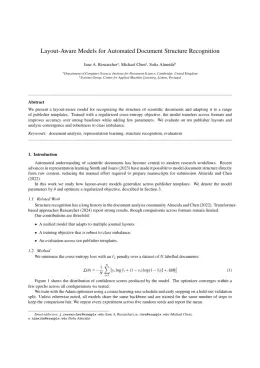
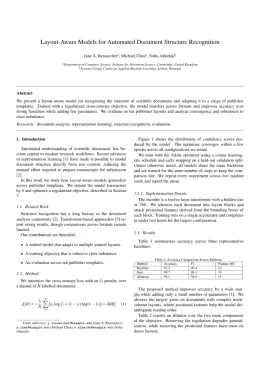
Write in a clean editor, then format for Journal of Bioresources and Bioproducts in one click — DocuGuru applies the official Elsevier template with numbered references and exports a submission-ready PDF plus the editable LaTeX source. Free to start.

About the Journal of Bioresources and Bioproducts format

Journal of Bioresources and Bioproducts is a peer-reviewed journal published by Elsevier, covering Advanced Cellulose Research Studies, Lignin and Wood Chemistry, Biofuel production and bioconversion.

PublisherElsevier
Reference styleNumbered (Elsevier)
Numbered — [1], [2] in the text
[1] A. Smith, B. Jones, C. Lee, A representative article title, Journal of Bioresources and Bioproducts 12 (2023) 45–58.

Formats any DOI in Journal of Bioresources and Bioproducts style. No sign-up.

Publishes research inAdvanced Cellulose Research Studies Lignin and Wood Chemistry Biofuel production and bioconversion Natural Fiber Reinforced Composites Diverse Scientific and Economic Studies
ISSN2369-9698
Citation impact (2-yr)6.78
h-index55
i10-index183
Total citations12,740
Open accessYes
Top institutions publishing hereNanjing Forestry University
Journal websitewww.sciencedirect.com
You getA submission-ready PDF and the editable LaTeX source — ready to submit.

Papers published in Journal of Bioresources and Bioproducts per year

24
1996
9
2016
33
2017
31
2018
16
2019
34
2020
35
2021
43
2022
47
2023
43
2024
47
2025

Citation impact of Journal of Bioresources and Bioproducts by publication year

247
1996
63
2016
203
2017
118
2018
1K
2019
3.4K
2020
3.1K
2021
2.3K
2022
1.3K
2023
587
2024
178
2025

Citations each year’s papers have accumulated so far — the most recent years are still building up.

Most-cited papers in Journal of Bioresources and Bioproducts

Synthesis and Application of Granular Activated Carbon from Biomass Waste Materials for Water Treatment: A Review

Joseph Jjagwe, Peter Wilberforce Olupot, Emmanuel Menya et al. · 5 Apr 2021

There is an increased global demand for activated carbon (AC) in application of water treatment and purification. Water pollutants that have exhibited a greater removal efficiency by AC included but not limited to heavy metals, pharmaceuticals, pesticides, natural organic matter, disinfection by-products, and microplastics. Granular activated carbon (GAC) is mostly used in aqueous solutions and…

Utilization of waste straw and husks from rice production: A review

Bernard A. Goodman · 29 Jul 2020

As a staple food for much of the world, rice production is widespread. However, it also results in the generation of large quantities of non-food biomass, primarily in the form of straw and husks. Although they have been little utilized and much rice straw is still simply burned, these lignocellulosic materials potentially have considerable values.…

Superhydrophobic modification of cellulose and cotton textiles: Methodologies and applications

David Wei, Haiying Wei, Alec C. Gauthier et al. · 1 Feb 2020

Superhydrophobic cellulose-based products have immense potential in many industries where plastics and other polymers with hydrophobic properties are used. Superhydrophobic cellulose-based plastic is inherently biodegradable, renewable and non-toxic. Finding a suitable replacement of plastics is highly desired since plastics has become an environmental concern. Despite its inherent hydrophilicity, cellulose has unparalleled advantages as a substrate…

Cellulose nanocomposites: Fabrication and biomedical applications

Blessy Joseph, V. K. Sagarika, Chinnu Sabu et al. · 30 Oct 2020

Cellulose is a linear biopolymer which is composed of nanofibrils, thus having a large surface area. This low-cost, low-density, high-specific-surface-area, easily processable polymer is found in nature in the form of plants, bacteria and tunicates. Cellulose has outstanding characteristics including low cytotoxicity, biocompatibility, good mechanical properties, high chemical stability, and cost effectiveness which make them…

Chitosan as A Preservative for Fruits and Vegetables: A Review on Chemistry and Antimicrobial Properties

Chao Duan, Xin Meng, Jingru Meng et al. · 1 Feb 2019

Chitosan, derived from chitin, a major constituent (in quantity) of crustaceans, is a unique aminopolysaccharide with emerging commercial potential in agriculture, food, pharmaceuticals and nutraceuticals due to its nontoxic, biodegradable and biocompatable properties. Chitosan coating on fruits and vegetables has been found to be effective for the reduction of a variety of harmful micro-organims and…

Journal of Bioresources and Bioproducts template — frequently asked questions

How do I write a paper in the Journal of Bioresources and Bioproducts format?
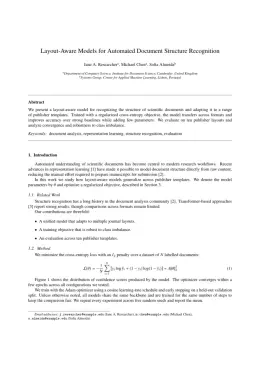
In DocuGuru you write your manuscript in a normal editor — no LaTeX setup required — and select the Journal of Bioresources and Bioproducts template. When you export, DocuGuru compiles the paper into the official Elsevier format and hands you a submission-ready PDF along with the editable LaTeX source.
What reference style does Journal of Bioresources and Bioproducts use?
Journal of Bioresources and Bioproducts uses Numbered (Elsevier) references, shown as numbered [1], [2] markers in the text. DocuGuru formats every in-text citation and the reference list in this exact style automatically. A reference appears like this: [1] A. Smith, B. Jones, C. Lee, A representative article title, Journal of Bioresources and Bioproducts 12 (2023) 45–58.
Do I need to know LaTeX to submit to Journal of Bioresources and Bioproducts?
No. DocuGuru generates the elsarticle LaTeX class and compiles the PDF for you in the background, so you get a Elsevier-ready Journal of Bioresources and Bioproducts document without writing any LaTeX. If you do want it, the LaTeX source is included in the export.
Can I import an existing draft into the Journal of Bioresources and Bioproducts template?
Yes. Paste or upload your current manuscript — Word, LaTeX, Markdown, or plain text — and DocuGuru reflows it into the Journal of Bioresources and Bioproducts format with correct headings, figures, tables, and numbered citations.
Who publishes Journal of Bioresources and Bioproducts?
Journal of Bioresources and Bioproducts is a multidisciplinary journal published by Elsevier. DocuGuru's Journal of Bioresources and Bioproducts template matches Elsevier's official submission format.
Can I export a submission-ready Journal of Bioresources and Bioproducts PDF?
Yes — DocuGuru produces a PDF built with the official Journal of Bioresources and Bioproducts template (the elsarticle class) that is ready to submit to Elsevier, together with the matching LaTeX source files.
How much does the Journal of Bioresources and Bioproducts template cost?
You can start writing in the Journal of Bioresources and Bioproducts template for free. Exporting the final submission-ready Journal of Bioresources and Bioproducts PDF and LaTeX source is part of DocuGuru's paid plans — see the app for current pricing.
Use the Journal of Bioresources and Bioproducts template