
610 citations
Cite
SaveGo to paper →
Elsevier
Journal of Biomedical Engineering Template
Write in a clean editor, then format for Journal of Biomedical Engineering in one click — DocuGuru applies the official Elsevier template with numbered references and exports a submission-ready PDF plus the editable LaTeX source. Free to start.
About the Journal of Biomedical Engineering format
Journal of Biomedical Engineering is a peer-reviewed journal published by Elsevier, covering Muscle activation and electromyography studies, Orthopaedic implants and arthroplasty, Non-Invasive Vital Sign Monitoring.
| Publisher | Elsevier |
|---|---|
| Reference style | Numbered (Elsevier) Numbered — [1], [2] in the text [1] A. Smith, B. Jones, C. Lee, A representative article title, Journal of Biomedical Engineering 12 (2023) 45–58.
Formats any DOI in Journal of Biomedical Engineering style. No sign-up. |
| Publishes research in | Muscle activation and electromyography studies Orthopaedic implants and arthroplasty Non-Invasive Vital Sign Monitoring Hemodynamic Monitoring and Therapy Total Knee Arthroplasty Outcomes |
| ISSN | 0141-5425 |
| h-index | 72 |
| i10-index | 511 |
| Total citations | 25,029 |
| Top institutions publishing here | University of Oxford |
| Journal website | www.journals.elsevier.com |
| You get | A submission-ready PDF and the editable LaTeX source — ready to submit. |
Papers published in Journal of Biomedical Engineering per year
Citation impact of Journal of Biomedical Engineering by publication year
Citations each year’s papers have accumulated so far — the most recent years are still building up.
Most-cited papers in Journal of Biomedical Engineering
555 citations
Cite
SaveGo to paper →
Modern three-dimensional gait analysis systems give information on joint angles and moments in the sagittal and coronal planes, for which normal ranges may not be readily available in the literature. Since patients with joint disease tend to walk slowly and with a short stride, it is essential that normal ranges for gait parameters should be…
457 citations
Cite
SaveGo to paper →
A clinical model of glucose-insulin interaction in insulin-dependent diabetes mellitus has been developed for patient and medical staff education. The model attempts to reflect the underlying (patho)physiology of insulin action and carbohydrate absorption in quantitative terms such as insulin sensitivity, volume of glucose and insulin distribution and maximal rate of gastric emptying. The model's predictions…
404 citations
Cite
SaveGo to paper →
Three-dimensional finite element stress analysis of bone is a key to understanding bone remodelling, assessing fracture risk, and designing prostheses; however, the cost and complexity of predicting the stress field in bone with accuracy has precluded the routine use of this method. A new, automated method of generating patient-specific three-dimensional finite element models of bone…
384 citations
Cite
SaveGo to paper →
Related journal templates
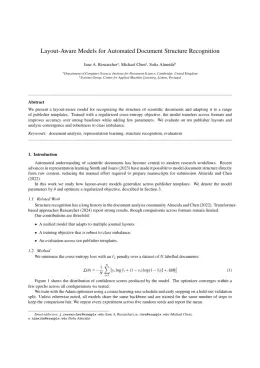
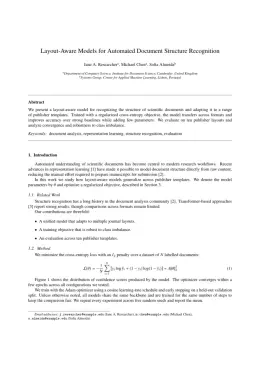
Journal of Biomedical Engineering template — frequently asked questions
How do I write a paper in the Journal of Biomedical Engineering format?
In DocuGuru you write your manuscript in a normal editor — no LaTeX setup required — and select the Journal of Biomedical Engineering template. When you export, DocuGuru compiles the paper into the official Elsevier format and hands you a submission-ready PDF along with the editable LaTeX source.
What reference style does Journal of Biomedical Engineering use?
Journal of Biomedical Engineering uses Numbered (Elsevier) references, shown as numbered [1], [2] markers in the text. DocuGuru formats every in-text citation and the reference list in this exact style automatically. A reference appears like this: [1] A. Smith, B. Jones, C. Lee, A representative article title, Journal of Biomedical Engineering 12 (2023) 45–58.
Do I need to know LaTeX to submit to Journal of Biomedical Engineering?
No. DocuGuru generates the elsarticle LaTeX class and compiles the PDF for you in the background, so you get a Elsevier-ready Journal of Biomedical Engineering document without writing any LaTeX. If you do want it, the LaTeX source is included in the export.
Can I import an existing draft into the Journal of Biomedical Engineering template?
Yes. Paste or upload your current manuscript — Word, LaTeX, Markdown, or plain text — and DocuGuru reflows it into the Journal of Biomedical Engineering format with correct headings, figures, tables, and numbered citations.
Who publishes Journal of Biomedical Engineering?
Journal of Biomedical Engineering is a multidisciplinary journal published by Elsevier. DocuGuru's Journal of Biomedical Engineering template matches Elsevier's official submission format.
Can I export a submission-ready Journal of Biomedical Engineering PDF?
Yes — DocuGuru produces a PDF built with the official Journal of Biomedical Engineering template (the elsarticle class) that is ready to submit to Elsevier, together with the matching LaTeX source files.
How much does the Journal of Biomedical Engineering template cost?
You can start writing in the Journal of Biomedical Engineering template for free. Exporting the final submission-ready Journal of Biomedical Engineering PDF and LaTeX source is part of DocuGuru's paid plans — see the app for current pricing.