
27 citations
Cite
SaveGo to paper →
Elsevier
Journal d imagerie diagnostique et interventionnelle Template
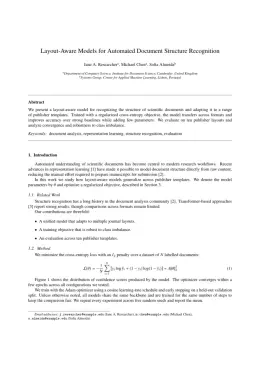
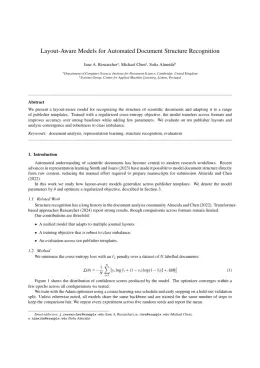
Write in a clean editor, then format for Journal d imagerie diagnostique et interventionnelle in one click — DocuGuru applies the official Elsevier template with numbered references and exports a submission-ready PDF plus the editable LaTeX source. Free to start.
About the Journal d imagerie diagnostique et interventionnelle format
Journal d imagerie diagnostique et interventionnelle is a peer-reviewed journal published by Elsevier, covering Diverse Scientific and Economic Studies, Human auditory perception and evaluation, Educational Robotics and Engineering.
| Publisher | Elsevier |
|---|---|
| Reference style | Numbered (Elsevier) Numbered — [1], [2] in the text [1] A. Smith, B. Jones, C. Lee, A representative article title, Journal d imagerie diagnostique et interventionnelle 12 (2023) 45–58.
Formats any DOI in Journal d imagerie diagnostique et interventionnelle style. No sign-up. |
| Publishes research in | Diverse Scientific and Economic Studies Human auditory perception and evaluation Educational Robotics and Engineering Radiation Dose and Imaging Radiology practices and education |
| ISSN | 2543-3431 |
| Citation impact (2-yr) | 0.04 |
| h-index | 4 |
| i10-index | 1 |
| Total citations | 149 |
| Article processing charge | $2,000 |
| Top institutions publishing here | Inserm |
| Journal website | www.journals.elsevier.com |
| You get | A submission-ready PDF and the editable LaTeX source — ready to submit. |
Papers published in Journal d imagerie diagnostique et interventionnelle per year
Citation impact of Journal d imagerie diagnostique et interventionnelle by publication year
Citations each year’s papers have accumulated so far — the most recent years are still building up.
Most-cited papers in Journal d imagerie diagnostique et interventionnelle
6 citations
Cite
SaveGo to paper →
La radiologie interventionnelle propose des actes diagnostiques ou thérapeutiques moins invasifs que la chirurgie ou inaccessibles à celle-ci, mais n’est cependant pas sans risque. La prise en charge des patients doit considérer deux risques antagonistes qui doivent être mis en balance : le risque hémorragique et le risque thromboembolique. Depuis plusieurs années, il existe une…
5 citations
Cite
SaveGo to paper →
5 citations
Cite
SaveGo to paper →
4 citations
Cite
SaveGo to paper →
Related journal templates
Journal d imagerie diagnostique et interventionnelle template — frequently asked questions
How do I write a paper in the Journal d imagerie diagnostique et interventionnelle format?
In DocuGuru you write your manuscript in a normal editor — no LaTeX setup required — and select the Journal d imagerie diagnostique et interventionnelle template. When you export, DocuGuru compiles the paper into the official Elsevier format and hands you a submission-ready PDF along with the editable LaTeX source.
What reference style does Journal d imagerie diagnostique et interventionnelle use?
Journal d imagerie diagnostique et interventionnelle uses Numbered (Elsevier) references, shown as numbered [1], [2] markers in the text. DocuGuru formats every in-text citation and the reference list in this exact style automatically. A reference appears like this: [1] A. Smith, B. Jones, C. Lee, A representative article title, Journal d imagerie diagnostique et interventionnelle 12 (2023) 45–58.
Do I need to know LaTeX to submit to Journal d imagerie diagnostique et interventionnelle?
No. DocuGuru generates the elsarticle LaTeX class and compiles the PDF for you in the background, so you get a Elsevier-ready Journal d imagerie diagnostique et interventionnelle document without writing any LaTeX. If you do want it, the LaTeX source is included in the export.
Can I import an existing draft into the Journal d imagerie diagnostique et interventionnelle template?
Yes. Paste or upload your current manuscript — Word, LaTeX, Markdown, or plain text — and DocuGuru reflows it into the Journal d imagerie diagnostique et interventionnelle format with correct headings, figures, tables, and numbered citations.
Who publishes Journal d imagerie diagnostique et interventionnelle?
Journal d imagerie diagnostique et interventionnelle is a multidisciplinary journal published by Elsevier. DocuGuru's Journal d imagerie diagnostique et interventionnelle template matches Elsevier's official submission format.
Can I export a submission-ready Journal d imagerie diagnostique et interventionnelle PDF?
Yes — DocuGuru produces a PDF built with the official Journal d imagerie diagnostique et interventionnelle template (the elsarticle class) that is ready to submit to Elsevier, together with the matching LaTeX source files.
How much does the Journal d imagerie diagnostique et interventionnelle template cost?
You can start writing in the Journal d imagerie diagnostique et interventionnelle template for free. Exporting the final submission-ready Journal d imagerie diagnostique et interventionnelle PDF and LaTeX source is part of DocuGuru's paid plans — see the app for current pricing.