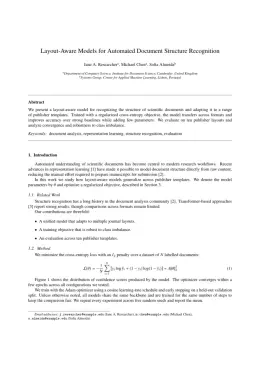
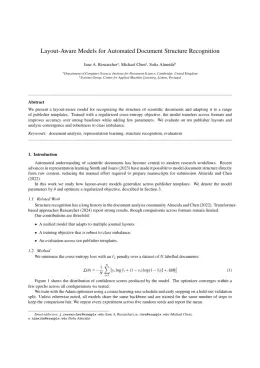
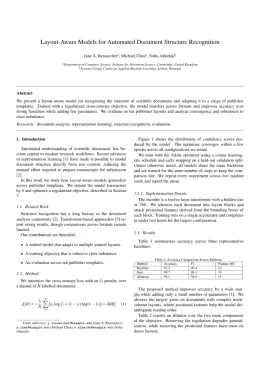
About the Infectious Disease Modelling format
Infectious Disease Modelling is a peer-reviewed journal published by Elsevier, covering COVID-19 epidemiological studies, Mathematical and Theoretical Epidemiology and Ecology Models, SARS-CoV-2 and COVID-19 Research.
| Publisher | Elsevier |
|---|
| Reference style | Numbered (Elsevier) Numbered — [1], [2] in the text
[1] A. Smith, B. Jones, C. Lee, A representative article title, Infectious Disease Modelling 12 (2023) 45–58.
Formats any DOI in Infectious Disease Modelling style. No sign-up.
|
|---|
| Publishes research in | COVID-19 epidemiological studies Mathematical and Theoretical Epidemiology and Ecology Models SARS-CoV-2 and COVID-19 Research Influenza Virus Research Studies Data-Driven Disease Surveillance |
|---|
| ISSN | 2468-0427 |
|---|
| Citation impact (2-yr) | 2.38 |
|---|
| h-index | 46 |
|---|
| i10-index | 257 |
|---|
| Total citations | 15,350 |
|---|
| Article processing charge | $1,500 |
|---|
| Open access | Yes |
|---|
| Top institutions publishing here | York University |
|---|
| Journal website | www.sciencedirect.com |
|---|
| You get | A submission-ready PDF and the editable LaTeX source — ready to submit. |
|---|
Papers published in Infectious Disease Modelling per year
Citation impact of Infectious Disease Modelling by publication year
Citations each year’s papers have accumulated so far — the most recent years are still building up.
Most-cited papers in Infectious Disease Modelling
To mask or not to mask: Modeling the potential for face mask use by the general public to curtail the COVID-19 pandemic
Steffen E. Eikenberry, Marina Mancuso, Enahoro Iboi et al. · 1 Jan 2020
Face mask use by the general public for limiting the spread of the COVID-19 pandemic is controversial, though increasingly recommended, and the potential of this intervention is not well understood. We develop a compartmental model for assessing the community-wide impact of mask use by the general, asymptomatic public, a portion of which may be asymptomatically…
Reproduction numbers of infectious disease models
P. van den Driessche · 29 Jun 2017
are given. These are useful for more complicated models that, for example, take account of variations in environmental fluctuation or stochasticity.
An updated estimation of the risk of transmission of the novel coronavirus (2019-nCov)
Biao Tang, Nicola Luigi Bragazzi, Qian Li et al. · 1 Jan 2020
The basic reproduction number of an infectious agent is the average number of infections one case can generate over the course of the infectious period, in a naïve, uninfected population. It is well-known that the estimation of this number may vary due to several methodological issues, including different assumptions and choice of parameters, utilized models,…
Real-time forecasts of the COVID-19 epidemic in China from February 5th to February 24th, 2020
Kimberlyn Roosa, Y. Lee, Ruiyan Luo et al. · 1 Jan 2020
The initial cluster of severe pneumonia cases that triggered the COVID-19 epidemic was identified in Wuhan, China in December 2019. While early cases of the disease were linked to a wet market, human-to-human transmission has driven the rapid spread of the virus throughout China. The Chinese government has implemented containment strategies of city-wide lockdowns, screening…
Why is it difficult to accurately predict the COVID-19 epidemic?
Weston Roda, Marie Varughese, Donglin Han et al. · 1 Jan 2020
Since the COVID-19 outbreak in Wuhan City in December of 2019, numerous model predictions on the COVID-19 epidemics in Wuhan and other parts of China have been reported. These model predictions have shown a wide range of variations. In our study, we demonstrate that nonidentifiability in model calibrations using the confirmed-case data is the main…