Elsevier

ImmunoInformatics Template

Write in a clean editor, then format for ImmunoInformatics in one click — DocuGuru applies the official Elsevier template with numbered references and exports a submission-ready PDF plus the editable LaTeX source. Free to start.

About the ImmunoInformatics format

ImmunoInformatics is a peer-reviewed journal published by Elsevier, covering vaccines and immunoinformatics approaches, Monoclonal and Polyclonal Antibodies Research, T-cell and B-cell Immunology.

PublisherElsevier
Reference styleNumbered (Elsevier)
Numbered — [1], [2] in the text
[1] A. Smith, B. Jones, C. Lee, A representative article title, ImmunoInformatics 12 (2023) 45–58.

Formats any DOI in ImmunoInformatics style. No sign-up.

Publishes research invaccines and immunoinformatics approaches Monoclonal and Polyclonal Antibodies Research T-cell and B-cell Immunology Immunotherapy and Immune Responses Single-cell and spatial transcriptomics
ISSN2667-1190
Citation impact (2-yr)4.6
h-index15
i10-index21
Total citations698
Article processing charge$1,790
Open accessYes
Top institutions publishing hereUniversity of Antwerp
Journal websitewww.sciencedirect.com
You getA submission-ready PDF and the editable LaTeX source — ready to submit.

Papers published in ImmunoInformatics per year

10
2007
8
2021
10
2022
9
2023
15
2024
17
2025

Citation impact of ImmunoInformatics by publication year

41
2007
167
2021
137
2022
182
2023
115
2024
34
2025

Citations each year’s papers have accumulated so far — the most recent years are still building up.

Most-cited papers in ImmunoInformatics

Benchmarking solutions to the T-cell receptor epitope prediction problem: IMMREP22 workshop report

Pieter Meysman, Justin Barton, Barbara Bravi et al. · 3 Feb 2023

Many different solutions to predicting the cognate epitope target of a T-cell receptor (TCR) have been proposed. However several questions on the advantages and disadvantages of these different approaches remain unresolved, as most methods have only been evaluated within the context of their initial publications and data sets. Here, we report the findings of the…

CelltrackR: An R package for fast and flexible analysis of immune cell migration data

Inge M. N. Wortel, Annie Y. Liu, Katharina Dannenberg et al. · 31 Jul 2021

Visualization of cell migration via time-lapse microscopy has greatly advanced our understanding of the immune system. However, subtle differences in migration dynamics are easily obscured by biases and imaging artifacts. While several analysis methods have been suggested to address these issues, an integrated tool implementing them is currently lacking. Here, we present celltrackR, an R…

Recent advances in T-cell receptor repertoire analysis: Bridging the gap with multimodal single-cell RNA sequencing

Sebastiaan Valkiers, Nicky de Vrij, Sofie Gielis et al. · 25 Jan 2022

T cells exercise a multitude of functions such as cytotoxicity, secretion of immunomodulating cytokines or regulation of tolerance, collectively resulting in an effective control of immune-related disease. Through the unique mechanism of V(D)J recombination, T cells express a highly specific receptor complex known as the T-cell receptor (TCR). Single-cell sequencing technologies have paved the road…

Lessons learned from the IMMREP23 TCR-epitope prediction challenge

Morten Nielsen, Anne Eugster, Mathias Fynbo Jensen et al. · 28 Sep 2024

Here, we present the findings from IMMREP23, the second benchmark competition focused on predicting the specificity of TCR-pMHC interactions. The interaction of T cell receptors (TCR) towards their pMHC target is a cornerstone of the cellular immune system. Over the last decade, substantial progress has been made within the field of TCR specificity prediction, providing…

Integrating single cell sequencing with a spatial quantitative systems pharmacology model spQSP for personalized prediction of triple-negative breast cancer immunotherapy response

Shuming Zhang, Chang Gong, Álvaro Ruiz-Martínez et al. · 24 Jul 2021

Response to cancer immunotherapies depends on the complex and dynamic interactions between T cell recognition and killing of cancer cells that are counteracted through immunosuppressive pathways in the tumor microenvironment. Therefore, while measurements such as tumor mutational burden provide biomarkers to select patients for immunotherapy, they neither universally predict patient response nor implicate the mechanisms…

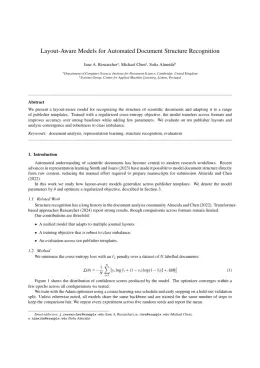
ImmunoInformatics template — frequently asked questions

How do I write a paper in the ImmunoInformatics format?
In DocuGuru you write your manuscript in a normal editor — no LaTeX setup required — and select the ImmunoInformatics template. When you export, DocuGuru compiles the paper into the official Elsevier format and hands you a submission-ready PDF along with the editable LaTeX source.
What reference style does ImmunoInformatics use?
ImmunoInformatics uses Numbered (Elsevier) references, shown as numbered [1], [2] markers in the text. DocuGuru formats every in-text citation and the reference list in this exact style automatically. A reference appears like this: [1] A. Smith, B. Jones, C. Lee, A representative article title, ImmunoInformatics 12 (2023) 45–58.
Do I need to know LaTeX to submit to ImmunoInformatics?
No. DocuGuru generates the elsarticle LaTeX class and compiles the PDF for you in the background, so you get a Elsevier-ready ImmunoInformatics document without writing any LaTeX. If you do want it, the LaTeX source is included in the export.
Can I import an existing draft into the ImmunoInformatics template?
Yes. Paste or upload your current manuscript — Word, LaTeX, Markdown, or plain text — and DocuGuru reflows it into the ImmunoInformatics format with correct headings, figures, tables, and numbered citations.
Who publishes ImmunoInformatics?
ImmunoInformatics is a multidisciplinary journal published by Elsevier. DocuGuru's ImmunoInformatics template matches Elsevier's official submission format.
Can I export a submission-ready ImmunoInformatics PDF?
Yes — DocuGuru produces a PDF built with the official ImmunoInformatics template (the elsarticle class) that is ready to submit to Elsevier, together with the matching LaTeX source files.
How much does the ImmunoInformatics template cost?
You can start writing in the ImmunoInformatics template for free. Exporting the final submission-ready ImmunoInformatics PDF and LaTeX source is part of DocuGuru's paid plans — see the app for current pricing.
Use the ImmunoInformatics template