Elsevier

IBRO Reports Template

Write in a clean editor, then format for IBRO Reports in one click — DocuGuru applies the official Elsevier template with author–year references and exports a submission-ready PDF plus the editable LaTeX source. Free to start.

About the IBRO Reports format

IBRO Reports is a peer-reviewed journal published by Elsevier, covering Neuroscience and Neuropharmacology Research, Neuroinflammation and Neurodegeneration Mechanisms, Stress Responses and Cortisol.

PublisherElsevier
Reference styleAuthor–year (Harvard)
Author–year — (Smith, 2023) in the text
Smith, A., Jones, B. and Lee, C. (2023) 'A representative article title', IBRO Reports, 12(3), pp. 45–58.

Formats any DOI in IBRO Reports style. No sign-up.

Publishes research inNeuroscience and Neuropharmacology Research Neuroinflammation and Neurodegeneration Mechanisms Stress Responses and Cortisol Neural dynamics and brain function Memory and Neural Mechanisms
ISSN2451-8301
h-index28
i10-index90
Total citations3,266
Article processing charge$1,500
Open accessYes
Top institutions publishing hereSeoul National University
Journal websitewww.journals.elsevier.com
You getA submission-ready PDF and the editable LaTeX source — ready to submit.

Papers published in IBRO Reports per year

1
2004
1
2008
1
2015
8
2016
18
2017
26
2018
1.9K
2019
49
2020

Citation impact of IBRO Reports by publication year

0
2004
0
2008
0
2015
233
2016
217
2017
935
2018
1K
2019
807
2020

Citations each year’s papers have accumulated so far — the most recent years are still building up.

Most-cited papers in IBRO Reports

The human hypothalamus in mood disorders: The HPA axis in the center

Ai‐Min Bao, Dick F. Swaab · 14 Dec 2018

There are no specific structural neuropathological hallmarks found in the brain of mood disorders. Instead, there are molecular, functional and structural alterations reported in many brain areas. The neurodevelopmental underpinning indicated the presence of various genetic and developmental risk factors. The effect of genetic polymorphisms and developmental sequalae, some of which may start in the…

How could stress lead to major depressive disorder?

Gal Richter‐Levin, Lin Xu · 22 Apr 2018

Stress is associated with major depressive disorder (MDD), but the underlying mechanism remains elusive. However, some experiences, referred to as stress, may actually lead to resilience. It is thus critical first to define what type of stress may lead to MDD. Long-term potentiation (LTP) and long-term depression (LTD) are both sensitive to stress, but particularly…

Neuronal nitric oxide synthase and affective disorders

Qi‐Gang Zhou, Xian‐Hui Zhu, Ashley D. Nemes et al. · 17 Nov 2018

Affective disorders including major depressive disorder (MDD), bipolar disorder (BPD), and general anxiety affect more than 10% of population in the world. Notably, neuronal nitric oxide synthase (nNOS), a downstream signal molecule of N-methyl-D-aspartate receptors (NMDARs) activation, is abundant in many regions of the brain such as the prefrontal cortex (PFC), hippocampus, amygdala, dorsal raphe…

A standardized and automated method of perineuronal net analysis using Wisteria floribunda agglutinin staining intensity

Megan Slaker, John H. Harkness, Barbara A. Sorg · 7 Oct 2016

agglutinin (WFA) as an indirect measure of the maturity of PNNs, with brighter WFA staining corresponding to a more mature PNN and dim WFA staining corresponding to an immature PNN. However, a clearly-defined and unified method for assessing the intensity of PNNs is critical to allow us to make comparisons across studies and to advance…

The role of NOX inhibitors in neurodegenerative diseases

Sumit Barua, Jong Youl Kim, Midori A. Yenari et al. · 1 Aug 2019

Oxidative stress is a key player in both chronic and acute brain disease due to the higher metabolic demand of the brain. Among the producers of free radicals, NADPH-oxidase (NOX) is a major contributor to oxidative stress in neurological disorders. In the brain, the superoxide produced by NOX is mainly found in leukocytes. However, recent…

IBRO Reports template — frequently asked questions

How do I write a paper in the IBRO Reports format?
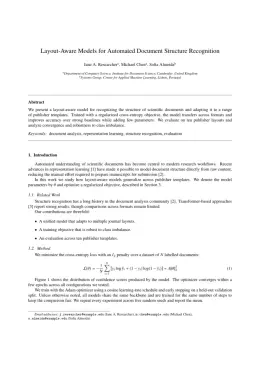
In DocuGuru you write your manuscript in a normal editor — no LaTeX setup required — and select the IBRO Reports template. When you export, DocuGuru compiles the paper into the official Elsevier format and hands you a submission-ready PDF along with the editable LaTeX source.
What reference style does IBRO Reports use?
IBRO Reports uses Author–year (Harvard) references, shown as author–year markers such as (Smith, 2023) in the text. DocuGuru formats every in-text citation and the reference list in this exact style automatically. A reference appears like this: Smith, A., Jones, B. and Lee, C. (2023) 'A representative article title', IBRO Reports, 12(3), pp. 45–58.
Do I need to know LaTeX to submit to IBRO Reports?
No. DocuGuru generates the elsarticle LaTeX class and compiles the PDF for you in the background, so you get a Elsevier-ready IBRO Reports document without writing any LaTeX. If you do want it, the LaTeX source is included in the export.
Can I import an existing draft into the IBRO Reports template?
Yes. Paste or upload your current manuscript — Word, LaTeX, Markdown, or plain text — and DocuGuru reflows it into the IBRO Reports format with correct headings, figures, tables, and author–year citations.
Who publishes IBRO Reports?
IBRO Reports is a multidisciplinary journal published by Elsevier. DocuGuru's IBRO Reports template matches Elsevier's official submission format.
Can I export a submission-ready IBRO Reports PDF?
Yes — DocuGuru produces a PDF built with the official IBRO Reports template (the elsarticle class) that is ready to submit to Elsevier, together with the matching LaTeX source files.
How much does the IBRO Reports template cost?
You can start writing in the IBRO Reports template for free. Exporting the final submission-ready IBRO Reports PDF and LaTeX source is part of DocuGuru's paid plans — see the app for current pricing.
Use the IBRO Reports template