Elsevier

Human Microbiome Journal Template

Write in a clean editor, then format for Human Microbiome Journal in one click — DocuGuru applies the official Elsevier template with numbered references and exports a submission-ready PDF plus the editable LaTeX source. Free to start.

About the Human Microbiome Journal format

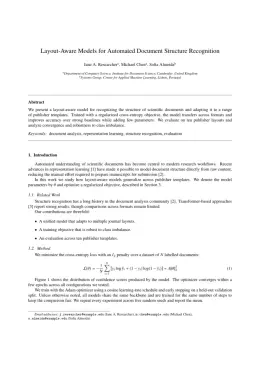
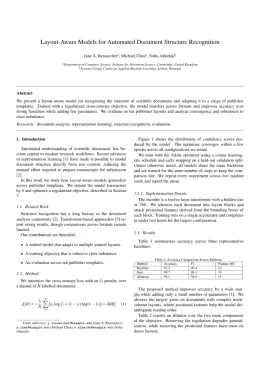
Human Microbiome Journal is a peer-reviewed journal published by Elsevier, covering Gut microbiota and health, Clostridium difficile and Clostridium perfringens research, Bacterial Identification and Susceptibility Testing.

PublisherElsevier
Reference styleNumbered (Elsevier)
Numbered — [1], [2] in the text
[1] A. Smith, B. Jones, C. Lee, A representative article title, Human Microbiome Journal 12 (2023) 45–58.

Formats any DOI in Human Microbiome Journal style. No sign-up.

Publishes research inGut microbiota and health Clostridium difficile and Clostridium perfringens research Bacterial Identification and Susceptibility Testing Genomics and Phylogenetic Studies Probiotics and Fermented Foods
ISSN2452-2317
h-index25
i10-index45
Total citations2,791
Top institutions publishing hereInstitut de Recherche pour le Développement
Journal websitewww.journals.elsevier.com
You getA submission-ready PDF and the editable LaTeX source — ready to submit.

Papers published in Human Microbiome Journal per year

12
2016
14
2017
17
2018
20
2019
8
2020
5
2021

Citation impact of Human Microbiome Journal by publication year

373
2016
426
2017
988
2018
790
2019
158
2020
41
2021

Citations each year’s papers have accumulated so far — the most recent years are still building up.

Most-cited papers in Human Microbiome Journal

Gut microbiota diversity according to dietary habits and geographical provenance

Bruno Senghor, Cheikh Sokhna, Raymond Ruimy et al. · 23 Feb 2018

The gut microbiota is an ecosystem including all bacterial species that permanently colonize the gastro intestinal tract and a large number of other microorganisms from the environment. These millions of microorganisms may be unbalanced by a number of external and internal factors. The aim of this review is to summarize recent findings on animal and…

Gut microbiome composition and diversity are related to human personality traits

Katerina V.‐A. Johnson · 21 Dec 2019

The gut microbiome has a measurable impact on the brain, influencing stress, anxiety, depressive symptoms and social behaviour. This microbiome-gut-brain axis may be mediated by various mechanisms including neural, immune and endocrine signalling. To date, the majority of research has been conducted in animal models, while the limited number of human studies has focused on…

Human microbiomes and antibiotic resistance

Sophie Alexandra Baron, Seydina M. Diene, Jean‐Marc Rolain · 15 Nov 2018

Human microbiomes are complex ecosystems involving bacteria, viruses, archaea or eukaryotes that are co-evolving in an environment subject to various selective pressures, such as antibiotic administration, diet and/or lifestyle. In this sympatric lifestyle, competition is hard and the synthesis of antibiotic molecules and/or antibiotic resistance genes (ARGs) is one solution that was developed by the…

Archaea: Essential inhabitants of the human digestive microbiota

Vanessa Demonfort Nkamga, Bernard Henrissat, Michel Drancourt · 9 Dec 2016

Prokaryotes forming the domain of Archaea, named after their first discovery in extreme environments, are acknowledged but still neglected members of the human digestive tract microbiota. In this microbiota, cultured archaea comprise anaerobic methanogens: Methanobrevibacter smithii, Methanobrevibacter oralis, Methanobrevibacter massiliense, Methanosphaera stadtmanae, Methanobrevibacter arboriphilus, Methanobrevibacter millerae and Methanomassiliicoccus luminyensis; along with the non-methanogen halophilic Archaea…

Human Microbiome Journal template — frequently asked questions

How do I write a paper in the Human Microbiome Journal format?
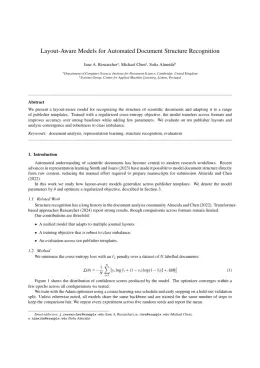
In DocuGuru you write your manuscript in a normal editor — no LaTeX setup required — and select the Human Microbiome Journal template. When you export, DocuGuru compiles the paper into the official Elsevier format and hands you a submission-ready PDF along with the editable LaTeX source.
What reference style does Human Microbiome Journal use?
Human Microbiome Journal uses Numbered (Elsevier) references, shown as numbered [1], [2] markers in the text. DocuGuru formats every in-text citation and the reference list in this exact style automatically. A reference appears like this: [1] A. Smith, B. Jones, C. Lee, A representative article title, Human Microbiome Journal 12 (2023) 45–58.
Do I need to know LaTeX to submit to Human Microbiome Journal?
No. DocuGuru generates the elsarticle LaTeX class and compiles the PDF for you in the background, so you get a Elsevier-ready Human Microbiome Journal document without writing any LaTeX. If you do want it, the LaTeX source is included in the export.
Can I import an existing draft into the Human Microbiome Journal template?
Yes. Paste or upload your current manuscript — Word, LaTeX, Markdown, or plain text — and DocuGuru reflows it into the Human Microbiome Journal format with correct headings, figures, tables, and numbered citations.
Who publishes Human Microbiome Journal?
Human Microbiome Journal is a multidisciplinary journal published by Elsevier. DocuGuru's Human Microbiome Journal template matches Elsevier's official submission format.
Can I export a submission-ready Human Microbiome Journal PDF?
Yes — DocuGuru produces a PDF built with the official Human Microbiome Journal template (the elsarticle class) that is ready to submit to Elsevier, together with the matching LaTeX source files.
How much does the Human Microbiome Journal template cost?
You can start writing in the Human Microbiome Journal template for free. Exporting the final submission-ready Human Microbiome Journal PDF and LaTeX source is part of DocuGuru's paid plans — see the app for current pricing.
Use the Human Microbiome Journal template