Elsevier

hLife Template

Write in a clean editor, then format for hLife in one click — DocuGuru applies the official Elsevier template with numbered references and exports a submission-ready PDF plus the editable LaTeX source. Free to start.

About the hLife format

hLife is a peer-reviewed journal published by Elsevier, covering SARS-CoV-2 and COVID-19 Research, Gut microbiota and health, COVID-19 Clinical Research Studies.

PublisherElsevier
Reference styleNumbered (Elsevier)
Numbered — [1], [2] in the text
[1] A. Smith, B. Jones, C. Lee, A representative article title, hLife 12 (2023) 45–58.

Formats any DOI in hLife style. No sign-up.

Publishes research inSARS-CoV-2 and COVID-19 Research Gut microbiota and health COVID-19 Clinical Research Studies interferon and immune responses Antibiotic Resistance in Bacteria
ISSN2949-9283
Citation impact (2-yr)5.19
h-index18
i10-index46
Total citations1,278
Open accessYes
Top institutions publishing hereChinese Academy of Sciences
You getA submission-ready PDF and the editable LaTeX source — ready to submit.

Papers published in hLife per year

31
2023
58
2024
79
2025

Citation impact of hLife by publication year

353
2023
572
2024
299
2025

Citations each year’s papers have accumulated so far — the most recent years are still building up.

Most-cited papers in hLife

Fecal microbiota transplantation in clinical practice: Present controversies and future prospects

Hongliang Tian, Xinjun Wang, Zhixun Fang et al. · 2 Feb 2024

The gut microbiota, serving as the only "organ" that humans can share, has been extensively applied in the treatment of various intestinal and extraintestinal diseases through fecal microbiota transplantation (FMT) technology. By optimizing the donor selection strategy, FMT exhibited the highest effectiveness (more than 90%) in treating acute intestinal inflammations, such as recurrent Clostridium difficile…

Distinctive serotypes of SARS-related coronaviruses defined by convalescent sera from unvaccinated individuals

Chee Wah Tan, Feng Zhu, Wan Ni Chia et al. · 25 Jul 2023

Multiple Omicron sub-lineages have emerged, with Omicron XBB and XBB.1.5 subvariants becoming the dominant variants globally at the time of this study. The key feature of new variants is their ability to escape humoral immunity despite the fact that there are limited genetic changes from their preceding variants. This raises the question of whether Omicron…

Understanding carbapenem-resistant hypervirulent Klebsiella pneumoniae: Key virulence factors and evolutionary convergence

Tao Chen, Liya Ying, Luying Xiong et al. · 26 Jun 2024

The emergence of hypervirulence (hv) and carbapenem resistance (CR) as distinct evolutionary directions for Klebsiella pneumoniae presents a significant threat in clinical settings. However, in recent years, there has been a growing identification of K. pneumoniae strains that integrate both phenotypes, resulting in severe clinical outcomes. Carbapenem-resistant hypervirulent K. pneumoniae (CRhvKP) typically emerges through the…

Emergence of hypervirulent Pseudomonas aeruginosa pathotypically armed with co-expressed T3SS effectors ExoS and ExoU

Yuqin Song, YongQi Mu, Nai-Kei Wong et al. · 28 Mar 2023

Pseudomonas aeruginosa is a significant pathogen mainly causing healthcare-associated infections (HAIs). Newly emerging high-risk clones of P. aeruginosa with elevated virulence profiles furtherly cause severe community-acquired infections (CAIs). Usually, it is not common for P. aeruginosa to co-carry exoU and exoS genes, encoding two type III secretion system (T3SS) effectors. The pathogenicity mechanism of exoS+/exoU+…

De novo design of covalent bonding peptides for target protein

Xiaohong Zhou, Qian Zhu, Anqi Zheng et al. · 30 Jul 2024

To rapidly develop hyper-stable inhibitors that bind specifically and covalently to functional proteins is critical for diagnostics and therapeutics. Taking targeting severe acute respiratory syndrome coronavirus 2 (SARS-CoV-2) variants as an example, we report a fast and low-cost de novo design strategy on covalent bonding peptides toward the SARS-CoV-2 spike protein receptor-binding domain (RBD), hence…

hLife template — frequently asked questions

How do I write a paper in the hLife format?
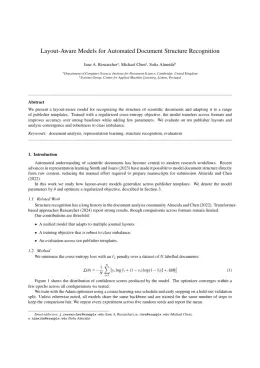
In DocuGuru you write your manuscript in a normal editor — no LaTeX setup required — and select the hLife template. When you export, DocuGuru compiles the paper into the official Elsevier format and hands you a submission-ready PDF along with the editable LaTeX source.
What reference style does hLife use?
hLife uses Numbered (Elsevier) references, shown as numbered [1], [2] markers in the text. DocuGuru formats every in-text citation and the reference list in this exact style automatically. A reference appears like this: [1] A. Smith, B. Jones, C. Lee, A representative article title, hLife 12 (2023) 45–58.
Do I need to know LaTeX to submit to hLife?
No. DocuGuru generates the elsarticle LaTeX class and compiles the PDF for you in the background, so you get a Elsevier-ready hLife document without writing any LaTeX. If you do want it, the LaTeX source is included in the export.
Can I import an existing draft into the hLife template?
Yes. Paste or upload your current manuscript — Word, LaTeX, Markdown, or plain text — and DocuGuru reflows it into the hLife format with correct headings, figures, tables, and numbered citations.
Who publishes hLife?
hLife is a multidisciplinary journal published by Elsevier. DocuGuru's hLife template matches Elsevier's official submission format.
Can I export a submission-ready hLife PDF?
Yes — DocuGuru produces a PDF built with the official hLife template (the elsarticle class) that is ready to submit to Elsevier, together with the matching LaTeX source files.
How much does the hLife template cost?
You can start writing in the hLife template for free. Exporting the final submission-ready hLife PDF and LaTeX source is part of DocuGuru's paid plans — see the app for current pricing.
Use the hLife template