Elsevier

Green Chemical Engineering Template

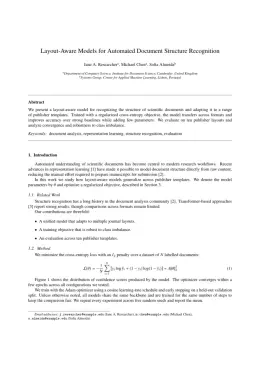
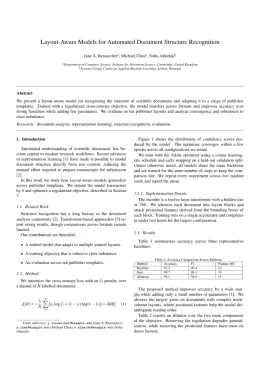
Write in a clean editor, then format for Green Chemical Engineering in one click — DocuGuru applies the official Elsevier template with numbered references and exports a submission-ready PDF plus the editable LaTeX source. Free to start.

About the Green Chemical Engineering format

Green Chemical Engineering is a peer-reviewed journal published by Elsevier, covering Ionic liquids properties and applications, Diverse Scientific and Economic Studies, Metal-Organic Frameworks: Synthesis and Applications.

PublisherElsevier
Reference styleNumbered (Elsevier)
Numbered — [1], [2] in the text
[1] A. Smith, B. Jones, C. Lee, A representative article title, Green Chemical Engineering 12 (2023) 45–58.

Formats any DOI in Green Chemical Engineering style. No sign-up.

Publishes research inIonic liquids properties and applications Diverse Scientific and Economic Studies Metal-Organic Frameworks: Synthesis and Applications Catalysis for Biomass Conversion Carbon dioxide utilization in catalysis
ISSN2096-9147
Citation impact (2-yr)4.9
h-index42
i10-index172
Total citations7,497
Open accessYes
Top institutions publishing hereEast China University of Science and Technology
Journal websitewww.sciencedirect.com
You getA submission-ready PDF and the editable LaTeX source — ready to submit.

Papers published in Green Chemical Engineering per year

8
2014
40
2020
61
2021
68
2022
47
2023
72
2024
71
2025

Citation impact of Green Chemical Engineering by publication year

0
2014
1.2K
2020
2.4K
2021
1.4K
2022
1.5K
2023
650
2024
138
2025

Citations each year’s papers have accumulated so far — the most recent years are still building up.

Most-cited papers in Green Chemical Engineering

Revisiting greenness of ionic liquids and deep eutectic solvents

Yu Chen, Tiancheng Mu · 6 Feb 2021

Green solvents are one of the hot topics of green chemistry. Ionic liquids (ILs) and deep eutectic solvents (DESs) are deemed as green solvents to a certain extent, and they have been applied in many areas, such as dissolution, separation, catalysis, electrochemistry and material synthesis. However, the greenness of ILs and DESs should be revisited…

Microalgae cultivation in photobioreactors: sustainable solutions for a greener future

Shaikh Abdur Razzak, Khairul Bahar, K. M. Oajedul Islam et al. · 21 Oct 2023

Microalgae cultivation in photobioreactors has emerged as a promising and sustainable approach to address various environmental and energy challenges, offering a multitude of benefits across diverse applications. Recent developments in microalgae cultivation in photobioreactors have contributed substantially to the development and optimization of sustainable bioprocesses. This manuscript presents a comprehensive analysis of recent innovations and…

The stability of MOFs in aqueous solutions—research progress and prospects

Yang An, Xinling Lv, Weiyi Jiang et al. · 31 Jul 2023

Metal-organic frameworks (MOFs) are favored in the fields of adsorption, separation, catalysis, electrochemistry, and magnetism due to their advantages of large specific surface area, high porosity, controllable pore size adjustment, and dispersion of metal active sites. The application of MOFs involves multiple fields, which requires that MOFs have good water stability, as gaseous and liquid…

Deep eutectic solvents eutectogels: progress and challenges

Jiake Wang, Shangzhong Zhang, Zhongzheng Ma et al. · 6 Jun 2021

Deep eutectic solvents (DESs) have received widespread attention for their advantages of good electrical conductivity, stability, environmental friendliness, and easy preparation with a wide range of applications. However, it was not until recent years that DESs were used as gel electrolytes as environmentally friendly alternatives to ionic liquids (ILs). In this review, we first introduce…

Recent advances in carbon dioxide capture and utilization with amines and ionic liquids

Yuxin Wu, Jianhong Xu, Kathryn A. Mumford et al. · 1 Sep 2020

Global warming and climate change due to anthropogenic carbon dioxide (CO2) have aroused significant concerns at the global scale due to rapid economic growth in industries and other fields. Therefore, CO2 capture, use, and storage have become particularly important. In this review, general background and methods for CO2 capture and separation, in particular, on ionic…

Green Chemical Engineering template — frequently asked questions

How do I write a paper in the Green Chemical Engineering format?
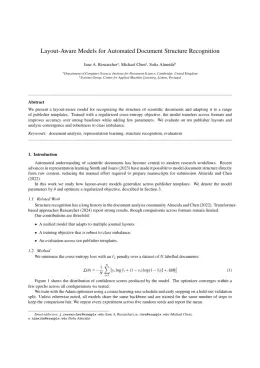
In DocuGuru you write your manuscript in a normal editor — no LaTeX setup required — and select the Green Chemical Engineering template. When you export, DocuGuru compiles the paper into the official Elsevier format and hands you a submission-ready PDF along with the editable LaTeX source.
What reference style does Green Chemical Engineering use?
Green Chemical Engineering uses Numbered (Elsevier) references, shown as numbered [1], [2] markers in the text. DocuGuru formats every in-text citation and the reference list in this exact style automatically. A reference appears like this: [1] A. Smith, B. Jones, C. Lee, A representative article title, Green Chemical Engineering 12 (2023) 45–58.
Do I need to know LaTeX to submit to Green Chemical Engineering?
No. DocuGuru generates the elsarticle LaTeX class and compiles the PDF for you in the background, so you get a Elsevier-ready Green Chemical Engineering document without writing any LaTeX. If you do want it, the LaTeX source is included in the export.
Can I import an existing draft into the Green Chemical Engineering template?
Yes. Paste or upload your current manuscript — Word, LaTeX, Markdown, or plain text — and DocuGuru reflows it into the Green Chemical Engineering format with correct headings, figures, tables, and numbered citations.
Who publishes Green Chemical Engineering?
Green Chemical Engineering is a multidisciplinary journal published by Elsevier. DocuGuru's Green Chemical Engineering template matches Elsevier's official submission format.
Can I export a submission-ready Green Chemical Engineering PDF?
Yes — DocuGuru produces a PDF built with the official Green Chemical Engineering template (the elsarticle class) that is ready to submit to Elsevier, together with the matching LaTeX source files.
How much does the Green Chemical Engineering template cost?
You can start writing in the Green Chemical Engineering template for free. Exporting the final submission-ready Green Chemical Engineering PDF and LaTeX source is part of DocuGuru's paid plans — see the app for current pricing.
Use the Green Chemical Engineering template