Elsevier

Green Carbon Template

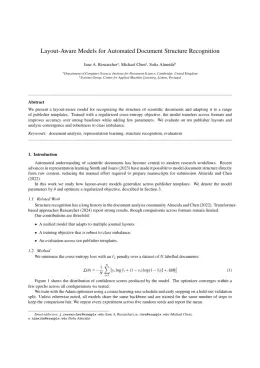
Write in a clean editor, then format for Green Carbon in one click — DocuGuru applies the official Elsevier template with numbered references and exports a submission-ready PDF plus the editable LaTeX source. Free to start.

About the Green Carbon format

Green Carbon is a peer-reviewed journal published by Elsevier, covering Catalysis for Biomass Conversion, Microbial Metabolic Engineering and Bioproduction, Catalysts for Methane Reforming.

PublisherElsevier
Reference styleNumbered (Elsevier)
Numbered — [1], [2] in the text
[1] A. Smith, B. Jones, C. Lee, A representative article title, Green Carbon 12 (2023) 45–58.

Formats any DOI in Green Carbon style. No sign-up.

Publishes research inCatalysis for Biomass Conversion Microbial Metabolic Engineering and Bioproduction Catalysts for Methane Reforming CO2 Reduction Techniques and Catalysts Biofuel production and bioconversion
ISSN2950-1555
Citation impact (2-yr)9.05
h-index30
i10-index75
Total citations2,749
Open accessYes
Top institutions publishing hereQingdao Institute of Bioenergy and Bioprocess Technology
You getA submission-ready PDF and the editable LaTeX source — ready to submit.

Papers published in Green Carbon per year

25
2023
63
2024
55
2025

Citation impact of Green Carbon by publication year

998
2023
1.4K
2024
256
2025

Citations each year’s papers have accumulated so far — the most recent years are still building up.

Most-cited papers in Green Carbon

Recent advancements and perspectives of the CO2 hydrogenation reaction

Wenhang Wang, Chunyang Zeng, Noritatsu Tsubaki · 23 Oct 2023

Owing to excessive carbon dioxide (CO2) emissions, which cause severe environmental issues, the conversion and utilization of CO2 have received increasing attention. Owing to its high efficiency and potential for industrial applications, converting CO2 into high value-added chemicals via thermocatalytic hydrogenation is a highly effective route among electrocatalytic, photocatalytic, and thermocatalytic CO2 conversion. In the…

Advances in reactive co-precipitation technology for preparing high-performance cathodes

Zhenzhen Wang, Yang Li, Chunliu Xu et al. · 1 Dec 2023

Reactive crystallization plays an essential role in the synthesis of high-quality precursors with a narrow particle size distribution, dense packing, and high sphericity. These features are beneficial in the fabrication of high-specific-capacity and long-cycle-life cathodes for lithium-ion and sodium-ion batteries. However, in industrial production, designing and scaling-up crystallizers involves the use of semi-empirical approaches, making…

Integration of advanced biotechnology for green carbon

Miao Wang, Yixiang Wang, Jingyuan Liu et al. · 8 Mar 2024

Carbon neutralization has been introduced as a long-term policy to control global warming and climate change. As plant photosynthesis produces the most abundant lignocellulosic biomass on Earth, its conversion to biofuels and bioproducts is considered a promising solution for reducing the net carbon release. However, natural lignocellulose recalcitrance crucially results in a costly biomass process…

Opportunities of CO2-based biorefineries for production of fuels and chemicals

Zihe Liu, Shuobo Shi, Yuchao Ji et al. · 1 Sep 2023

Biorefinery production of fuels and chemicals represents an attractive route for solving current energy crisis, as well as reducing green-house gas (GHG) emissions from ships, planes, and long-haul trucks. The current biorefinery industry is under transition from the use of food (1 G, 1st generation), to the use of biomass (2 G, 2nd generation). Moreover,…

ZIF-8-derived Fe-C catalysts: Relationship between structure and catalytic activity toward the oxygen reduction reaction

Jakub P. Masnica, Syed Sibt-e-Hassan, Sanja Potgieter‐Vermaak et al. · 10 Nov 2023

The oxygen reduction reaction (ORR) activity of carbonized ZIF-8 (CZ) and its Fe-doped derivatives, CZ-A (doped with ammonium iron (II) sulphate) and CZ-B (doped with iron (II) acetate), were examined in both acidic (0.5 M H2SO4) and basic (0.1 M KOH) electrolytes using a rotating disk electrode setup. These data show that the ORR activity…

Green Carbon template — frequently asked questions

How do I write a paper in the Green Carbon format?
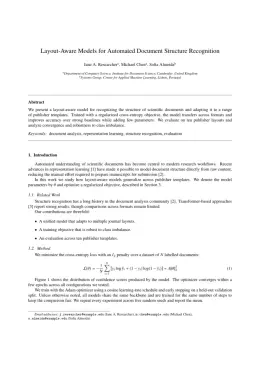
In DocuGuru you write your manuscript in a normal editor — no LaTeX setup required — and select the Green Carbon template. When you export, DocuGuru compiles the paper into the official Elsevier format and hands you a submission-ready PDF along with the editable LaTeX source.
What reference style does Green Carbon use?
Green Carbon uses Numbered (Elsevier) references, shown as numbered [1], [2] markers in the text. DocuGuru formats every in-text citation and the reference list in this exact style automatically. A reference appears like this: [1] A. Smith, B. Jones, C. Lee, A representative article title, Green Carbon 12 (2023) 45–58.
Do I need to know LaTeX to submit to Green Carbon?
No. DocuGuru generates the elsarticle LaTeX class and compiles the PDF for you in the background, so you get a Elsevier-ready Green Carbon document without writing any LaTeX. If you do want it, the LaTeX source is included in the export.
Can I import an existing draft into the Green Carbon template?
Yes. Paste or upload your current manuscript — Word, LaTeX, Markdown, or plain text — and DocuGuru reflows it into the Green Carbon format with correct headings, figures, tables, and numbered citations.
Who publishes Green Carbon?
Green Carbon is a multidisciplinary journal published by Elsevier. DocuGuru's Green Carbon template matches Elsevier's official submission format.
Can I export a submission-ready Green Carbon PDF?
Yes — DocuGuru produces a PDF built with the official Green Carbon template (the elsarticle class) that is ready to submit to Elsevier, together with the matching LaTeX source files.
How much does the Green Carbon template cost?
You can start writing in the Green Carbon template for free. Exporting the final submission-ready Green Carbon PDF and LaTeX source is part of DocuGuru's paid plans — see the app for current pricing.
Use the Green Carbon template