Elsevier

Global Ecology and Conservation Template

Write in a clean editor, then format for Global Ecology and Conservation in one click — DocuGuru applies the official Elsevier template with author–year references and exports a submission-ready PDF plus the editable LaTeX source. Free to start.

About the Global Ecology and Conservation format

Global Ecology and Conservation is a peer-reviewed journal published by Elsevier, covering Wildlife Ecology and Conservation, Ecology and Vegetation Dynamics Studies, Species Distribution and Climate Change.

PublisherElsevier
Reference styleAuthor–year (Harvard)
Author–year — (Smith, 2023) in the text
Smith, A., Jones, B. and Lee, C. (2023) 'A representative article title', Global Ecology and Conservation, 12(3), pp. 45–58.

Formats any DOI in Global Ecology and Conservation style. No sign-up.

Publishes research inWildlife Ecology and Conservation Ecology and Vegetation Dynamics Studies Species Distribution and Climate Change Plant and animal studies Land Use and Ecosystem Services
ISSN2351-9894
Citation impact (2-yr)2.68
h-index102
i10-index2,040
Total citations81,300
Article processing charge$1,820
Open accessYes
Top institutions publishing hereChinese Academy of Sciences
Journal websitewww.journals.elsevier.com
You getA submission-ready PDF and the editable LaTeX source — ready to submit.

Papers published in Global Ecology and Conservation per year

75
2014
124
2015
88
2016
84
2017
157
2018
386
2019
549
2020
556
2021
362
2022
428
2023
598
2024
645
2025

Citation impact of Global Ecology and Conservation by publication year

3.8K
2014
6.1K
2015
4.3K
2016
4.5K
2017
5.7K
2018
14.5K
2019
16.5K
2020
11.5K
2021
5.7K
2022
4.1K
2023
3K
2024
842
2025

Citations each year’s papers have accumulated so far — the most recent years are still building up.

Most-cited papers in Global Ecology and Conservation

Total concentrations and sources of heavy metal pollution in global river and lake water bodies from 1972 to 2017

Qiaoqiao Zhou, Nan Yang, Youzhi Li et al. · 23 Jan 2020

This study collected past sampling data on total concentrations of 12 heavy metals (Cd, Pb, Cr, Hg, Zn, Cu, Ni, Al, Fe, Mn, As, and Co) in surface water bodies, i.e., 168 rivers and 71 lakes, from 1972 to 2017. The intent was to investigate the levels and sources of heavy metal pollution across five…

Agricultural waste: Review of the evolution, approaches and perspectives on alternative uses

Mónica Duque-Acevedo, Luis Jesús Belmonte Ureña, Francisco Joaquín Cortés‐García et al. · 8 Jan 2020

This research provides an analysis of existing scientific production on agricultural waste
\nfrom 1931 to 2018. The database was obtained from Scopus and includes a total of 3148
\narticles, which were analysed using the bibliometric method. This method focuses on the
\nidentification, evolution, approaches and trends referred to in the use and transformation
\nof agricultural waste. The results of…

Land cover distribution in the peatlands of Peninsular Malaysia, Sumatra and Borneo in 2015 with changes since 1990

Jukka Miettinen, Chenghua Shi, Soo Chin Liew · 5 Mar 2016

Insular Southeast Asian peatlands have experienced rapid land cover changes over the past decades inducing a variety of environmental effects ranging from regional consequences on peatland ecology, biodiversity and hydrology to globally significant carbon emissions. In this paper we present the land cover and industrial plantation distribution in the peatlands of Peninsular Malaysia, Sumatra and…

Biodiversity hotspots: A shortcut for a more complicated concept

Christian Marchese · 31 Dec 2014

In an era of human activities, global environmental changes, habitat loss and species extinction, conservation strategies are a crucial step toward minimizing biodiversity loss. For instance, oceans acidification and land use are intensifying in many places with negative and often irreversible consequences for biodiversity. Biodiversity hotspots, despite some criticism, have become a tool for setting…

Mixed-species versus monocultures in plantation forestry: Development, benefits, ecosystem services and perspectives for the future

Corsa Lok Ching Liu, Oleksandra Kuchma, Konstantin V. Krutovsky · 1 Jul 2018

Plantation forests are increasing rapidly in the world in order to alleviate deforestation and degradation of natural forests, along with providing various goods and services. While monoculture plantations have been the dominant type of plantation in practice and well-recorded in research, in the face of intensifying climate change and resource scarcity, there is a growing…

Global Ecology and Conservation template — frequently asked questions

How do I write a paper in the Global Ecology and Conservation format?
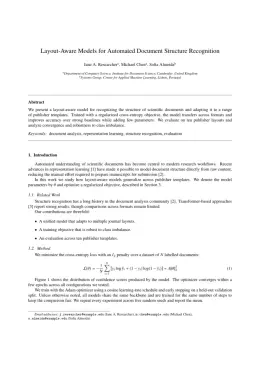
In DocuGuru you write your manuscript in a normal editor — no LaTeX setup required — and select the Global Ecology and Conservation template. When you export, DocuGuru compiles the paper into the official Elsevier format and hands you a submission-ready PDF along with the editable LaTeX source.
What reference style does Global Ecology and Conservation use?
Global Ecology and Conservation uses Author–year (Harvard) references, shown as author–year markers such as (Smith, 2023) in the text. DocuGuru formats every in-text citation and the reference list in this exact style automatically. A reference appears like this: Smith, A., Jones, B. and Lee, C. (2023) 'A representative article title', Global Ecology and Conservation, 12(3), pp. 45–58.
Do I need to know LaTeX to submit to Global Ecology and Conservation?
No. DocuGuru generates the elsarticle LaTeX class and compiles the PDF for you in the background, so you get a Elsevier-ready Global Ecology and Conservation document without writing any LaTeX. If you do want it, the LaTeX source is included in the export.
Can I import an existing draft into the Global Ecology and Conservation template?
Yes. Paste or upload your current manuscript — Word, LaTeX, Markdown, or plain text — and DocuGuru reflows it into the Global Ecology and Conservation format with correct headings, figures, tables, and author–year citations.
Who publishes Global Ecology and Conservation?
Global Ecology and Conservation is a multidisciplinary journal published by Elsevier. DocuGuru's Global Ecology and Conservation template matches Elsevier's official submission format.
Can I export a submission-ready Global Ecology and Conservation PDF?
Yes — DocuGuru produces a PDF built with the official Global Ecology and Conservation template (the elsarticle class) that is ready to submit to Elsevier, together with the matching LaTeX source files.
How much does the Global Ecology and Conservation template cost?
You can start writing in the Global Ecology and Conservation template for free. Exporting the final submission-ready Global Ecology and Conservation PDF and LaTeX source is part of DocuGuru's paid plans — see the app for current pricing.
Use the Global Ecology and Conservation template