Elsevier

Genomics Proteomics & Bioinformatics Template

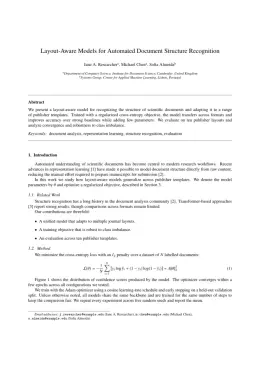
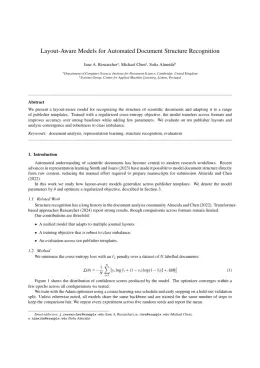
Write in a clean editor, then format for Genomics Proteomics & Bioinformatics in one click — DocuGuru applies the official Elsevier template with numbered references and exports a submission-ready PDF plus the editable LaTeX source. Free to start.

About the Genomics Proteomics & Bioinformatics format

Genomics Proteomics & Bioinformatics is a peer-reviewed journal published by Elsevier, covering Genomics and Phylogenetic Studies, RNA modifications and cancer, RNA and protein synthesis mechanisms.

PublisherElsevier
Reference styleNumbered (Elsevier)
Numbered — [1], [2] in the text
[1] A. Smith, B. Jones, C. Lee, A representative article title, Genomics Proteomics & Bioinformatics 12 (2023) 45–58.

Formats any DOI in Genomics Proteomics & Bioinformatics style. No sign-up.

Publishes research inGenomics and Phylogenetic Studies RNA modifications and cancer RNA and protein synthesis mechanisms Bioinformatics and Genomic Networks Gene expression and cancer classification
ISSN1672-0229
Citation impact (2-yr)5.32
h-index102
i10-index744
Total citations59,840
Article processing charge$3,500
Open accessYes
Top institutions publishing hereChinese Academy of Sciences
Journal websitewww.journals.elsevier.com
You getA submission-ready PDF and the editable LaTeX source — ready to submit.

Papers published in Genomics Proteomics & Bioinformatics per year

42
2014
55
2015
48
2016
48
2017
53
2018
62
2019
70
2020
124
2021
107
2022
49
2023
97
2024
138
2025

Citation impact of Genomics Proteomics & Bioinformatics by publication year

1.6K
2014
7.3K
2015
4.8K
2016
3.9K
2017
4.8K
2018
3K
2019
3.8K
2020
9K
2021
4.8K
2022
773
2023
858
2024
625
2025

Citations each year’s papers have accumulated so far — the most recent years are still building up.

Most-cited papers in Genomics Proteomics & Bioinformatics

PacBio Sequencing and its Applications

Anthony Rhoads, Kin Fai Au · 1 Oct 2015

Single-molecule, real-time sequencing developed by Pacific BioSciences offers longer read lengths than the second-generation sequencing (SGS) technologies, making it well-suited for unsolved problems in genome, transcriptome, and epigenetics research. The highly-contiguous de novo assemblies using PacBio sequencing can close gaps in current reference assemblies and characterize structural variation (SV) in personal genomes. With longer reads,…

2,462 citations Cite SaveGo to paper →
Exosome and Exosomal MicroRNA: Trafficking, Sorting, and Function

Jian Zhang, Sha Li, Lu Li et al. · 1 Feb 2015

Exosomes are 40-100 nm nano-sized vesicles that are released from many cell types into the extracellular space. Such vesicles are widely distributed in various body fluids. Recently, mRNAs and microRNAs (miRNAs) have been identified in exosomes, which can be taken up by neighboring or distant cells and subsequently modulate recipient cells. This suggests an active…

2,257 citations Cite SaveGo to paper →
KaKs_Calculator 2.0: A Toolkit Incorporating Gamma-Series Methods and Sliding Window Strategies

Dapeng Wang, Yubin Zhang, Zhang Zhang et al. · 1 Mar 2010

We present an integrated stand-alone software package named KaKs_Calculator 2.0 as an updated version. It incorporates 17 methods for the calculation of nonsynonymous and synonymous substitution rates; among them, we added our modified versions of several widely used methods as the gamma series including gamma-NG, gamma-LWL, gamma-MLWL, gamma-LPB, gamma-MLPB, gamma-YN and gamma-MYN, which have been…

2,224 citations Cite SaveGo to paper →
The Genome Sequence Archive Family: Toward Explosive Data Growth and Diverse Data Types

Tingting Chen, Xu Chen, Sisi Zhang et al. · 1 Aug 2021

The Genome Sequence Archive (GSA) is a data repository for archiving raw sequence data, which provides data storage and sharing services for worldwide scientific communities. Considering explosive data growth with diverse data types, here we present the GSA family by expanding into a set of resources for raw data archive with different purposes, namely, GSA…

1,909 citations Cite SaveGo to paper →
KaKs_Calculator: Calculating Ka and Ks Through Model Selection and Model Averaging

Zhang Zhang, Jun Li, Xiaoqian Zhao et al. · 1 Dec 2006

Abstract KaKs_Calculator is a software package that calculates nonsynonymous (Ka) and synonymous (Ks) substitution rates through model selection and model averaging. Since existing methods for this estimation adopt their specific mutation (substitution) models that consider different evolutionary features, leading to diverse estimates, KaKs_Calculator implements a set of candidate models in a maximum likelihood framework and…

1,324 citations Cite SaveGo to paper →

Genomics Proteomics & Bioinformatics template — frequently asked questions

How do I write a paper in the Genomics Proteomics & Bioinformatics format?
In DocuGuru you write your manuscript in a normal editor — no LaTeX setup required — and select the Genomics Proteomics & Bioinformatics template. When you export, DocuGuru compiles the paper into the official Elsevier format and hands you a submission-ready PDF along with the editable LaTeX source.
What reference style does Genomics Proteomics & Bioinformatics use?
Genomics Proteomics & Bioinformatics uses Numbered (Elsevier) references, shown as numbered [1], [2] markers in the text. DocuGuru formats every in-text citation and the reference list in this exact style automatically. A reference appears like this: [1] A. Smith, B. Jones, C. Lee, A representative article title, Genomics Proteomics & Bioinformatics 12 (2023) 45–58.
Do I need to know LaTeX to submit to Genomics Proteomics & Bioinformatics?
No. DocuGuru generates the elsarticle LaTeX class and compiles the PDF for you in the background, so you get a Elsevier-ready Genomics Proteomics & Bioinformatics document without writing any LaTeX. If you do want it, the LaTeX source is included in the export.
Can I import an existing draft into the Genomics Proteomics & Bioinformatics template?
Yes. Paste or upload your current manuscript — Word, LaTeX, Markdown, or plain text — and DocuGuru reflows it into the Genomics Proteomics & Bioinformatics format with correct headings, figures, tables, and numbered citations.
Who publishes Genomics Proteomics & Bioinformatics?
Genomics Proteomics & Bioinformatics is a multidisciplinary journal published by Elsevier. DocuGuru's Genomics Proteomics & Bioinformatics template matches Elsevier's official submission format.
Can I export a submission-ready Genomics Proteomics & Bioinformatics PDF?
Yes — DocuGuru produces a PDF built with the official Genomics Proteomics & Bioinformatics template (the elsarticle class) that is ready to submit to Elsevier, together with the matching LaTeX source files.
How much does the Genomics Proteomics & Bioinformatics template cost?
You can start writing in the Genomics Proteomics & Bioinformatics template for free. Exporting the final submission-ready Genomics Proteomics & Bioinformatics PDF and LaTeX source is part of DocuGuru's paid plans — see the app for current pricing.
Use the Genomics Proteomics & Bioinformatics template