Elsevier

Computational and Structural Biotechnology Journal Template

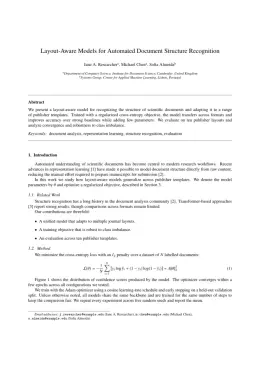
Write in a clean editor, then format for Computational and Structural Biotechnology Journal in one click — DocuGuru applies the official Elsevier template with numbered references and exports a submission-ready PDF plus the editable LaTeX source. Free to start.

About the Computational and Structural Biotechnology Journal format

Computational and Structural Biotechnology Journal is a peer-reviewed journal published by Elsevier, covering RNA and protein synthesis mechanisms, Bioinformatics and Genomic Networks, Computational Drug Discovery Methods.

PublisherElsevier
Reference styleNumbered (Elsevier)
Numbered — [1], [2] in the text
[1] A. Smith, B. Jones, C. Lee, A representative article title, Computational and Structural Biotechnology Journal 12 (2023) 45–58.

Formats any DOI in Computational and Structural Biotechnology Journal style. No sign-up.

Publishes research inRNA and protein synthesis mechanisms Bioinformatics and Genomic Networks Computational Drug Discovery Methods Protein Structure and Dynamics Genomics and Phylogenetic Studies
ISSN2001-0370
Citation impact (2-yr)5.77
h-index129
i10-index2,005
Total citations106,340
Article processing charge$2,642
Open accessYes
Top institutions publishing hereChinese Academy of Sciences
Journal websitewww.journals.elsevier.com
You getA submission-ready PDF and the editable LaTeX source — ready to submit.

Papers published in Computational and Structural Biotechnology Journal per year

66
2014
57
2015
50
2016
43
2017
71
2018
151
2019
391
2020
539
2021
607
2022
513
2023
458
2024
573
2025

Citation impact of Computational and Structural Biotechnology Journal by publication year

6K
2014
3.8K
2015
3.6K
2016
3.1K
2017
7.1K
2018
8.8K
2019
17.7K
2020
22.4K
2021
13.3K
2022
6.7K
2023
4.9K
2024
1.8K
2025

Citations each year’s papers have accumulated so far — the most recent years are still building up.

Most-cited papers in Computational and Structural Biotechnology Journal

Machine learning applications in cancer prognosis and prediction

Κωνσταντίνα Κούρου, Themis P. Exarchos, Konstantinos Exarchos et al. · 15 Nov 2014

Cancer has been characterized as a heterogeneous disease consisting of many different subtypes. The early diagnosis and prognosis of a cancer type have become a necessity in cancer research, as it can facilitate the subsequent clinical management of patients. The importance of classifying cancer patients into high or low risk groups has led many research…

3,330 citations Cite SaveGo to paper →
Survival analysis across the entire transcriptome identifies biomarkers with the highest prognostic power in breast cancer

Balázs Győrffy · 1 Jan 2021

INTRODUCTION: Extensive research is directed to uncover new biomarkers capable to stratify breast cancer patients into clinically relevant cohorts. However, the overall performance ranking of such marker candidates compared to other genes is virtually absent. Here, we present the ranking of all survival related genes in chemotherapy treated basal and estrogen positive/HER2 negative breast cancer.…

1,751 citations Cite SaveGo to paper →
Machine Learning and Data Mining Methods in Diabetes Research

Ioannis Kavakiotis, O. Tsave, Athanasios Salifoglou et al. · 1 Jan 2017

The remarkable advances in biotechnology and health sciences have led to a significant production of data, such as high throughput genetic data and clinical information, generated from large Electronic Health Records (EHRs). To this end, application of machine learning and data mining methods in biosciences is presently, more than ever before, vital and indispensable in…

1,429 citations Cite SaveGo to paper →
UCell: Robust and scalable single-cell gene signature scoring

Massimo Andreatta, Santiago J. Carmona · 1 Jan 2021

UCell is an R package for evaluating gene signatures in single-cell datasets. UCell signature scores, based on the Mann-Whitney U statistic, are robust to dataset size and heterogeneity, and their calculation demands less computing time and memory than other available methods, enabling the processing of large datasets in a few minutes even on machines with…

1,075 citations Cite SaveGo to paper →
Machine Learning Methods for Histopathological Image Analysis

Daisuke Komura, Shumpei Ishikawa · 1 Jan 2018

Abundant accumulation of digital histopathological images has led to the increased demand for their analysis, such as computer-aided diagnosis using machine learning techniques. However, digital pathological images and related tasks have some issues to be considered. In this mini-review, we introduce the application of digital pathological image analysis using machine learning algorithms, address some problems…

Computational and Structural Biotechnology Journal template — frequently asked questions

How do I write a paper in the Computational and Structural Biotechnology Journal format?
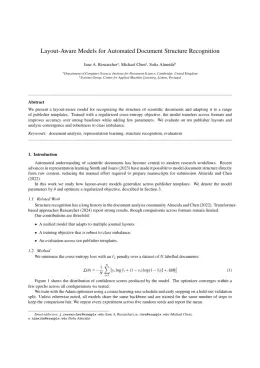
In DocuGuru you write your manuscript in a normal editor — no LaTeX setup required — and select the Computational and Structural Biotechnology Journal template. When you export, DocuGuru compiles the paper into the official Elsevier format and hands you a submission-ready PDF along with the editable LaTeX source.
What reference style does Computational and Structural Biotechnology Journal use?
Computational and Structural Biotechnology Journal uses Numbered (Elsevier) references, shown as numbered [1], [2] markers in the text. DocuGuru formats every in-text citation and the reference list in this exact style automatically. A reference appears like this: [1] A. Smith, B. Jones, C. Lee, A representative article title, Computational and Structural Biotechnology Journal 12 (2023) 45–58.
Do I need to know LaTeX to submit to Computational and Structural Biotechnology Journal?
No. DocuGuru generates the elsarticle LaTeX class and compiles the PDF for you in the background, so you get a Elsevier-ready Computational and Structural Biotechnology Journal document without writing any LaTeX. If you do want it, the LaTeX source is included in the export.
Can I import an existing draft into the Computational and Structural Biotechnology Journal template?
Yes. Paste or upload your current manuscript — Word, LaTeX, Markdown, or plain text — and DocuGuru reflows it into the Computational and Structural Biotechnology Journal format with correct headings, figures, tables, and numbered citations.
Who publishes Computational and Structural Biotechnology Journal?
Computational and Structural Biotechnology Journal is a multidisciplinary journal published by Elsevier. DocuGuru's Computational and Structural Biotechnology Journal template matches Elsevier's official submission format.
Can I export a submission-ready Computational and Structural Biotechnology Journal PDF?
Yes — DocuGuru produces a PDF built with the official Computational and Structural Biotechnology Journal template (the elsarticle class) that is ready to submit to Elsevier, together with the matching LaTeX source files.
How much does the Computational and Structural Biotechnology Journal template cost?
You can start writing in the Computational and Structural Biotechnology Journal template for free. Exporting the final submission-ready Computational and Structural Biotechnology Journal PDF and LaTeX source is part of DocuGuru's paid plans — see the app for current pricing.
Use the Computational and Structural Biotechnology Journal template