Elsevier

Cell Reports Template

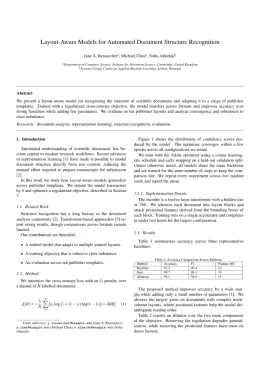
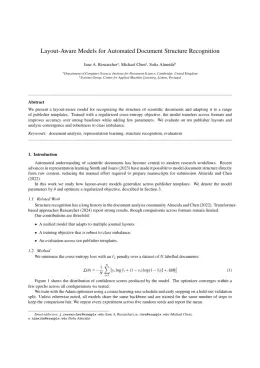
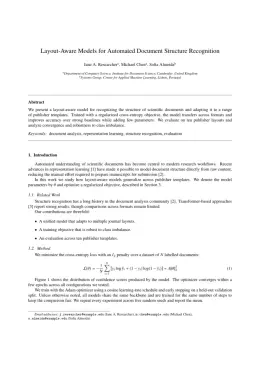
Write in a clean editor, then format for Cell Reports in one click — DocuGuru applies the official Elsevier template with numbered references and exports a submission-ready PDF plus the editable LaTeX source. Free to start.

About the Cell Reports format

Cell Reports is a peer-reviewed journal published by Elsevier, covering RNA Research and Splicing, Neuroscience and Neuropharmacology Research, RNA modifications and cancer.

PublisherElsevier
Reference styleNumbered (Elsevier)
Numbered — [1], [2] in the text
[1] A. Smith, B. Jones, C. Lee, A representative article title, Cell Reports 12 (2023) 45–58.

Formats any DOI in Cell Reports style. No sign-up.

Publishes research inRNA Research and Splicing Neuroscience and Neuropharmacology Research RNA modifications and cancer Immune Cell Function and Interaction Epigenetics and DNA Methylation
ISSN2211-1247
Citation impact (2-yr)7.87
h-index325
i10-index13,373
Total citations1,051,057
Article processing charge$5,200
Open accessYes
Top institutions publishing hereHarvard University
Journal websitewww.sciencedirect.com
You getA submission-ready PDF and the editable LaTeX source — ready to submit.

Papers published in Cell Reports per year

721
2014
852
2015
1.1K
2016
1.1K
2017
1.3K
2018
1.3K
2019
1.4K
2020
1.4K
2021
1.5K
2022
1.6K
2023
1.4K
2024
1.6K
2025

Citation impact of Cell Reports by publication year

90.6K
2014
97.5K
2015
110.1K
2016
122.7K
2017
121.8K
2018
104K
2019
91.8K
2020
76.9K
2021
55.8K
2022
40.4K
2023
20.7K
2024
7.8K
2025

Citations each year’s papers have accumulated so far — the most recent years are still building up.

Most-cited papers in Cell Reports

Pan-cancer Immunogenomic Analyses Reveal Genotype-Immunophenotype Relationships and Predictors of Response to Checkpoint Blockade

Pornpimol Charoentong, Francesca Finotello, Mihaela Angelova et al. · 1 Jan 2017

The Cancer Genome Atlas revealed the genomic landscapes of human cancers. In parallel, immunotherapy is transforming the treatment of advanced cancers. Unfortunately, the majority of patients do not respond to immunotherapy, making the identification of predictive markers and the mechanisms of resistance an area of intense research. To increase our understanding of tumor-immune cell interactions,…

5,420 citations Cite SaveGo to paper →
Formation of Chromosomal Domains by Loop Extrusion

Geoffrey Fudenberg, Maxim Imakaev, Carolyn Lu et al. · 1 May 2016

Topologically associating domains (TADs) are fundamental structural and functional building blocks of human interphase chromosomes, yet the mechanisms of TAD formation remain unclear. Here, we propose that loop extrusion underlies TAD formation. In this process, cis-acting loop-extruding factors, likely cohesins, form progressively larger loops but stall at TAD boundaries due to interactions with boundary proteins,…

2,201 citations Cite SaveGo to paper →
Interferon Receptor Signaling Pathways Regulating PD-L1 and PD-L2 Expression

Ángel García-Díaz, Daniel Sanghoon Shin, Blanca Homet Moreno et al. · 1 May 2017

PD-L1 and PD-L2 are ligands for the PD-1 immune inhibiting checkpoint that can be induced in tumors by interferon exposure, leading to immune evasion. This process is important for immunotherapy based on PD-1 blockade. We examined the specific molecules involved in interferon-induced signaling that regulates PD-L1 and PD-L2 expression in melanoma cells. These studies revealed…

1,927 citations Cite SaveGo to paper →
A GAL4-Driver Line Resource for Drosophila Neurobiology

Arnim Jenett, Gerald M. Rubin, Teri-T B Ngo et al. · 1 Oct 2012

We established a collection of 7,000 transgenic lines of Drosophila melanogaster. Expression of GAL4 in each line is controlled by a different, defined fragment of genomic DNA that serves as a transcriptional enhancer. We used confocal microscopy of dissected nervous systems to determine the expression patterns driven by each fragment in the adult brain and…

1,651 citations Cite SaveGo to paper →
Direct Activation of STING in the Tumor Microenvironment Leads to Potent and Systemic Tumor Regression and Immunity

Leticia Corrales, Laura Hix Glickman, Sarah M. McWhirter et al. · 1 May 2015

Spontaneous tumor-initiated T cell priming is dependent on IFN-β production by tumor-resident dendritic cells. On the basis of recent observations indicating that IFN-β expression was dependent upon activation of the host STING pathway, we hypothesized that direct engagement of STING through intratumoral (IT) administration of specific agonists would result in effective anti-tumor therapy. After proof-of-principle…

1,523 citations Cite SaveGo to paper →

Cell Reports template — frequently asked questions

How do I write a paper in the Cell Reports format?
In DocuGuru you write your manuscript in a normal editor — no LaTeX setup required — and select the Cell Reports template. When you export, DocuGuru compiles the paper into the official Elsevier format and hands you a submission-ready PDF along with the editable LaTeX source.
What reference style does Cell Reports use?
Cell Reports uses Numbered (Elsevier) references, shown as numbered [1], [2] markers in the text. DocuGuru formats every in-text citation and the reference list in this exact style automatically. A reference appears like this: [1] A. Smith, B. Jones, C. Lee, A representative article title, Cell Reports 12 (2023) 45–58.
Do I need to know LaTeX to submit to Cell Reports?
No. DocuGuru generates the elsarticle LaTeX class and compiles the PDF for you in the background, so you get a Elsevier-ready Cell Reports document without writing any LaTeX. If you do want it, the LaTeX source is included in the export.
Can I import an existing draft into the Cell Reports template?
Yes. Paste or upload your current manuscript — Word, LaTeX, Markdown, or plain text — and DocuGuru reflows it into the Cell Reports format with correct headings, figures, tables, and numbered citations.
Who publishes Cell Reports?
Cell Reports is a multidisciplinary journal published by Elsevier. DocuGuru's Cell Reports template matches Elsevier's official submission format.
Can I export a submission-ready Cell Reports PDF?
Yes — DocuGuru produces a PDF built with the official Cell Reports template (the elsarticle class) that is ready to submit to Elsevier, together with the matching LaTeX source files.
How much does the Cell Reports template cost?
You can start writing in the Cell Reports template for free. Exporting the final submission-ready Cell Reports PDF and LaTeX source is part of DocuGuru's paid plans — see the app for current pricing.
Use the Cell Reports template