Elsevier

BBA Clinical Template

Write in a clean editor, then format for BBA Clinical in one click — DocuGuru applies the official Elsevier template with numbered references and exports a submission-ready PDF plus the editable LaTeX source. Free to start.

About the BBA Clinical format

BBA Clinical is a peer-reviewed journal published by Elsevier, covering Cardiovascular Disease and Adiposity, Mitochondrial Function and Pathology, Adipokines, Inflammation, and Metabolic Diseases.

PublisherElsevier
Reference styleNumbered (Elsevier)
Numbered — [1], [2] in the text
[1] A. Smith, B. Jones, C. Lee, A representative article title, BBA Clinical 12 (2023) 45–58.

Formats any DOI in BBA Clinical style. No sign-up.

Publishes research inCardiovascular Disease and Adiposity Mitochondrial Function and Pathology Adipokines, Inflammation, and Metabolic Diseases Magnesium in Health and Disease Liver Disease Diagnosis and Treatment
ISSN2214-6474
h-index42
i10-index135
Total citations7,475
Top institutions publishing hereUniversidade Estadual de Campinas (UNICAMP)
Journal websitewww.journals.elsevier.com
You getA submission-ready PDF and the editable LaTeX source — ready to submit.

Papers published in BBA Clinical per year

1
1998
1
2004
1
2006
37
2014
95
2015
50
2016
25
2017

Citation impact of BBA Clinical by publication year

0
1998
0
2004
0
2006
1.2K
2014
2.1K
2015
3K
2016
1.1K
2017

Citations each year’s papers have accumulated so far — the most recent years are still building up.

Most-cited papers in BBA Clinical

Shining light on the head: Photobiomodulation for brain disorders

Michael R. Hamblin · 6 Oct 2016

Photobiomodulation (PBM) describes the use of red or near-infrared light to stimulate, heal, regenerate, and protect tissue that has either been injured, is degenerating, or else is at risk of dying. One of the organ systems of the human body that is most necessary to life, and whose optimum functioning is most worried about by…

Glycogen metabolism in humans

María M. Adeva‐Andany, Manuel González-Lucán, Cristóbal Donapetry‐García et al. · 28 Feb 2016

In the human body, glycogen is a branched polymer of glucose stored mainly in the liver and the skeletal muscle that supplies glucose to the blood stream during fasting periods and to the muscle cells during muscle contraction. Glycogen has been identified in other tissues such as brain, heart, kidney, adipose tissue, and erythrocytes, but…

The fate of chemoresistance in triple negative breast cancer (TNBC)

Elma Anna O'Reilly, Luke Gubbins, Shiva Sharma et al. · 12 Mar 2015

BACKGROUND: Treatment options for women presenting with triple negative breast cancer (TNBC) are limited due to the lack of a therapeutic target and as a result, are managed with standard chemotherapy such as paclitaxel (Taxol®). Following chemotherapy, the ideal tumour response is apoptotic cell death. Post-chemotherapy, cells can maintain viability by undergoing viable cellular responses…

Antioxidative activity of high-density lipoprotein (HDL): Mechanistic insights into potential clinical benefit

Fernando Brites, Maximiliano Martín, Isabelle Guillas et al. · 19 Aug 2017

Uptake of low-density lipoprotein (LDL) particles by macrophages represents a key step in the development of atherosclerotic plaques, leading to the foam cell formation. Chemical modification of LDL is however necessary to induce this process. Proatherogenic LDL modifications include aggregation, enzymatic digestion and oxidation. LDL oxidation by one-electron (free radicals) and two-electron oxidants dramatically increases…

Association of mitochondrial dysfunction and fatigue: A review of the literature

Kristin Filler, Debra Lyon, James P. Bennett et al. · 13 Apr 2014

Fatigue is often described by patients as a lack of energy, mental or physical tiredness, diminished endurance, and prolonged recovery after physical activity. Etiologic mechanisms underlying fatigue are not well understood; however, fatigue is a hallmark symptom of mitochondrial disease, making mitochondrial dysfunction a putative biological mechanism for fatigue. Therefore, this review examined studies that…

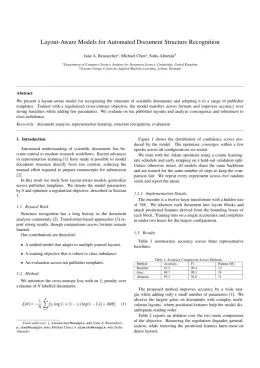
BBA Clinical template — frequently asked questions

How do I write a paper in the BBA Clinical format?
In DocuGuru you write your manuscript in a normal editor — no LaTeX setup required — and select the BBA Clinical template. When you export, DocuGuru compiles the paper into the official Elsevier format and hands you a submission-ready PDF along with the editable LaTeX source.
What reference style does BBA Clinical use?
BBA Clinical uses Numbered (Elsevier) references, shown as numbered [1], [2] markers in the text. DocuGuru formats every in-text citation and the reference list in this exact style automatically. A reference appears like this: [1] A. Smith, B. Jones, C. Lee, A representative article title, BBA Clinical 12 (2023) 45–58.
Do I need to know LaTeX to submit to BBA Clinical?
No. DocuGuru generates the elsarticle LaTeX class and compiles the PDF for you in the background, so you get a Elsevier-ready BBA Clinical document without writing any LaTeX. If you do want it, the LaTeX source is included in the export.
Can I import an existing draft into the BBA Clinical template?
Yes. Paste or upload your current manuscript — Word, LaTeX, Markdown, or plain text — and DocuGuru reflows it into the BBA Clinical format with correct headings, figures, tables, and numbered citations.
Who publishes BBA Clinical?
BBA Clinical is a multidisciplinary journal published by Elsevier. DocuGuru's BBA Clinical template matches Elsevier's official submission format.
Can I export a submission-ready BBA Clinical PDF?
Yes — DocuGuru produces a PDF built with the official BBA Clinical template (the elsarticle class) that is ready to submit to Elsevier, together with the matching LaTeX source files.
How much does the BBA Clinical template cost?
You can start writing in the BBA Clinical template for free. Exporting the final submission-ready BBA Clinical PDF and LaTeX source is part of DocuGuru's paid plans — see the app for current pricing.
Use the BBA Clinical template

