
1,309 citations
Cite
SaveGo to paper →
Elsevier
Atmospheric Research Template
Write in a clean editor, then format for Atmospheric Research in one click — DocuGuru applies the official Elsevier template with author–year references and exports a submission-ready PDF plus the editable LaTeX source. Free to start.
About the Atmospheric Research format
Atmospheric Research is a peer-reviewed journal published by Elsevier, covering Meteorological Phenomena and Simulations, Climate variability and models, Atmospheric chemistry and aerosols.
| Publisher | Elsevier |
|---|---|
| Reference style | Author–year (Harvard) Author–year — (Smith, 2023) in the text Smith, A., Jones, B. and Lee, C. (2023) 'A representative article title', Atmospheric Research, 12(3), pp. 45–58.
Formats any DOI in Atmospheric Research style. No sign-up. |
| Publishes research in | Meteorological Phenomena and Simulations Climate variability and models Atmospheric chemistry and aerosols Atmospheric aerosols and clouds Precipitation Measurement and Analysis |
| ISSN | 0169-8095 |
| Citation impact (2-yr) | 3.63 |
| h-index | 179 |
| i10-index | 5,290 |
| Total citations | 274,291 |
| Article processing charge | $3,090 |
| Top institutions publishing here | Chinese Academy of Sciences |
| Journal website | www.elsevier.com |
| You get | A submission-ready PDF and the editable LaTeX source — ready to submit. |
Papers published in Atmospheric Research per year
Citation impact of Atmospheric Research by publication year
Citations each year’s papers have accumulated so far — the most recent years are still building up.
Most-cited papers in Atmospheric Research
Aerosols of biological origin play a vital role in the Earth system, particularly in the interactions between atmosphere, biosphere, climate, and public health. Airborne bacteria, fungal spores, pollen, and other bioparticles are essential for the reproduction and spread of organisms across various ecosystems, and they can cause or enhance human, animal, and plant diseases. Moreover,…
1,039 citations
Cite
SaveGo to paper →
855 citations
Cite
SaveGo to paper →
702 citations
Cite
SaveGo to paper →
Gridded climatologies of total lightning flash rates observed by the spaceborne Optical Transient Detector (OTD) and Lightning Imaging Sensor (LIS) instruments have been updated. OTD collected data from May 1995 to March 2000. LIS data (equatorward of about 38°) adds the years 1998–2010. Flash counts from each instrument are scaled by the best available estimates…
683 citations
Cite
SaveGo to paper →
Related journal templates
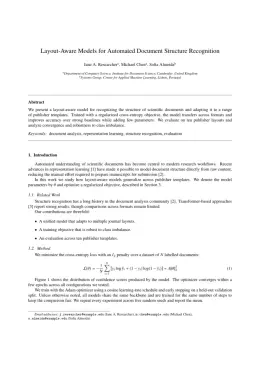
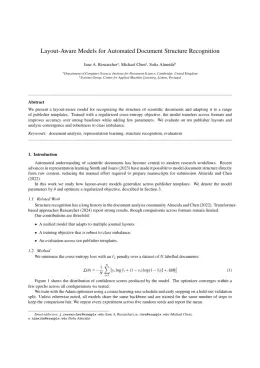
Atmospheric Research template — frequently asked questions
How do I write a paper in the Atmospheric Research format?
In DocuGuru you write your manuscript in a normal editor — no LaTeX setup required — and select the Atmospheric Research template. When you export, DocuGuru compiles the paper into the official Elsevier format and hands you a submission-ready PDF along with the editable LaTeX source.
What reference style does Atmospheric Research use?
Atmospheric Research uses Author–year (Harvard) references, shown as author–year markers such as (Smith, 2023) in the text. DocuGuru formats every in-text citation and the reference list in this exact style automatically. A reference appears like this: Smith, A., Jones, B. and Lee, C. (2023) 'A representative article title', Atmospheric Research, 12(3), pp. 45–58.
Do I need to know LaTeX to submit to Atmospheric Research?
No. DocuGuru generates the elsarticle LaTeX class and compiles the PDF for you in the background, so you get a Elsevier-ready Atmospheric Research document without writing any LaTeX. If you do want it, the LaTeX source is included in the export.
Can I import an existing draft into the Atmospheric Research template?
Yes. Paste or upload your current manuscript — Word, LaTeX, Markdown, or plain text — and DocuGuru reflows it into the Atmospheric Research format with correct headings, figures, tables, and author–year citations.
Who publishes Atmospheric Research?
Atmospheric Research is a multidisciplinary journal published by Elsevier. DocuGuru's Atmospheric Research template matches Elsevier's official submission format.
Can I export a submission-ready Atmospheric Research PDF?
Yes — DocuGuru produces a PDF built with the official Atmospheric Research template (the elsarticle class) that is ready to submit to Elsevier, together with the matching LaTeX source files.
How much does the Atmospheric Research template cost?
You can start writing in the Atmospheric Research template for free. Exporting the final submission-ready Atmospheric Research PDF and LaTeX source is part of DocuGuru's paid plans — see the app for current pricing.