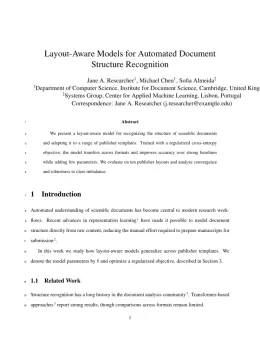
About the JAMA Neurology format
JAMA Neurology is a peer-reviewed journal published by Clinical & Medical Journals, covering Acute Ischemic Stroke Management, Intracerebral and Subarachnoid Hemorrhage Research, Dementia and Cognitive Impairment Research. Over its lifetime it has published 4,254 papers, which have received 231,238 citations.
| Publisher | Clinical & Medical Journals |
|---|
| Reference style | Numbered (Vancouver) Numbered — [1], [2] in the text
1. Smith A, Jones B, Lee C. A representative article title. JAMA Neurology. 2023;12(3):45–58.
Formats any DOI in JAMA Neurology style. No sign-up.
|
|---|
| Publishes research in | Acute Ischemic Stroke Management Intracerebral and Subarachnoid Hemorrhage Research Dementia and Cognitive Impairment Research Parkinson's Disease Mechanisms and Treatments Alzheimer's disease research and treatments |
|---|
| ISSN | 2168-6149 |
|---|
| Citation impact (2-yr) | 10.76 |
|---|
| h-index | 233 |
|---|
| i10-index | 1,996 |
|---|
| Top institutions publishing here | University of California, San Francisco |
|---|
| Journal website | archneur.jamanetwork.com |
|---|
| You get | A submission-ready PDF and the editable LaTeX source — ready to submit. |
|---|
Papers published in JAMA Neurology per year
Citation impact of JAMA Neurology by publication year
Citations each year’s papers have accumulated so far — the most recent years are still building up.
Most-cited papers in JAMA Neurology
Neurologic Manifestations of Hospitalized Patients With Coronavirus Disease 2019 in Wuhan, China
Ling Mao, Huijuan Jin, Mengdie Wang et al. · 10 Apr 2020
Importance: The outbreak of coronavirus disease 2019 (COVID-19) in Wuhan, China, is serious and has the potential to become an epidemic worldwide. Several studies have described typical clinical manifestations including fever, cough, diarrhea, and fatigue. However, to our knowledge, it has not been reported that patients with COVID-19 had any neurologic manifestations. Objective: To study…
Amyloid-β and Tau
George S. Bloom · 3 Feb 2014
The defining features of Alzheimer disease (AD) include conspicuous changes in both brain histology and behavior. The AD brain is characterized microscopically by the combined presence of 2 classes of abnormal structures, extracellular amyloid plaques and intraneuronal neurofibrillary tangles, both of which comprise highly insoluble, densely packed filaments. The soluble building blocks of these structures…
Treatment Outcomes in Patients With Newly Diagnosed Epilepsy Treated With Established and New Antiepileptic Drugs
Zhibin Chen, Martin J. Brodie, Danny Liew et al. · 26 Dec 2017
Importance: A study published in 2000 showed that more than one-third of adults with epilepsy have inadequate control of seizures with antiepileptic drugs (AEDs). This study evaluates overall treatment outcomes in light of the introduction of more than 1 dozen new AEDs in the past 2 decades. Objective: To assess long-term treatment outcome in patients…
Neurofibromatosis. Conference statement, National Institute of Health development conference
Da Stumpf · 1 Jan 1988
Association of Plasma Neurofilament Light With Neurodegeneration in Patients With Alzheimer Disease
Niklas Mattsson, Ulf Andréasson, Henrik Zetterberg et al. · 28 Mar 2017
Importance: Existing cerebrospinal fluid (CSF) or imaging (tau positron emission tomography) biomarkers for Alzheimer disease (AD) are invasive or expensive. Biomarkers based on standard blood test results would be useful in research, drug development, and clinical practice. Plasma neurofilament light (NFL) has recently been proposed as a blood-based biomarker for neurodegeneration in dementias. Objective: To…