BMC (BioMed Central)

Molecular Horticulture Template

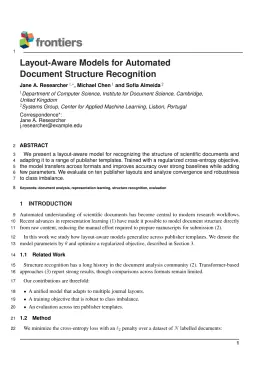
Write in a clean editor, then format for Molecular Horticulture in one click — DocuGuru applies the official BMC (BioMed Central) template with numbered references and exports a submission-ready PDF plus the editable LaTeX source. Free to start.

About the Molecular Horticulture format

Molecular Horticulture is a peer-reviewed journal published by BMC (BioMed Central), covering Plant Gene Expression Analysis, Plant Molecular Biology Research, Plant Reproductive Biology. Over its lifetime it has published 238 papers, which have received 3,962 citations.

PublisherBMC (BioMed Central)
Reference styleNumbered (Vancouver)
Numbered — [1], [2] in the text
1. Smith A, Jones B, Lee C. A representative article title. Molecular Horticulture. 2023;12(3):45–58.

Formats any DOI in Molecular Horticulture style. No sign-up.

Publishes research inPlant Gene Expression Analysis Plant Molecular Biology Research Plant Reproductive Biology Postharvest Quality and Shelf Life Management Plant biochemistry and biosynthesis
ISSN2730-9401
Citation impact (2-yr)5.77
h-index26
i10-index91
Open accessYes — indexed in DOAJ
Top institutions publishing hereNanjing Agricultural University
Journal websitemolhort.biomedcentral.com
You getA submission-ready PDF and the editable LaTeX source — ready to submit.

Papers published in Molecular Horticulture per year

1
2005
17
2021
27
2022
28
2023
44
2024
66
2025

Citation impact of Molecular Horticulture by publication year

0
2005
1.3K
2021
1.1K
2022
581
2023
535
2024
349
2025

Citations each year’s papers have accumulated so far — the most recent years are still building up.

Most-cited papers in Molecular Horticulture

Plant carotenoids: recent advances and future perspectives

Tianhu Sun, Sombir Rao, Xuesong Zhou et al. · 21 Jan 2022

Carotenoids are isoprenoid metabolites synthesized de novo in all photosynthetic organisms. Carotenoids are essential for plants with diverse functions in photosynthesis, photoprotection, pigmentation, phytohormone synthesis, and signaling. They are also critically important for humans as precursors of vitamin A synthesis and as dietary antioxidants. The vital roles of carotenoids to plants and humans have prompted…

Leaf senescence: progression, regulation, and application

Yongfeng Guo, Guodong Ren, Kewei Zhang et al. · 16 Jun 2021

Leaf senescence, the last stage of leaf development, is a type of postmitotic senescence and is characterized by the functional transition from nutrient assimilation to nutrient remobilization which is essential for plants' fitness. The initiation and progression of leaf senescence are regulated by a variety of internal and external factors such as age, phytohormones, and…

MG2C: a user-friendly online tool for drawing genetic maps

Jiangtao Chao, Zhiyuan Li, Yuhe Sun et al. · 1 Dec 2021

Genetic map is a linear arrangement of the relative positions of sites in the chromosome or genome based on the recombination frequency between genetic markers. It is the important basis for genetic analysis. Several kinds of software have been designed for genetic mapping, but all these tools require users to write or edit code, making…

Recent advances in proteomics and metabolomics in plants

Shijuan Yan, Ruchika Bhawal, Zhibin Yin et al. · 23 Jul 2022

Over the past decade, systems biology and plant-omics have increasingly become the main stream in plant biology research. New developments in mass spectrometry and bioinformatics tools, and methodological schema to integrate multi-omics data have leveraged recent advances in proteomics and metabolomics. These progresses are driving a rapid evolution in the field of plant research, greatly…

Molecular basis of pathogenesis of postharvest pathogenic Fungi and control strategy in fruits: progress and prospect

Zhanquan Zhang, Tong Chen, Boqiang Li et al. · 16 Jun 2021

The disease caused by pathogenic fungi is the main cause of postharvest loss of fresh fruits. The formulation of disease control strategies greatly depends on the understanding of pathogenic mechanism of fungal pathogens and control strategy. In recent years, based on the application of various combinatorial research methods, some pathogenic genes of important postharvest fungal…


Molecular Horticulture template — frequently asked questions

How do I write a paper in the Molecular Horticulture format?
In DocuGuru you write your manuscript in a normal editor — no LaTeX setup required — and select the Molecular Horticulture template. When you export, DocuGuru compiles the paper into the official BMC (BioMed Central) format and hands you a submission-ready PDF along with the editable LaTeX source.
What reference style does Molecular Horticulture use?
Molecular Horticulture uses Numbered (Vancouver) references, shown as numbered [1], [2] markers in the text. DocuGuru formats every in-text citation and the reference list in this exact style automatically. A reference appears like this: 1. Smith A, Jones B, Lee C. A representative article title. Molecular Horticulture. 2023;12(3):45–58.
Do I need to know LaTeX to submit to Molecular Horticulture?
No. DocuGuru generates the bmcart LaTeX class and compiles the PDF for you in the background, so you get a BMC (BioMed Central)-ready Molecular Horticulture document without writing any LaTeX. If you do want it, the LaTeX source is included in the export.
Can I import an existing draft into the Molecular Horticulture template?
Yes. Paste or upload your current manuscript — Word, LaTeX, Markdown, or plain text — and DocuGuru reflows it into the Molecular Horticulture format with correct headings, figures, tables, and numbered citations.
What is Molecular Horticulture?
BMC / BioMed Central journal. It is a life sciences and medicine journal, published by BMC (BioMed Central).
Can I export a submission-ready Molecular Horticulture PDF?
Yes — DocuGuru produces a PDF built with the official Molecular Horticulture template (the bmcart class) that is ready to submit to BMC (BioMed Central), together with the matching LaTeX source files.
How much does the Molecular Horticulture template cost?
You can start writing in the Molecular Horticulture template for free. Exporting the final submission-ready Molecular Horticulture PDF and LaTeX source is part of DocuGuru's paid plans — see the app for current pricing.
Use the Molecular Horticulture template